From Still Life to Architecture —Marathon with Alexey Kondratyev and Olga Ovtina
Building Form and Light by the Same Rules — from Objects on a Table to a City Street
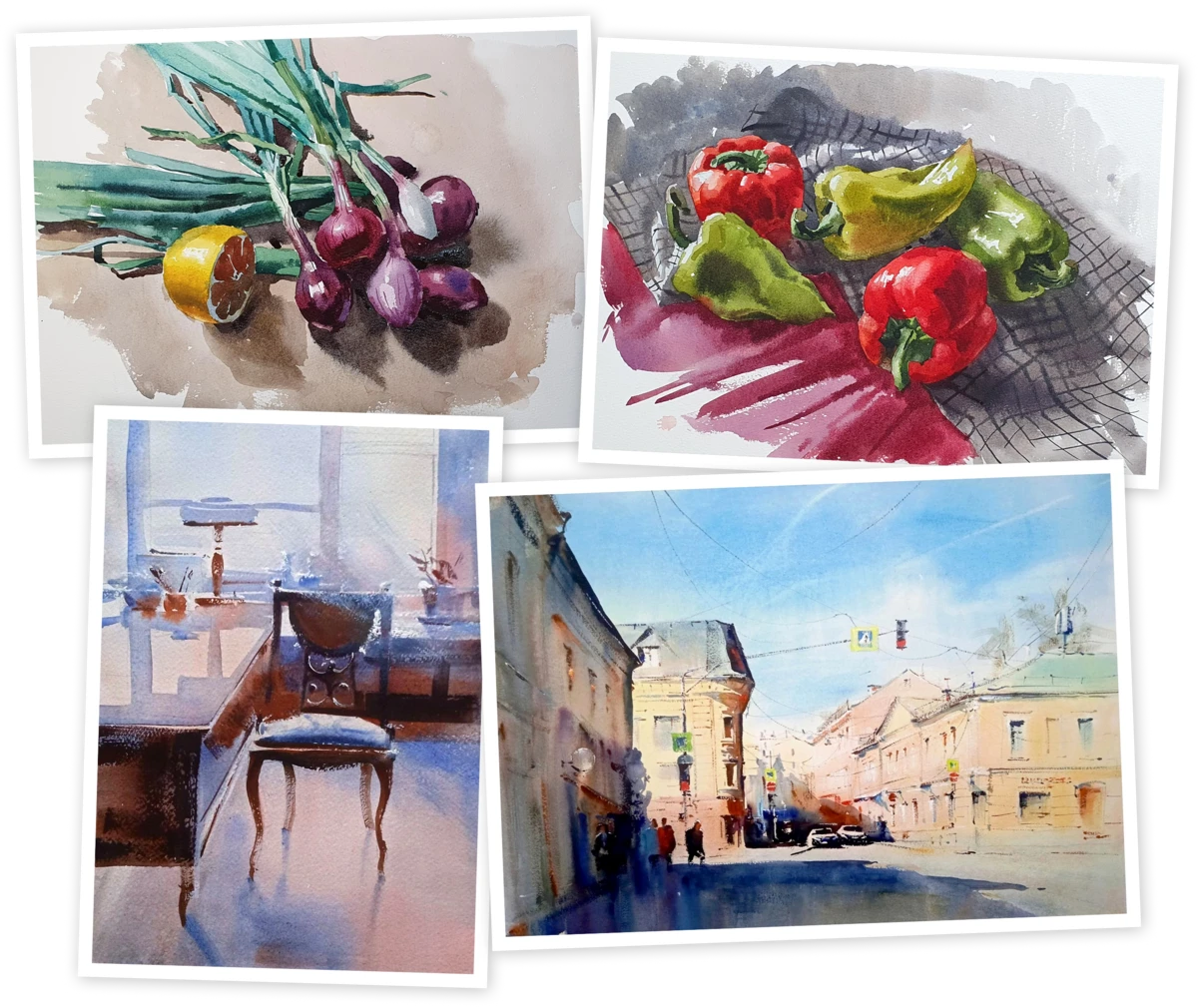
Material: watercolor
Number of paintings: 4
Course duration: 6 hours
Access: lifetime
What you'll paint at the marathon
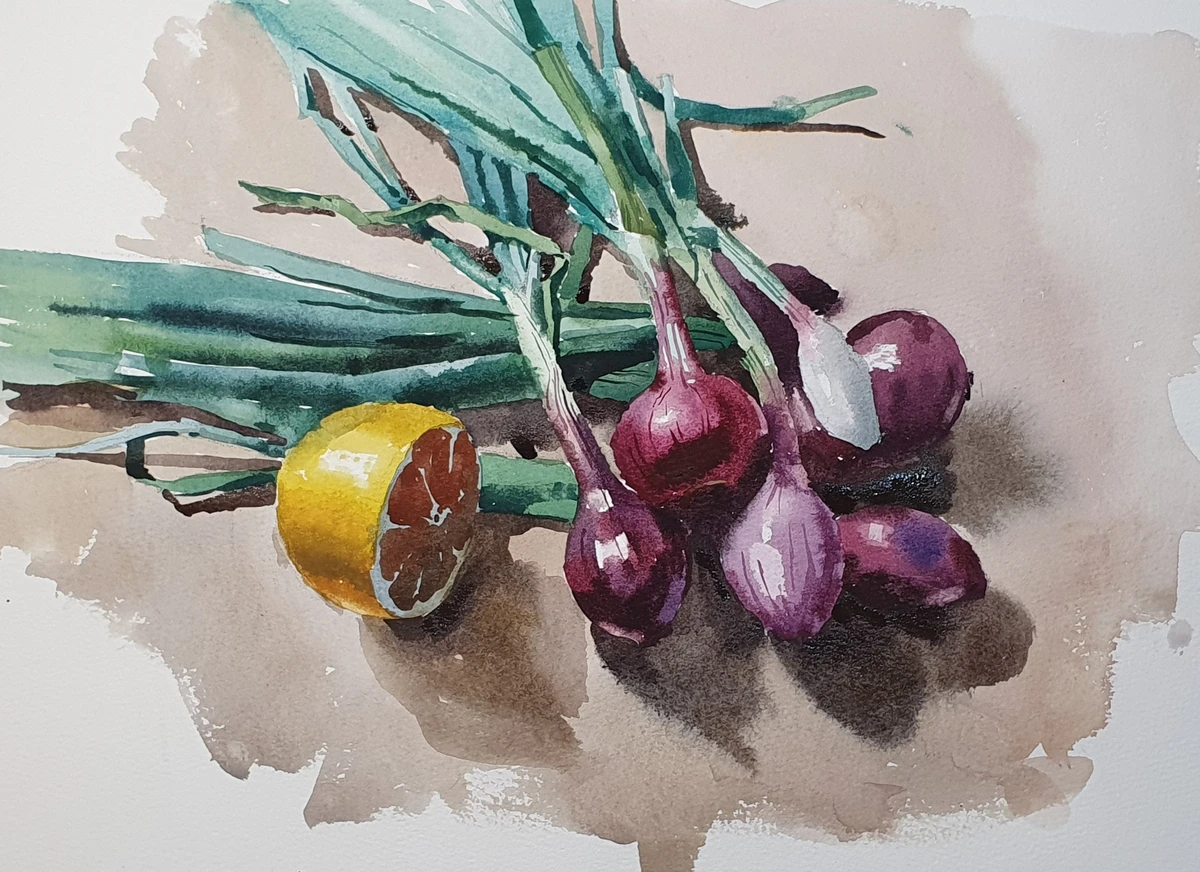
Onions with Alexey Kondratyev
In this lesson:
- we'll talk about the connection between detail and the compositional center;
- we'll learn to simplify the leaves of green onions and bring out the important ones;
- we'll see how tonal contrast enhances the volume of objects, using a lemon as an example;
- we'll talk about green mixes and the use of Cobalt Green.
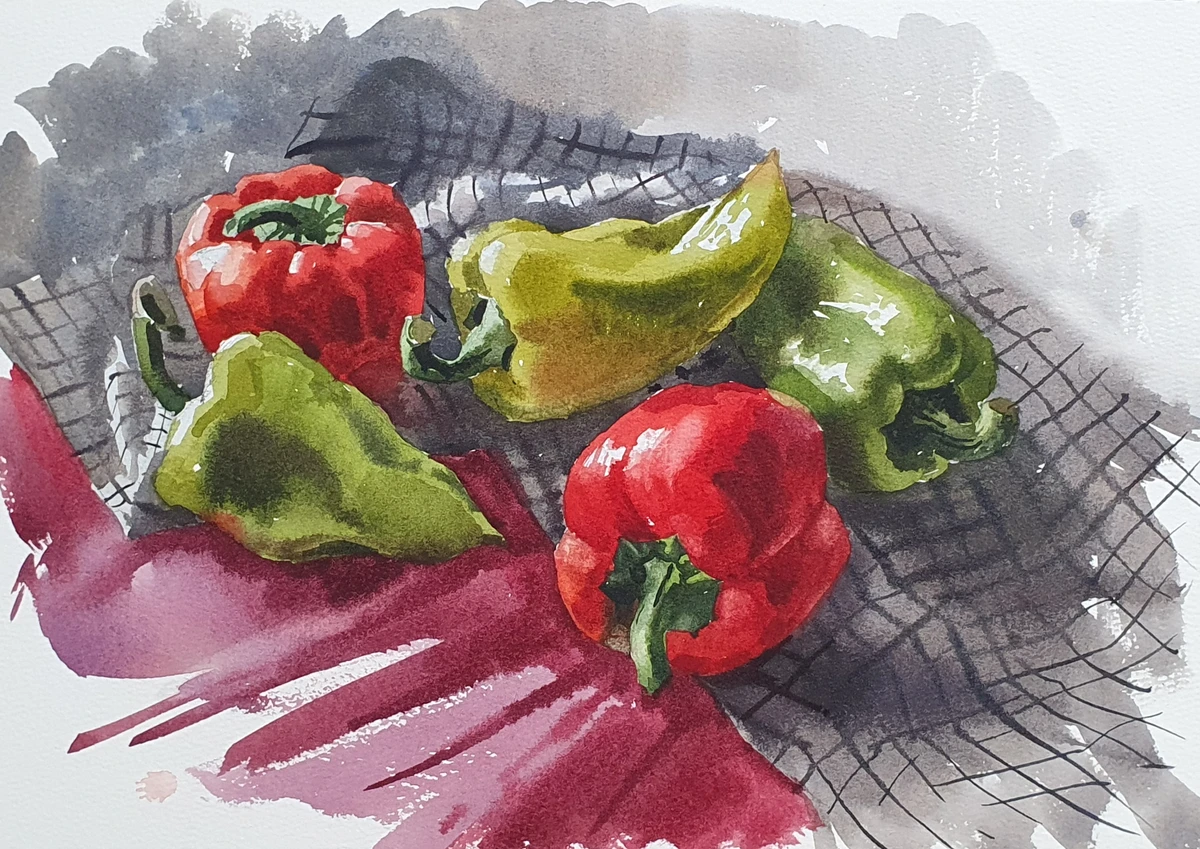
Peppers with Alexey Kondratyev
In this lesson:
- we'll talk about how objects take shape, using peppers as an example, and how this knowledge helps convey three-dimensional spatial relationships;
- we'll learn to use highlights to strengthen the sense of volume;
- we'll analyze the variety of pepper shapes and discuss their individual elements;
- we'll see how and why it's important to simplify the surroundings of objects.
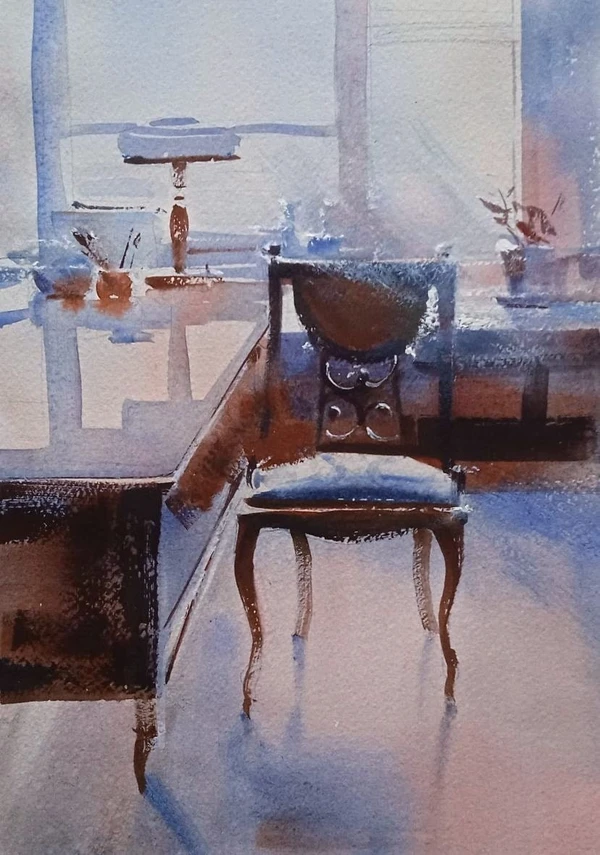
Workspace with Olga Ovtina
In this lesson:
- we'll see how to build an interior composition using large color relationships while preserving the feeling of light and air;
- we'll paint a table, a chair, and background objects, and learn how to simplify forms without overloading the work with detail;
- we'll explore how warm and cool tones convey space, light, and depth;
- we'll learn to highlight what matters most, work with soft edges, and create a unified atmosphere in a watercolor study.
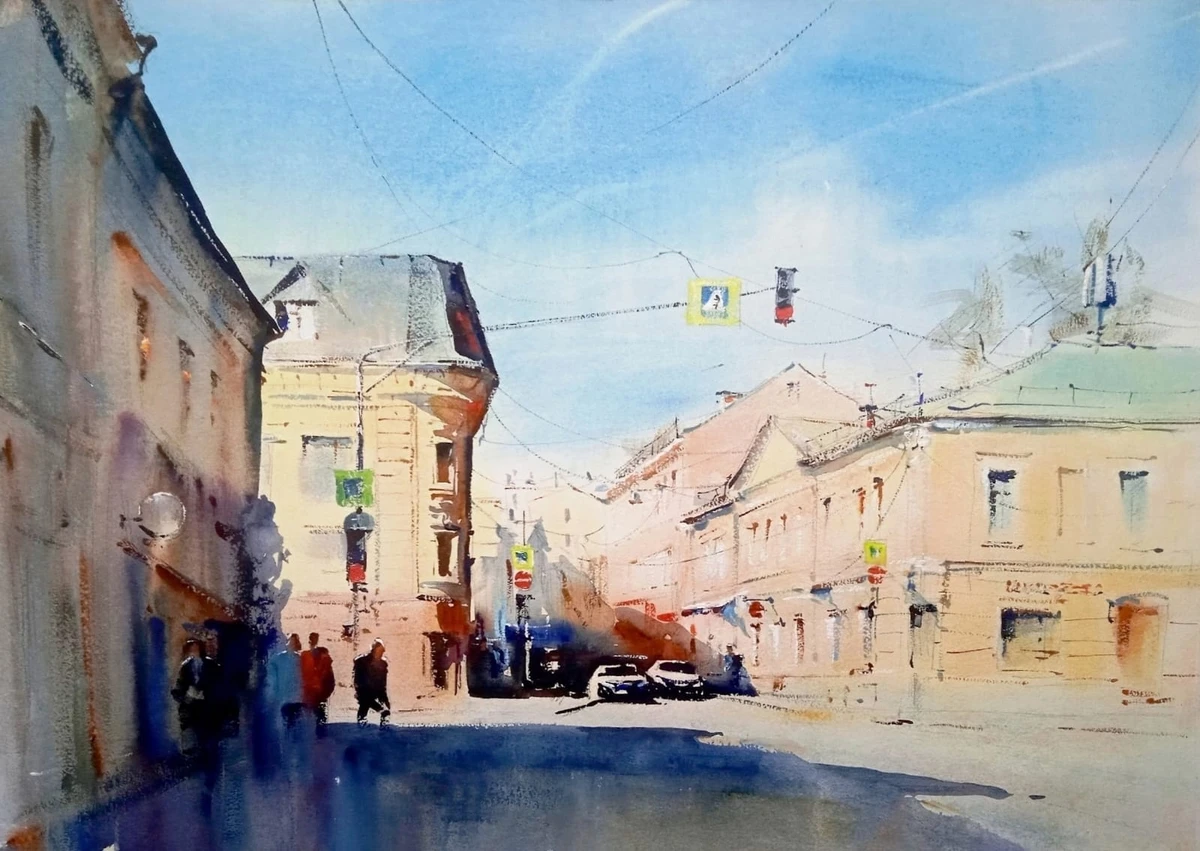
Solyanka Street with Olga Ovtina
In this lesson:
- we'll see how to capture a sun-drenched city street and a sense of spatial depth;
- we'll learn to paint architecture with a light touch, keeping perspective without excessive detail;
- we'll explore working with large light and shadow shapes;
- we'll add people, cars, and urban details in a way that brings the composition to life.
Watch all four sessions to unlock four bonus lessons!
Bonus 1
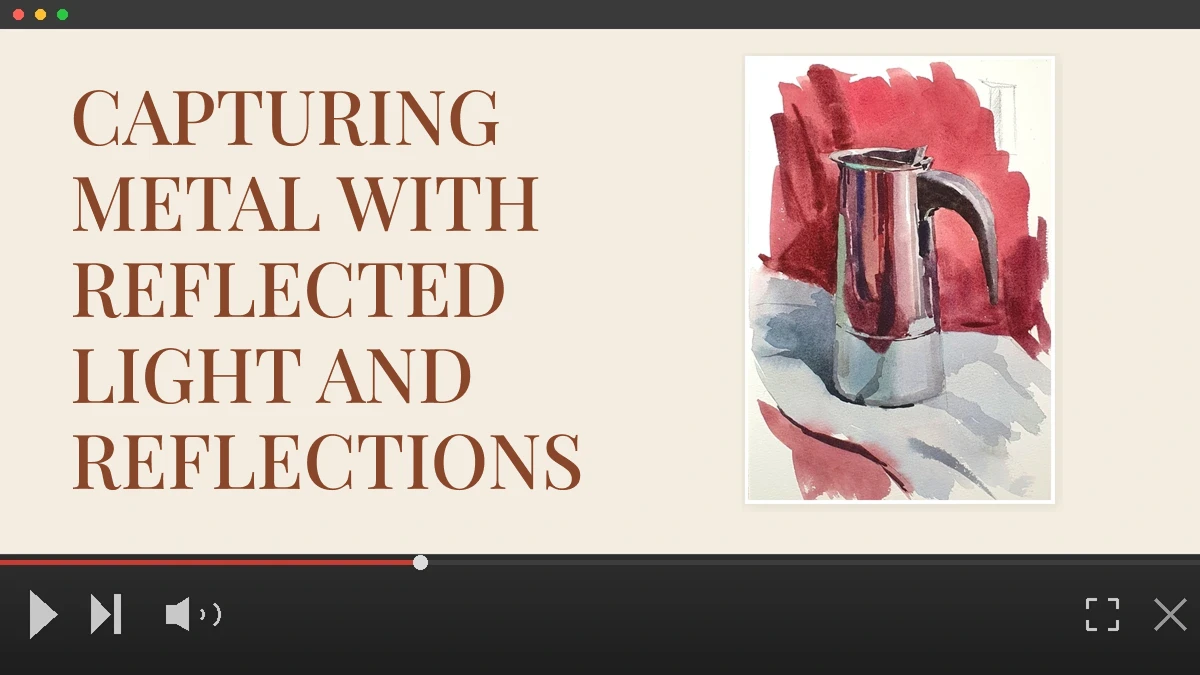
Capturing Metal with Reflected Light and Reflections
Duration ~ 39 minutes
Metal always draws the eye, but painting it in watercolor is a real challenge. It acts like a funhouse mirror, gathering all the surrounding colors and highlights while breaking up the form of the object. In this bonus lesson, we'll dig into the anatomy of metal surfaces so you can stop being intimidated by complex textures and learn to paint them with confidence, conviction, and without unnecessary visual "noise."
In this lesson we:
- we'll explore how to construct cylindrical objects, work with symmetry, ellipses, and construction lines;
- we'll learn to simplify reflections and reflected light, picking out what matters most;
- we'll understand how reflections behave on a metal surface and how to preserve tonal contrast;
- we'll reinforce the laws of light and shadow and learn how not to lose the form while getting carried away by the beauty of metal.
Bonus 2
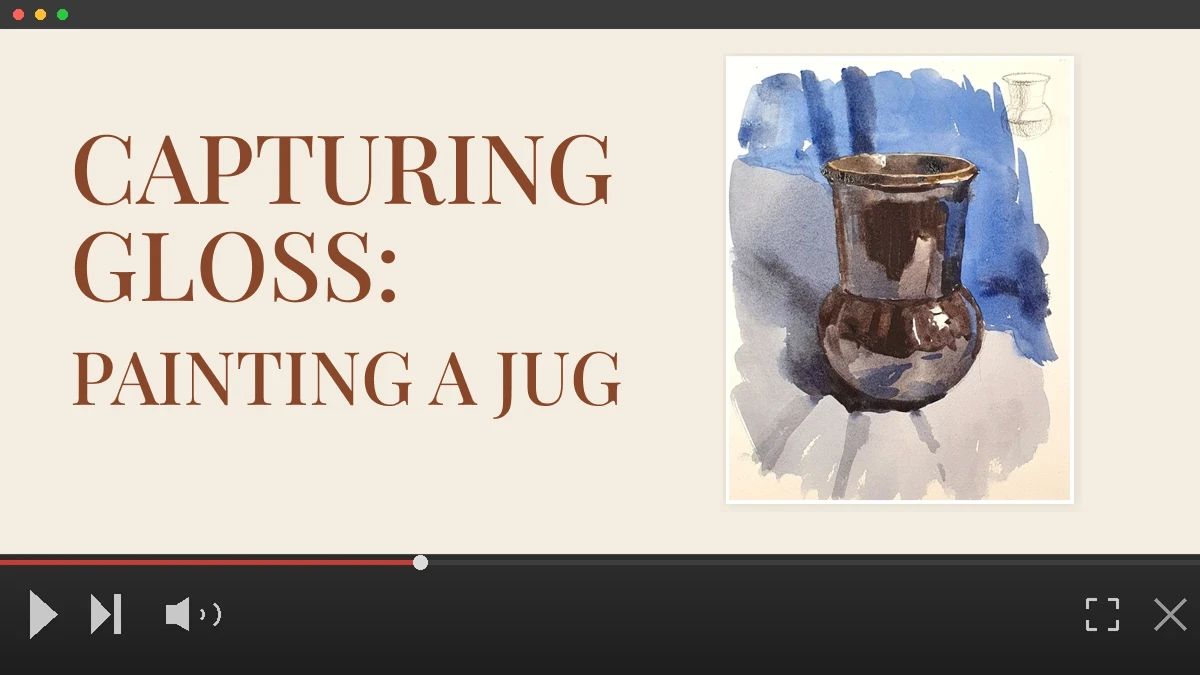
Capturing Gloss: Painting a Jug
Duration ~ 33 minutes
When working with gloss, our goal isn't to copy every random patch of color — it's to understand the logic of the surface: the contrast of deep shadow, the shape of areas of reflected light, and the brilliance of highlights. These are exactly what make an object feel truly three-dimensional, shiny, and tangible.
In this lesson we:
- we'll revisit the rules for constructing cylindrical objects and working with ellipses;
- we'll learn to bring complex texture under the laws of light and shadow;
- we'll explore how an object's color influences reflections and reflected light;
- we'll understand the role of highlights in conveying the materiality of a glossy surface.
Bonus 3
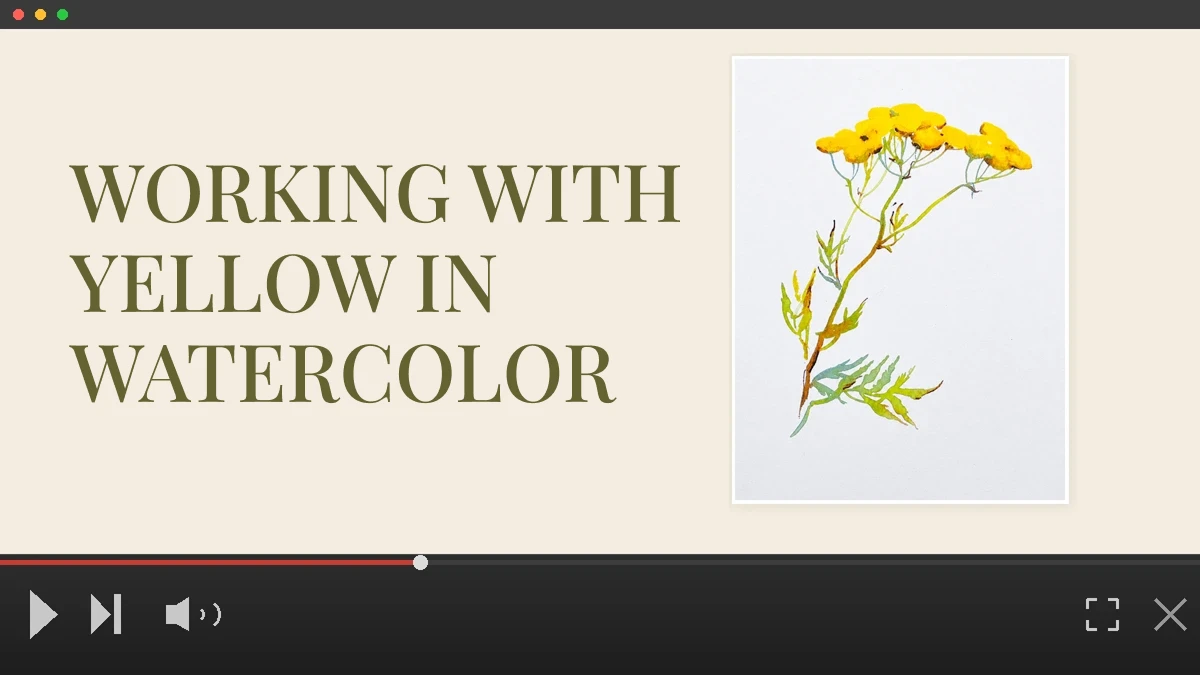
Working with Yellow in Watercolor
Duration ~ 25 minutes
I invite you to explore the possibilities of yellow — the lightest and most temperamental color in watercolor. We'll look at its unique qualities and discover how a single color can fill a painting with the feeling of sunlight.
In this lesson we'll learn:
- to understand the qualities of a transparent yellow pigment;
- to emphasize yellow with cool greens and blues;
- to blend saturated color into a transparent wash;
- to paint fine stems and delicate, airy leaves;
- to bring out the fragility of a plant, keeping it light and airy.
Bonus 4
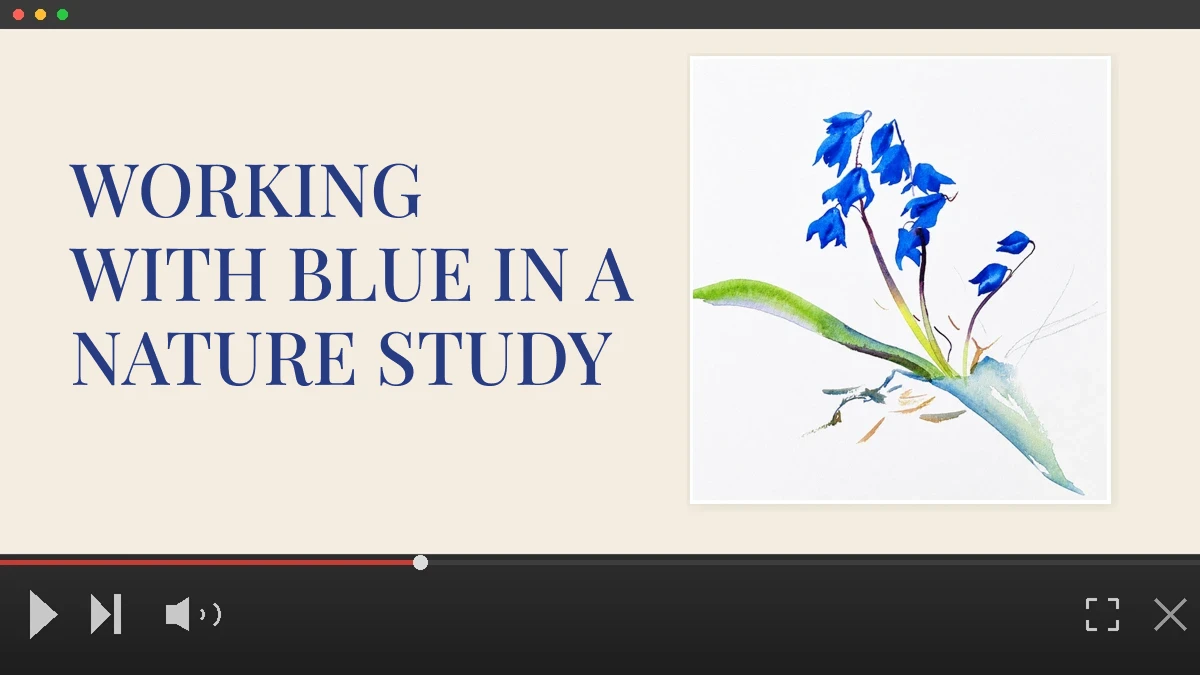
Working with Blue in a Nature Study
Duration ~ 40 minutes
Spring squill flowers are a perfect reason to look at the color blue in a whole new way. In this lesson, you'll explore its possibilities and discover how a single shade can fill a watercolor painting with depth, freshness, and the feeling of spring.
In this lesson we'll learn:
- work with blue, unlocking its depth and transparency;
- create soft color gradients on wet paper;
- combine blue with greens and neutral tones;
- paint flowers from a loose shape to a defined form, keeping them looking natural.
The marathon is led by
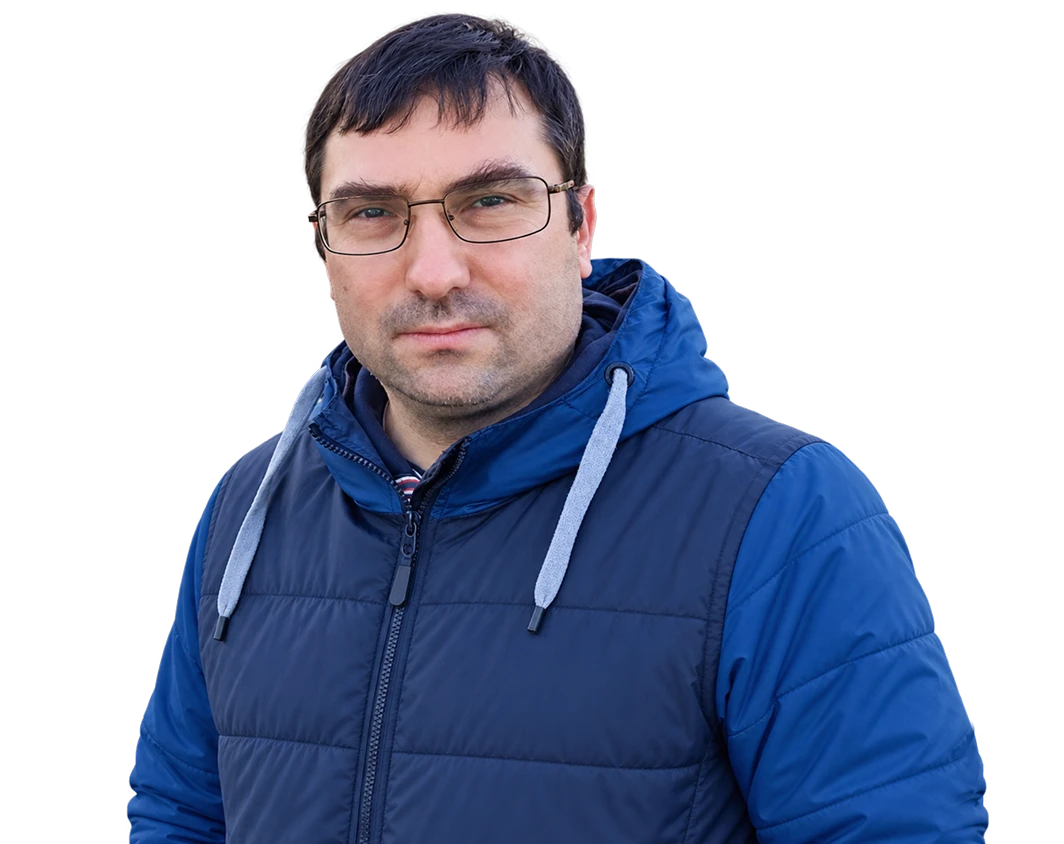
Alexey Kondratyev
Watercolor artist
- Watercolor artist with a fine arts and teaching background.
- I've been teaching for over 20 years.
- Since 2019, I've been actively painting urban environments: in summer — from life en plein air, and in winter — still lifes in the studio and from my own photo references.
- An active member of the Urban Sketchers movement and the Chertanovo Art Association.
- Participant in numerous exhibitions.
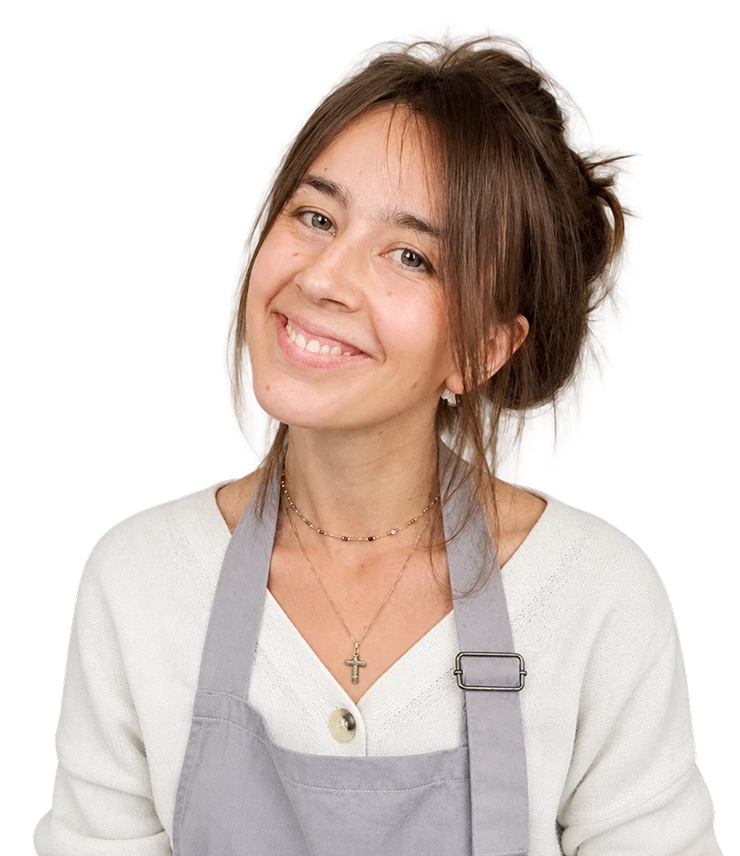
Olga Ovtina
Watercolor artist
- Graduated from the Sergei Andriyaka School of Watercolor and the Gerasimov Institute of Cinematography (VGIK)
- Production designer at "Theater T"
- Since 2016, I've been teaching watercolor painting workshops and classes
- Member of the Union of Watercolorists of Russia
- Participant in numerous exhibitions
What materials will we use for the marathon
A detailed materials page will open after purchase.
Sign up for the marathon:
Marathon Unlimited
Get +64 marathons with +280 paintings and watch them at your convenience
- Number of marathons: 64
- Number of paintings: 280
- Access: 1 year unlimited
per marathon
Subscribe to Marathon UnlimitedAnnual payment 119.88 $
From Still Life to Architecture —Marathon with Alexey Kondratyev and Olga Ovtina
Building Form and Light by the Same Rules — from Objects on a Table to a City Street
Sign up