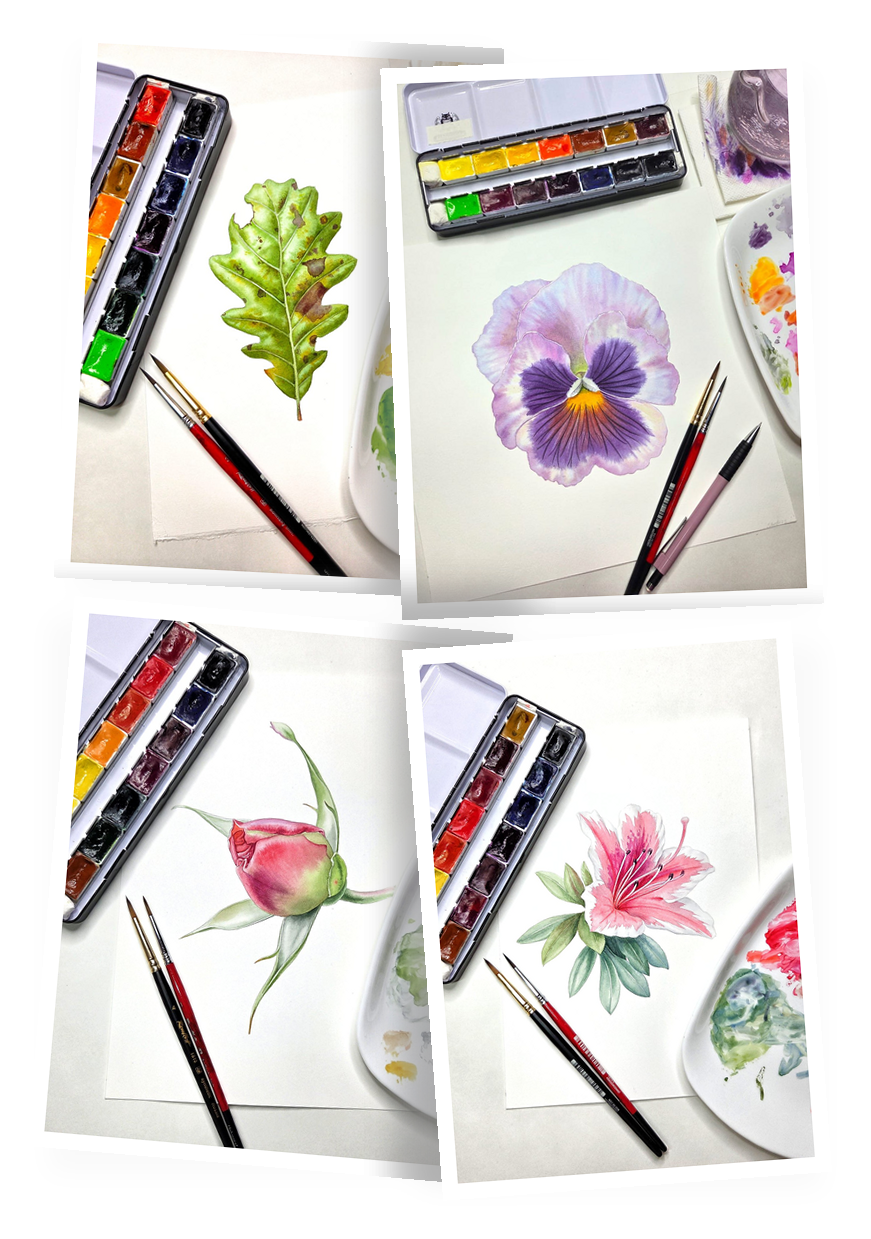
The Beauty of Plants in Detail course with Irina Vastardis
- 8 richly detailed botanical subjects: flowers, leaves, and natural forms
- We'll cover the fundamentals of botanical watercolor and the principles of painting plants with accuracy and vitality
- You'll learn to mix complex natural shades and convey the living texture of plants
What this course is about
Botanical watercolor is not just a painting technique but a way to feel nature more deeply and learn to see its details. By painting flowers and leaves, we discover a new, more attentive, gentle, and contemplative way of looking at the world around us.
Who this course is for
This course is for anyone who wants to learn to capture the beauty of plants in watercolor — from the most delicate petals to complex leaf and bud shapes. It suits beginners as well as those who already have some experience and want to deepen their botanical watercolor skills.
Course program
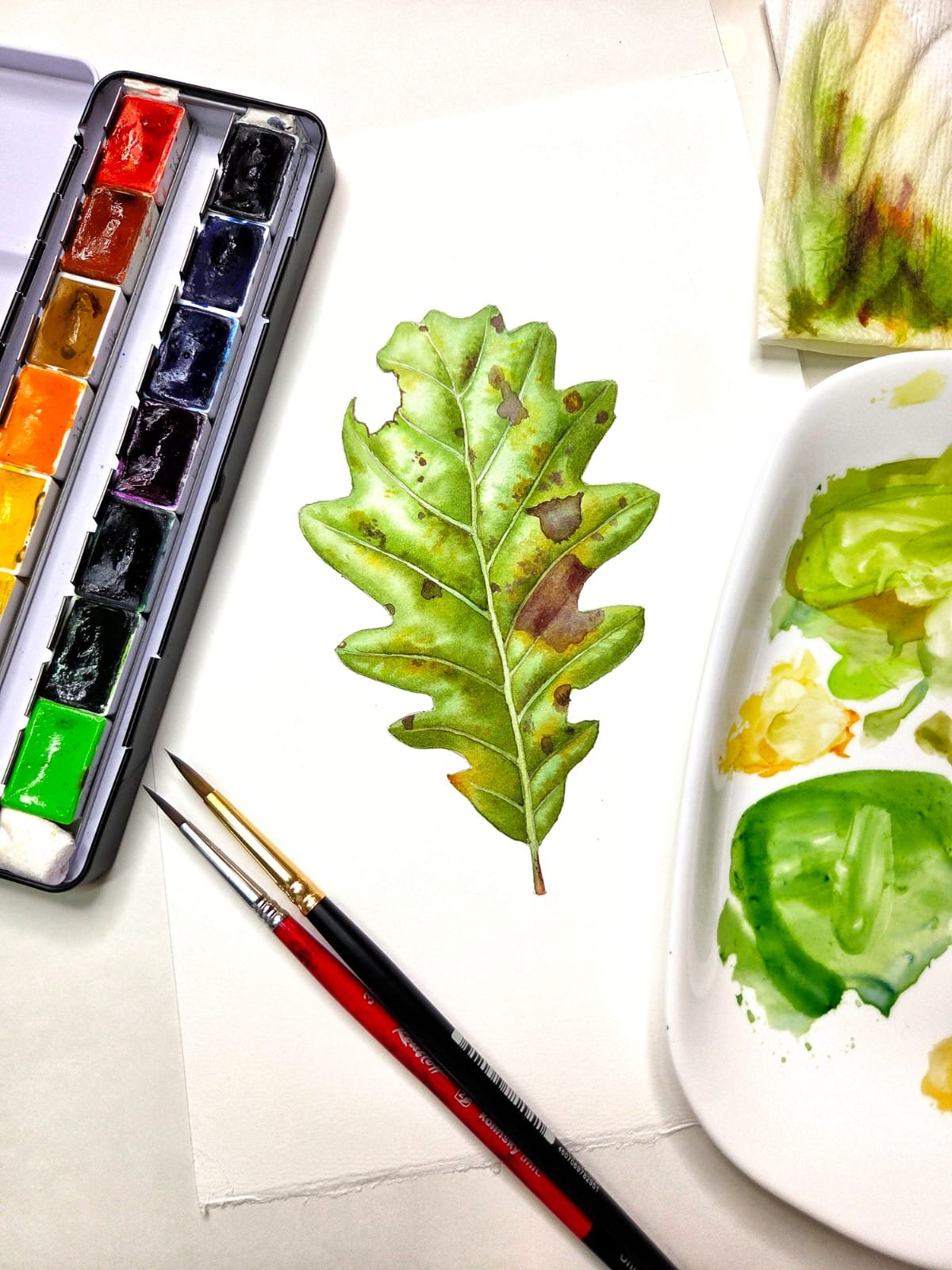
In this lesson you'll learn how to:
- paint a realistic oak leaf, conveying patches of color and veins
- make an accurate drawing of the shape, with correct proportions and a well-developed leaf structure
- build up the form in stages through color
- use the layered watercolor technique to create the effect of an autumn leaf
- work wet-on-wet and wet-on-dry to make the image look realistic
In this lesson you'll learn how to:
- place the flower on the sheet properly (composition)
- analyze the basic shapes and proportions of the petals
- combine cool and warm shades so the flower “breathes”
- work wet-on-wet
- apply watercolor in layers
- convey the structure and texture of the petals
- keep the lightness and transparency of watercolor
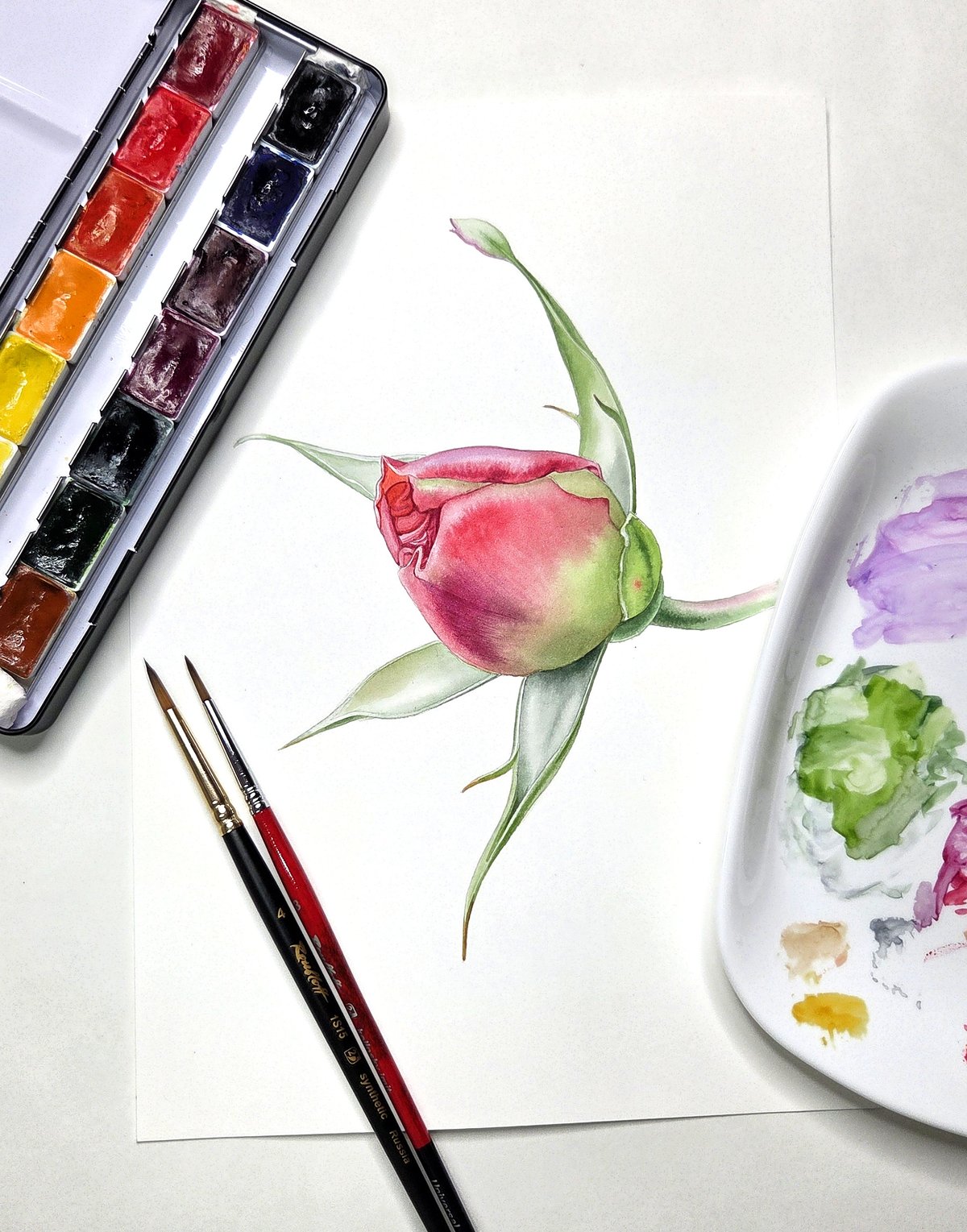
In this lesson you'll learn how to:
- build the shape of the bud in a pencil drawing
- choose the right shades of red to convey the color of the rose accurately
- use soft layers of watercolor to build volume
- create the effect of “velvety” petals
- add the final accents that make the work look complete and expressive
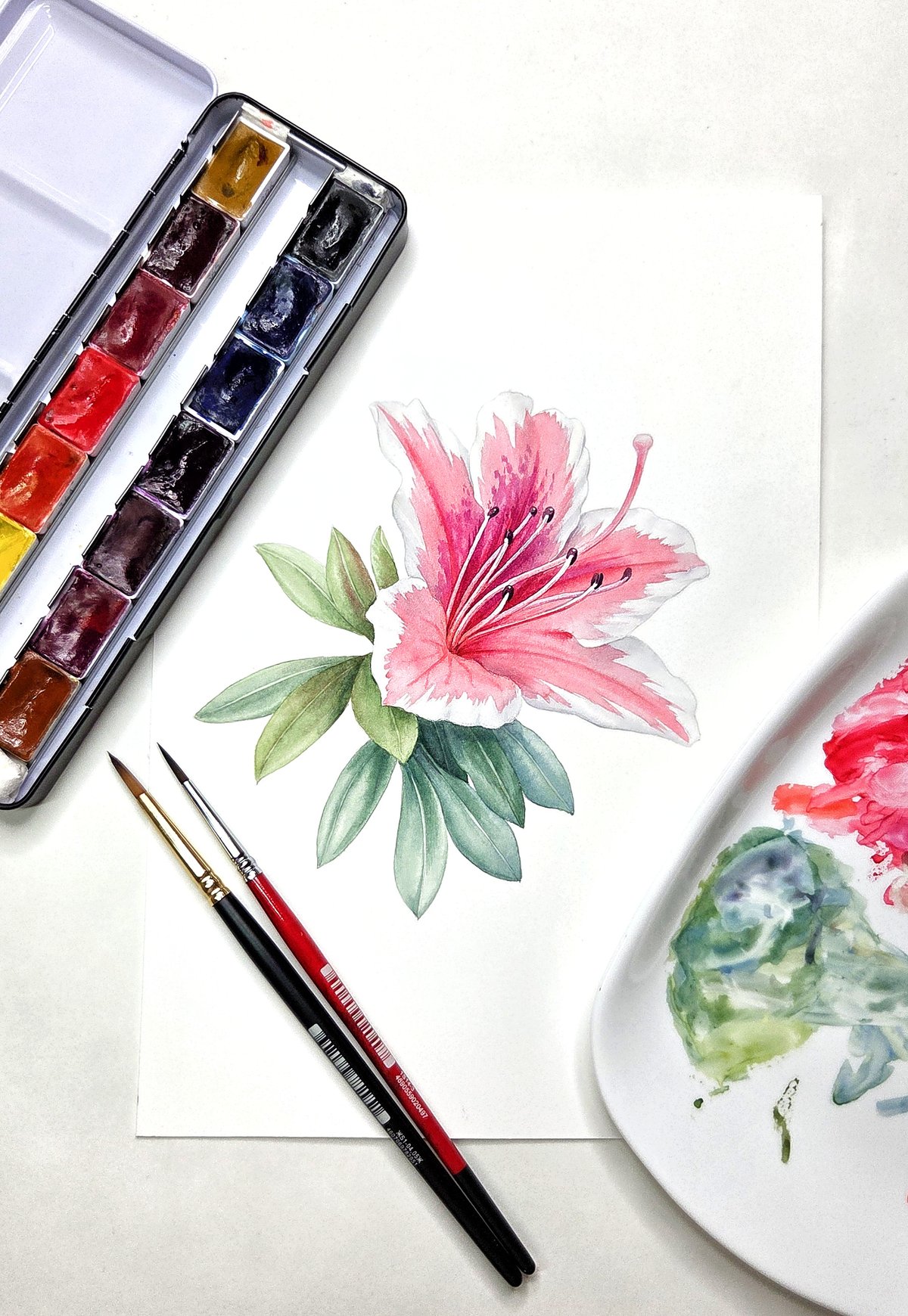
In this lesson you'll learn how to:
- draw the flower correctly while keeping the natural asymmetry of the petals
- paint a flower with a white edge on its petals on white paper
- use soft layers of watercolor to convey multiple colors and create volume
- use masking fluid: how to apply and remove it, protect your brush, and choose when to use it
- paint simple green leaves without using green paint
- add the final accents so the work looks complete and artistically expressive
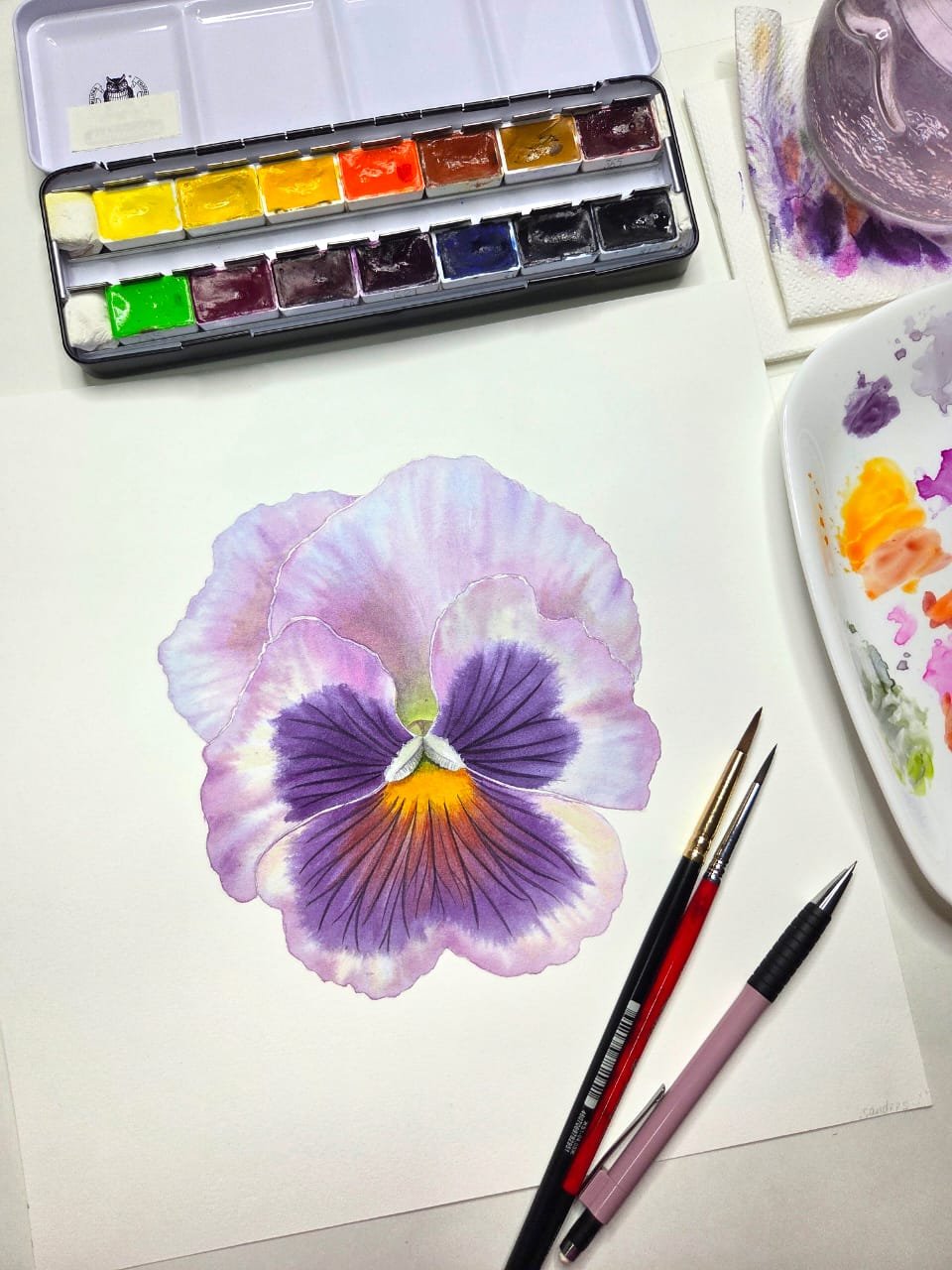
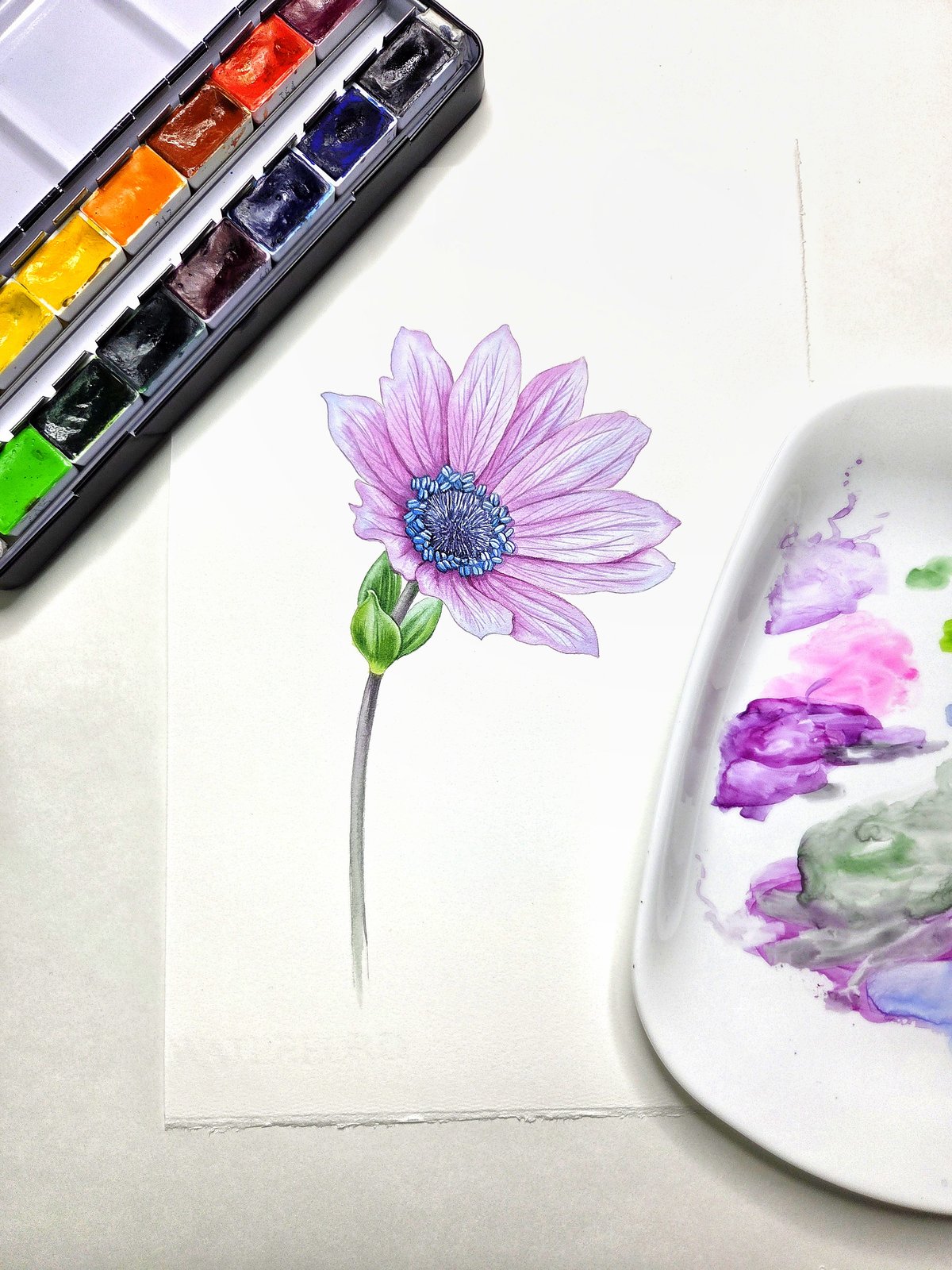
In this lesson you'll learn how to:
- build a radial flower with many petals correctly
- work with a gradient of violet shades, from a saturated center to light edges
- use the wet-on-wet technique
- convey the structure and texture of the petals and paint veins on them
- work out the details of the flower's center — the pistils and stamens
- create a three-dimensional stem
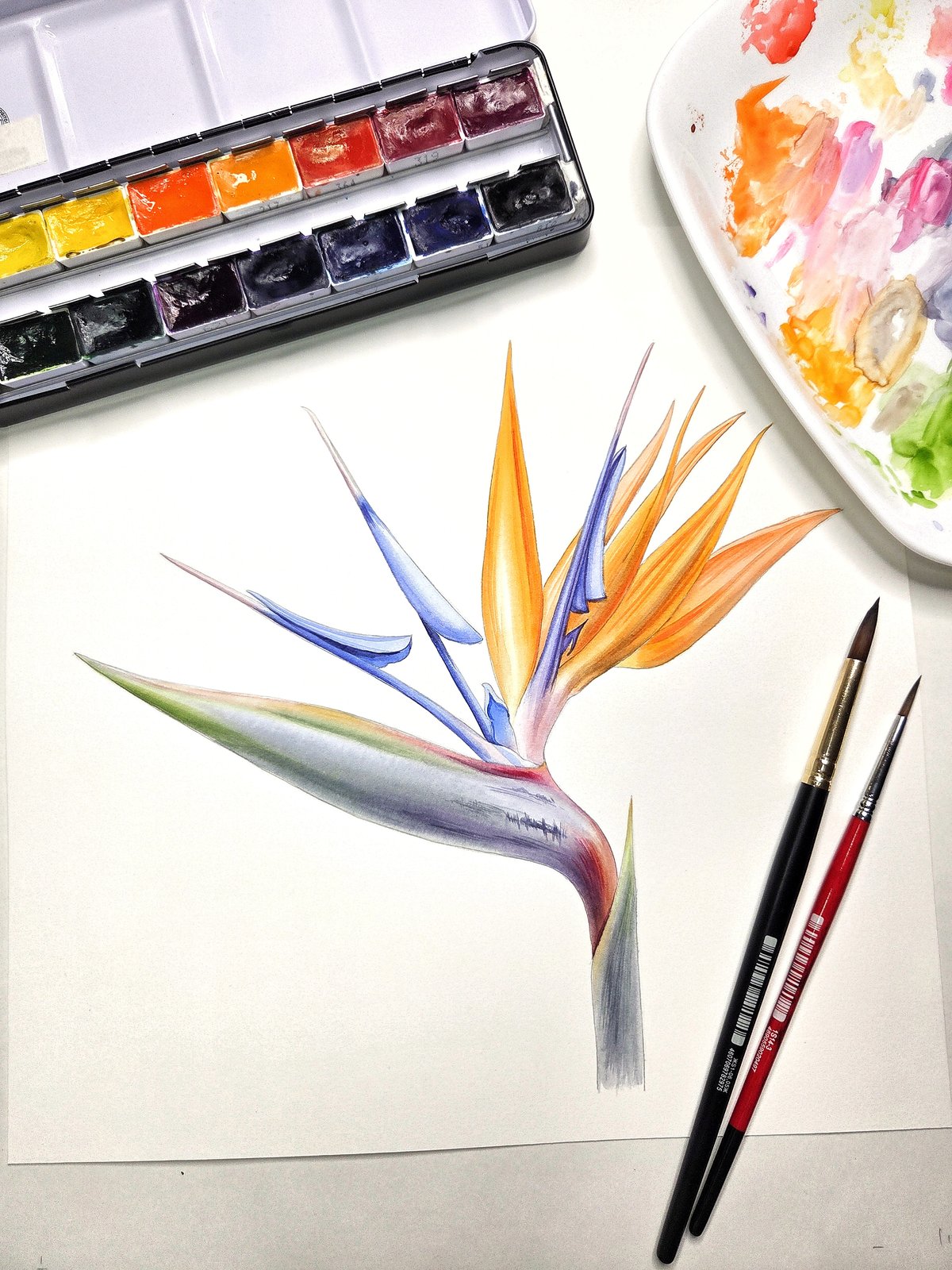
In this lesson you'll learn how to:
- compose a picture around a large strelitzia flower
- make an accurate drawing of the shape and proportions so the petals look natural
- combine bright, contrasting colors (orange, blue, green) without losing the purity of the shades
- use layered watercolor to create the effect of a waxy bloom
- work wet-on-wet and wet-on-dry to convey soft transitions and crisp edges
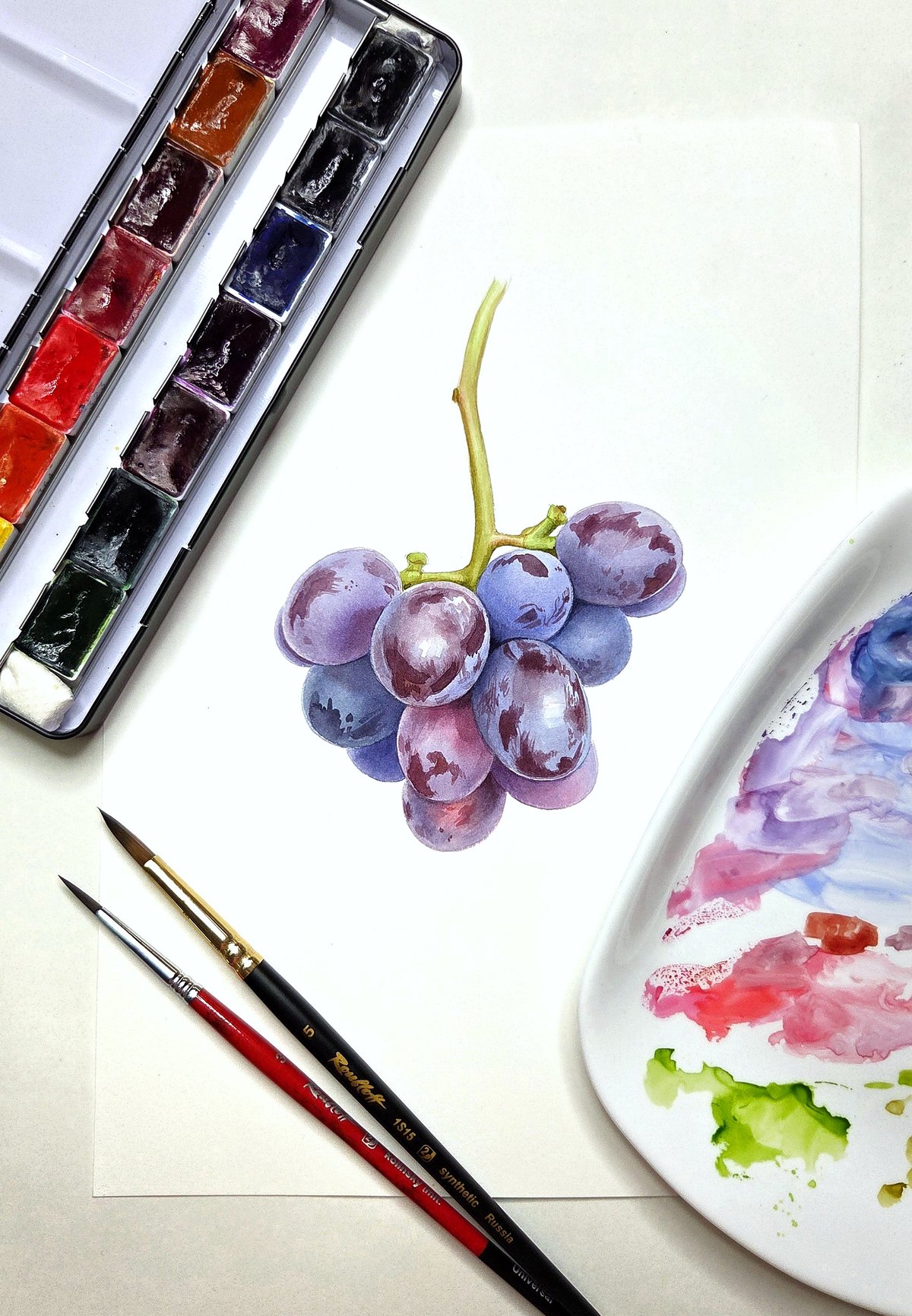
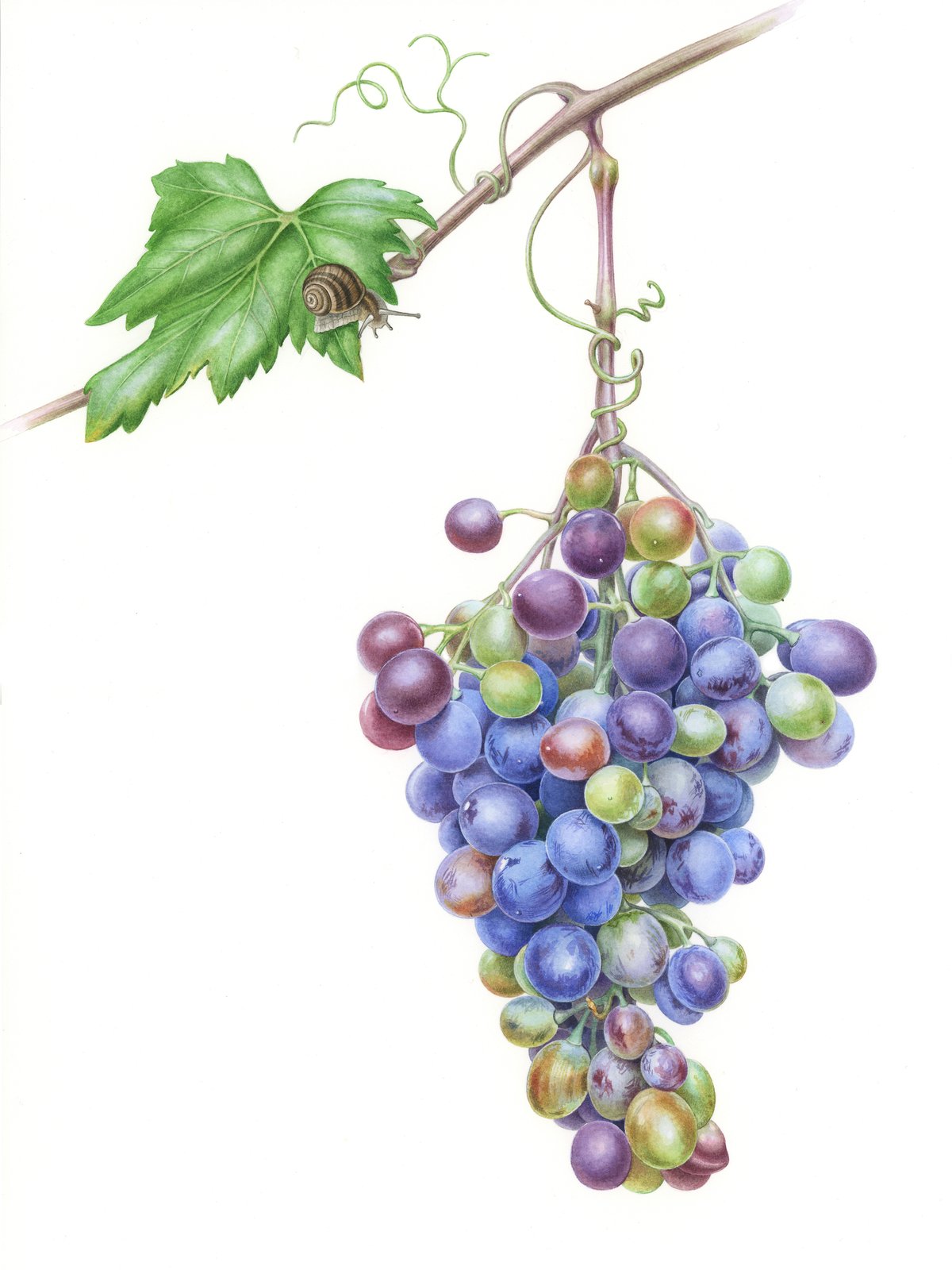
In this lesson you'll learn how to:
- build the shape of the bunch correctly and distribute the berries in space
- convey the convincing spherical volume of individual berries
- choose shades for dark and light berries, from creamy violet to warm pink-purple
- paint realistic highlights, moisture, and reflections on the surface of the berries
- convey the matte, waxy bloom on the berries
- carefully work out the stems and the woody structure of the vine
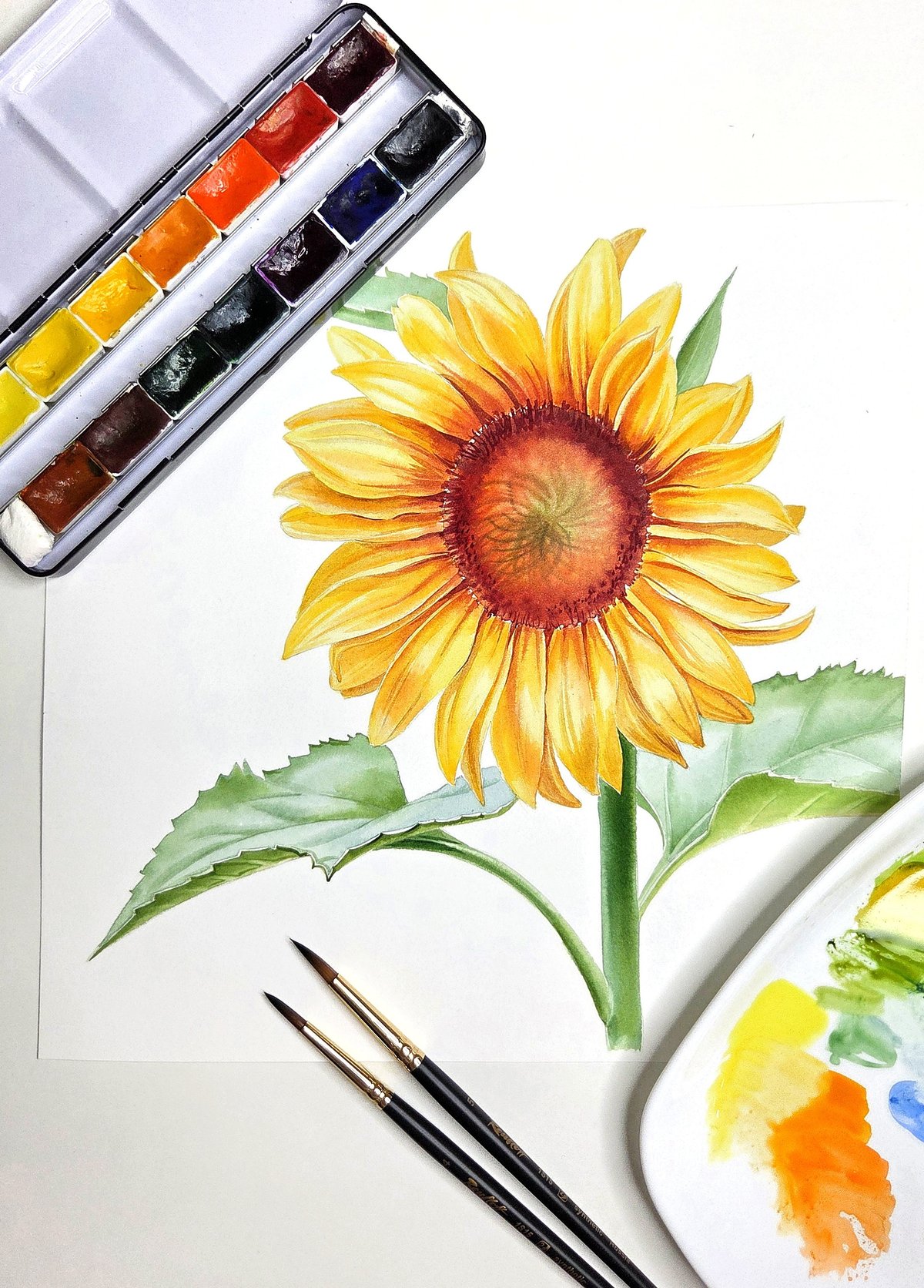
In this lesson you'll learn how to:
- fit the subject harmoniously into the white space of the sheet
- convey the proportions of the sunflower's flower head correctly
- draw the flower with its natural asymmetry and angle in mind
- use warm and cool yellows and oranges to create a sense of depth
- convey the texture and rhythmic structure of the center of the flower head without excessive detail
- paint the leaves and stem, keeping their texture without overloading the work with details
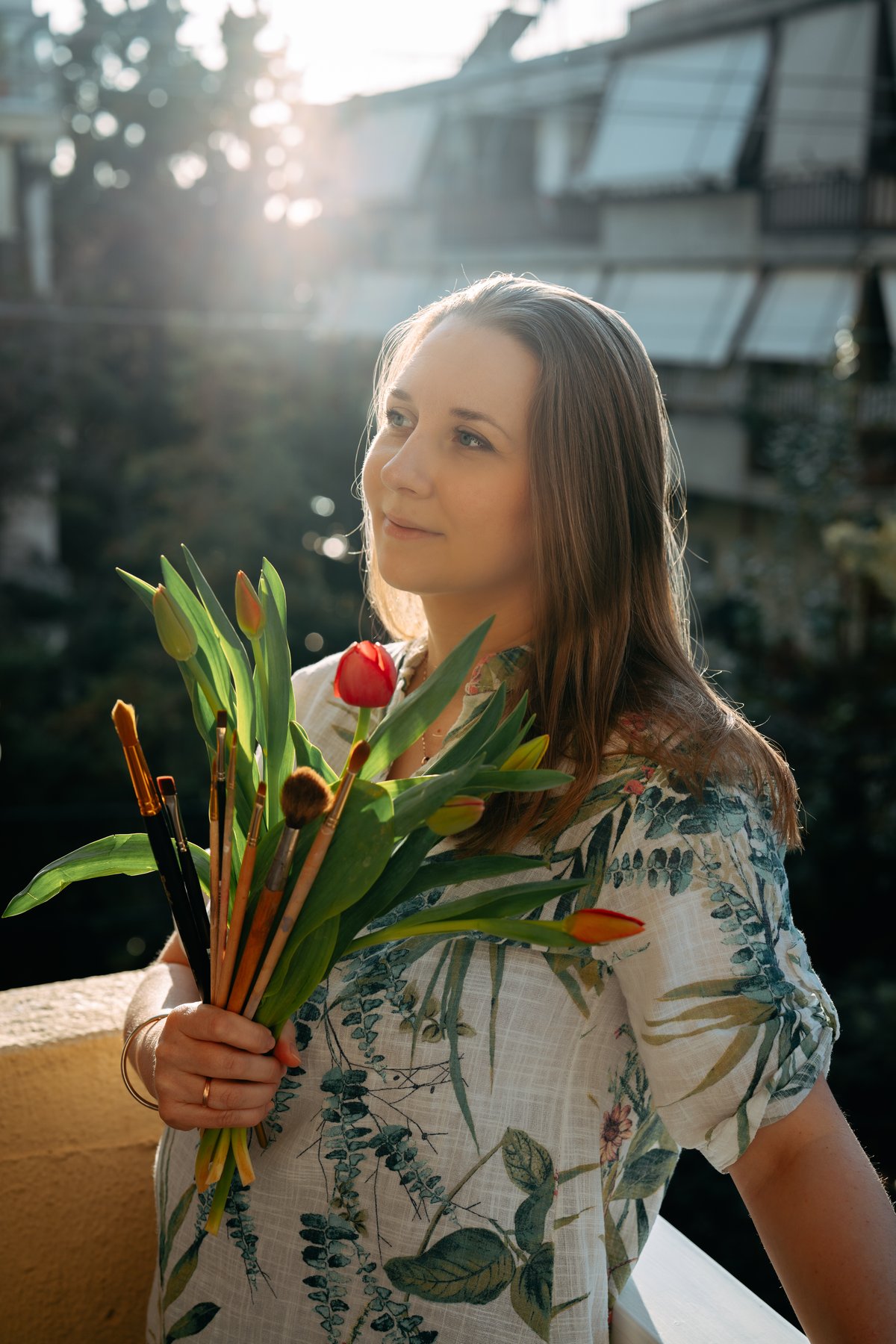
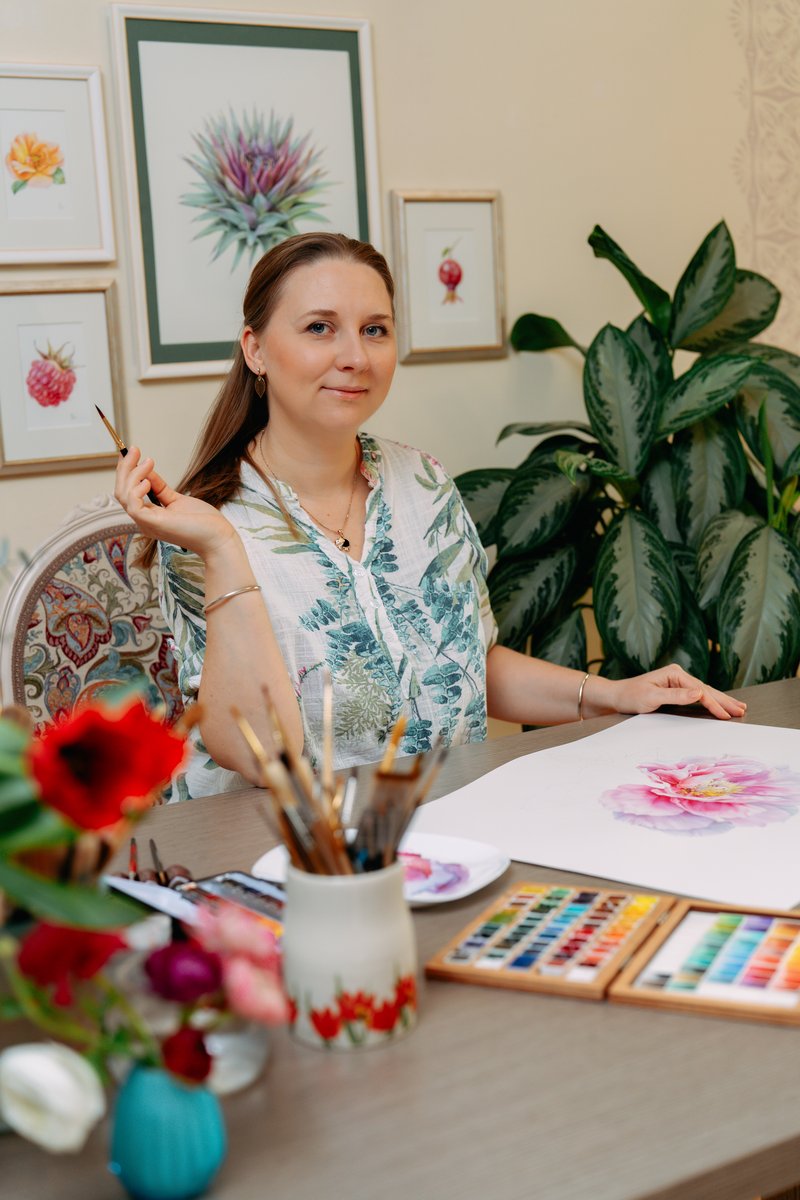
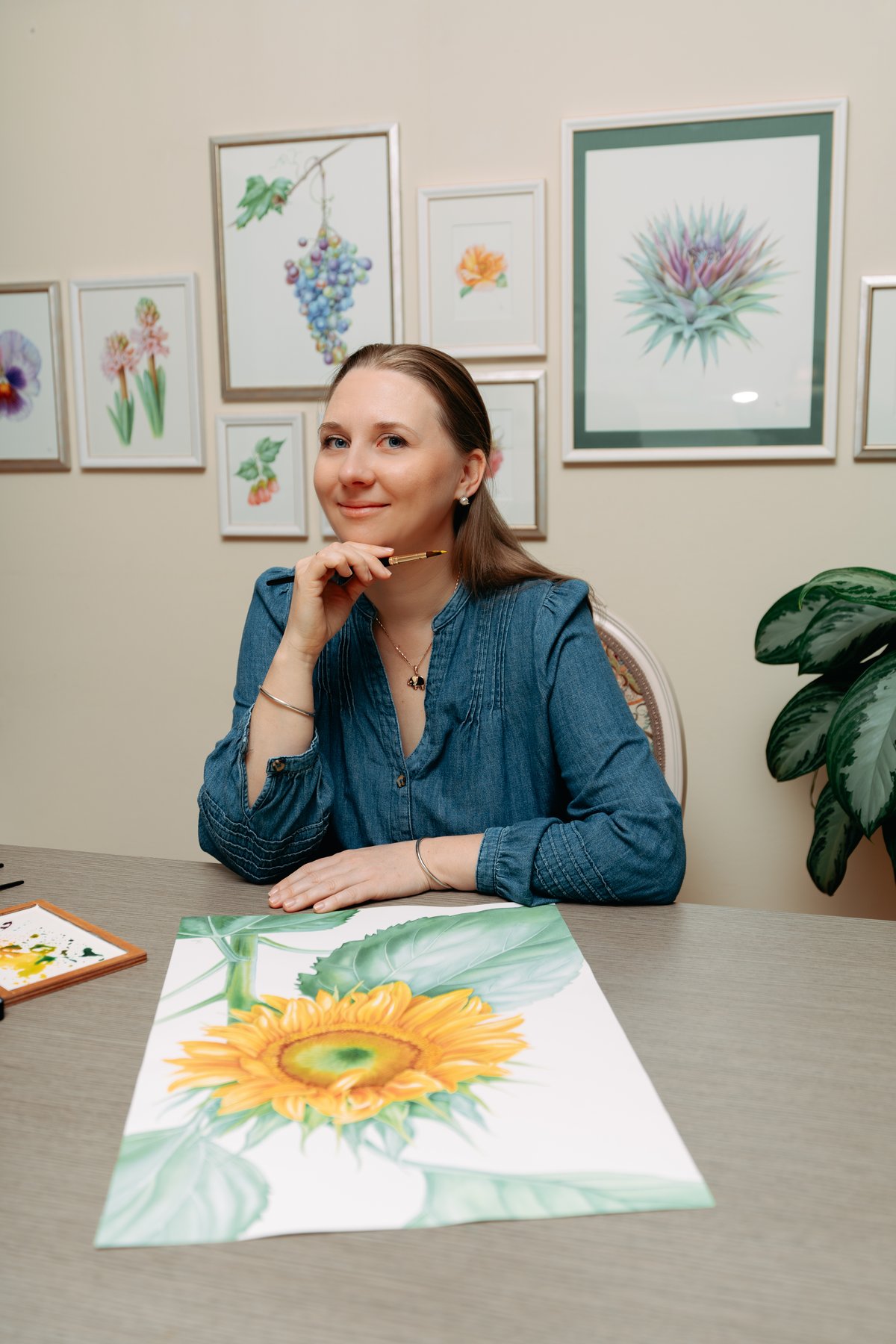
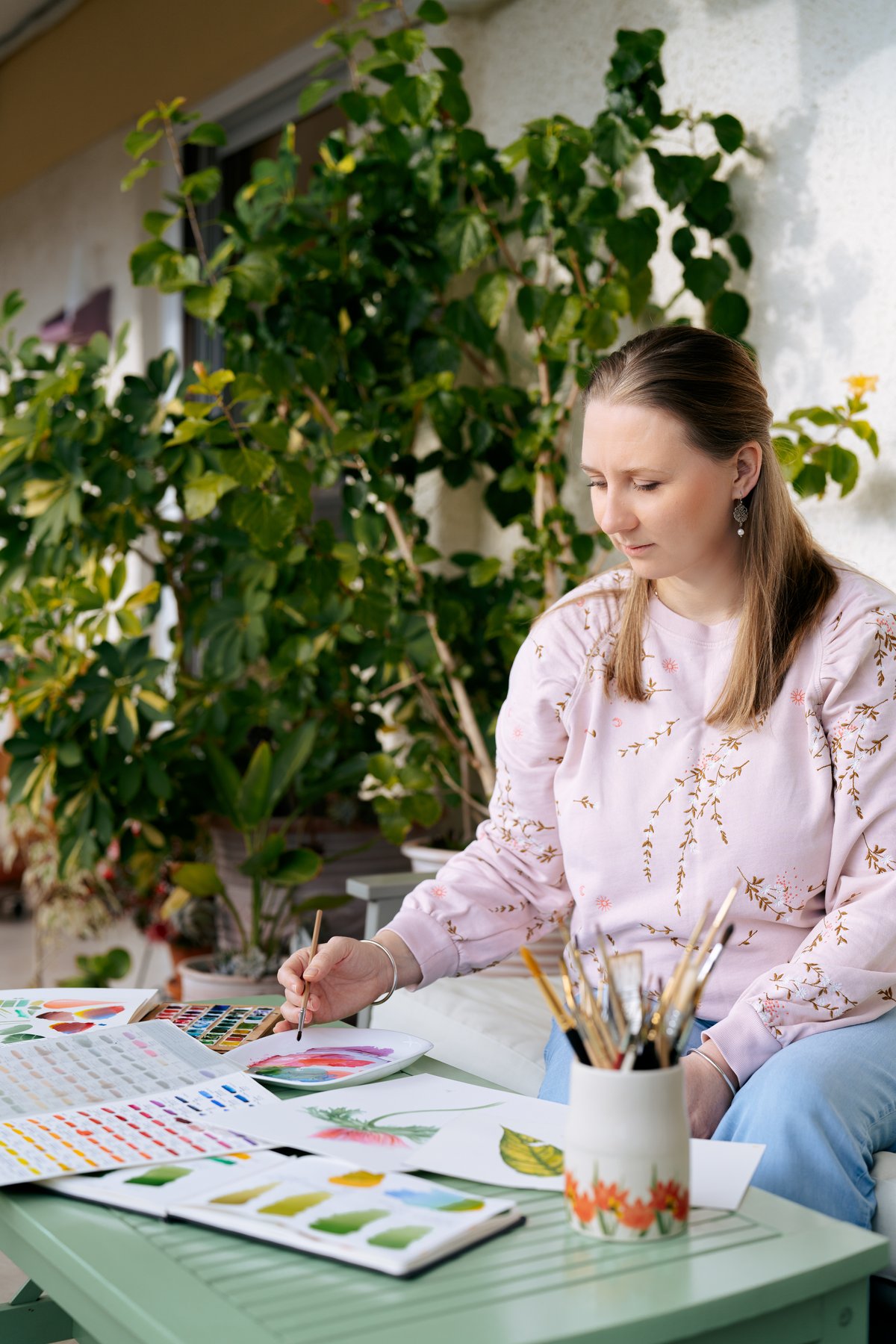
Course instructor
- I've been drawing since childhood and have worked professionally in botanical watercolor since 2019
- Since 2023 I've been teaching online, giving lessons in botanical watercolor
- I took part in the botanical exhibition ANTHOGRAPHIA at the Goulandris Natural History Museum, Kifissia, Athens (Greece)
- Solo exhibition at Palazzo Doria, Cabella Ligure (Italy)
- Member of the Society of Botanical Artists (SBA), the British international professional organization of botanical art
- Graduated from the Stroganov Moscow State Academy of Arts and Industry (Russia) with a master's degree in restoration and conservation of monumental painting
- Worked as a restoration artist (Category II) in the Department of Scientific Restoration and Conservation of Egg Tempera Painting at the Moscow Kremlin Museums (Russia)
- Professional experience working with objects of museum and historical significance
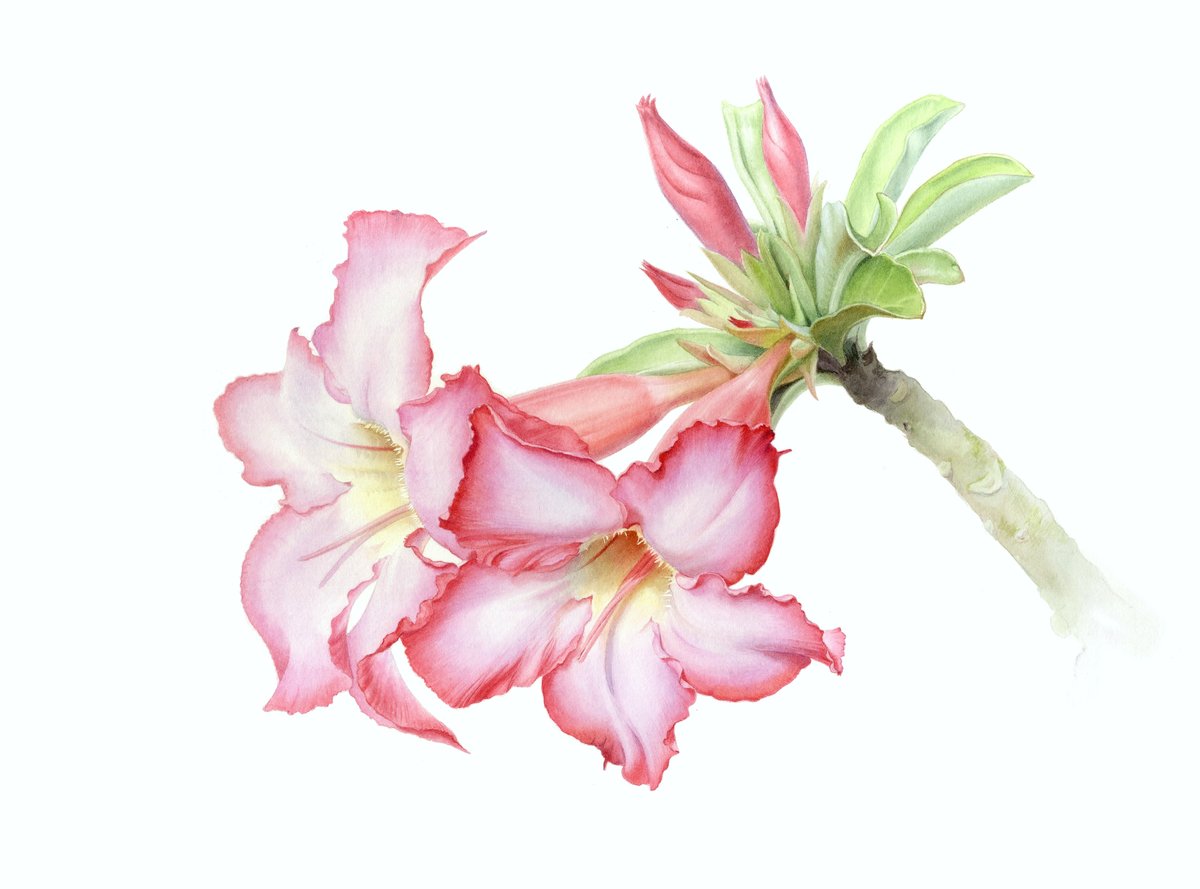
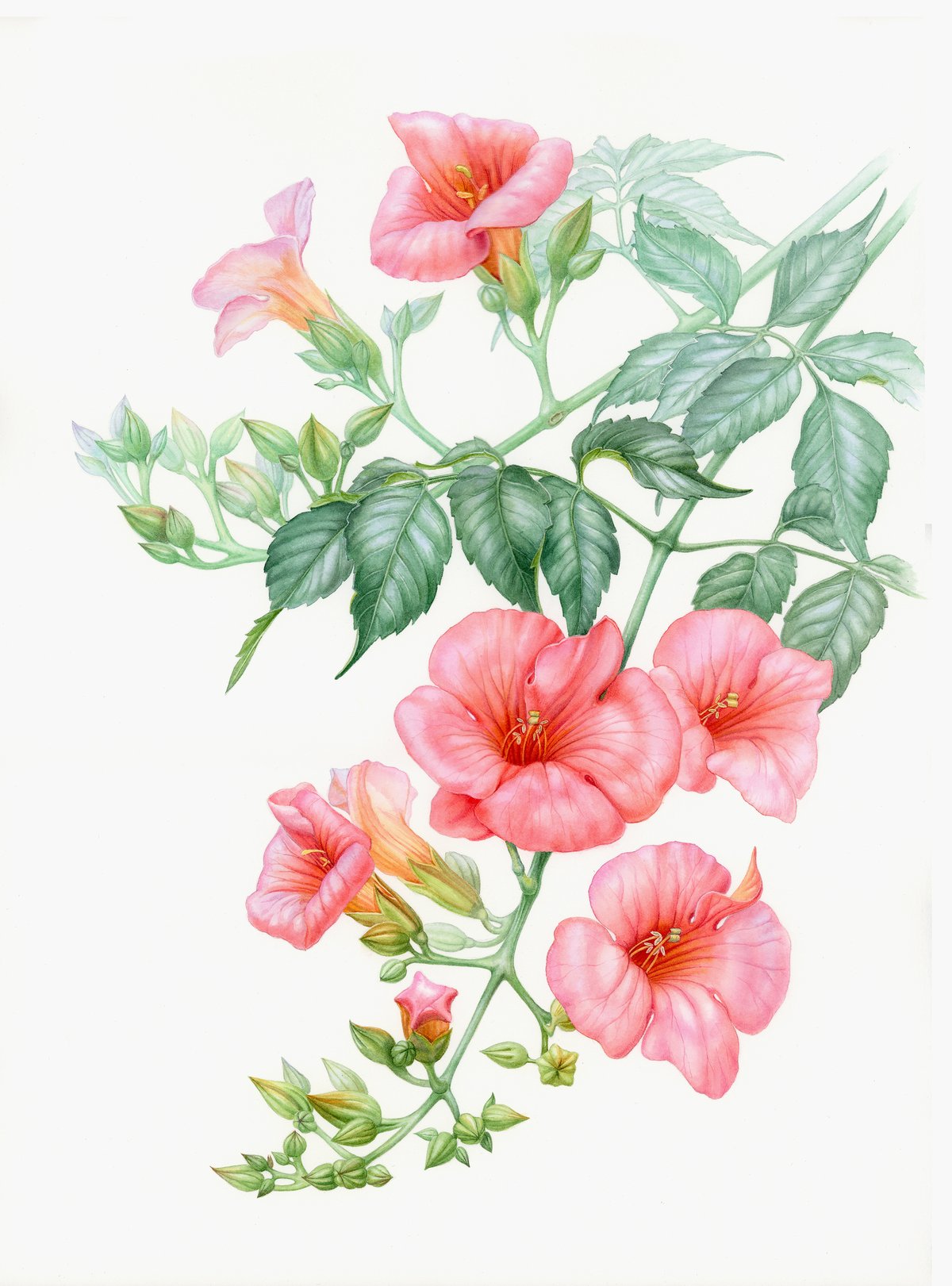
Works by Irina Vastardis
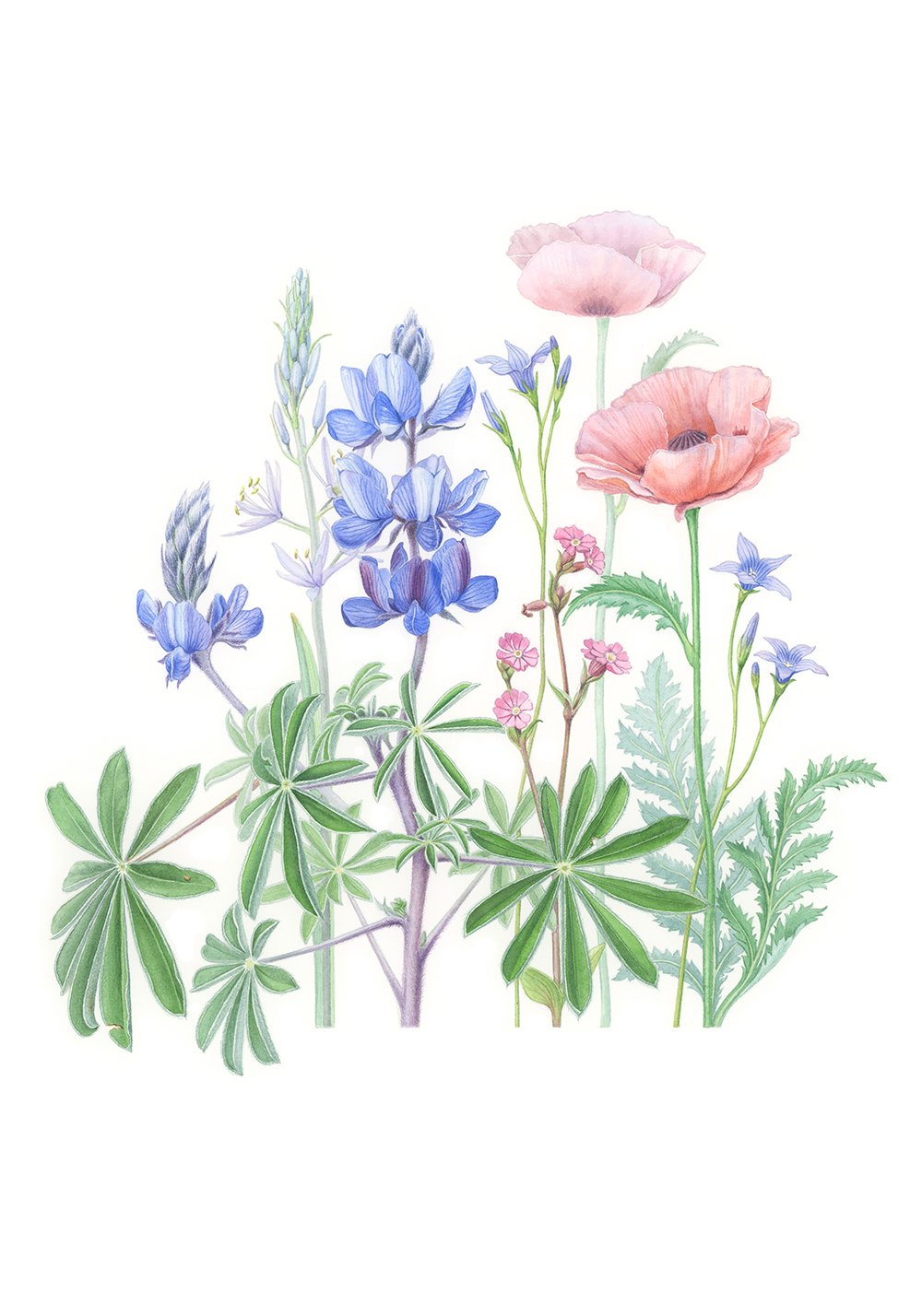
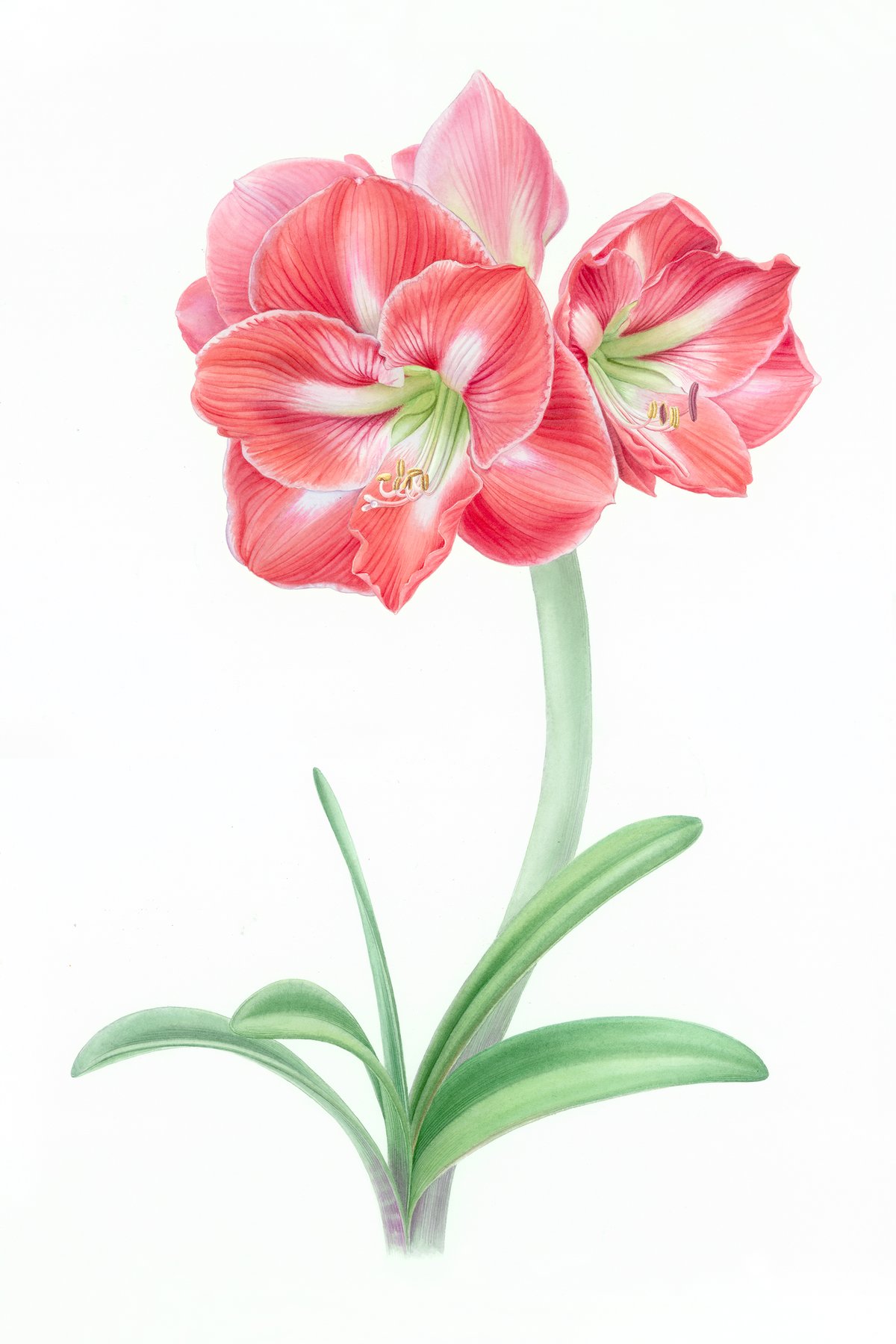
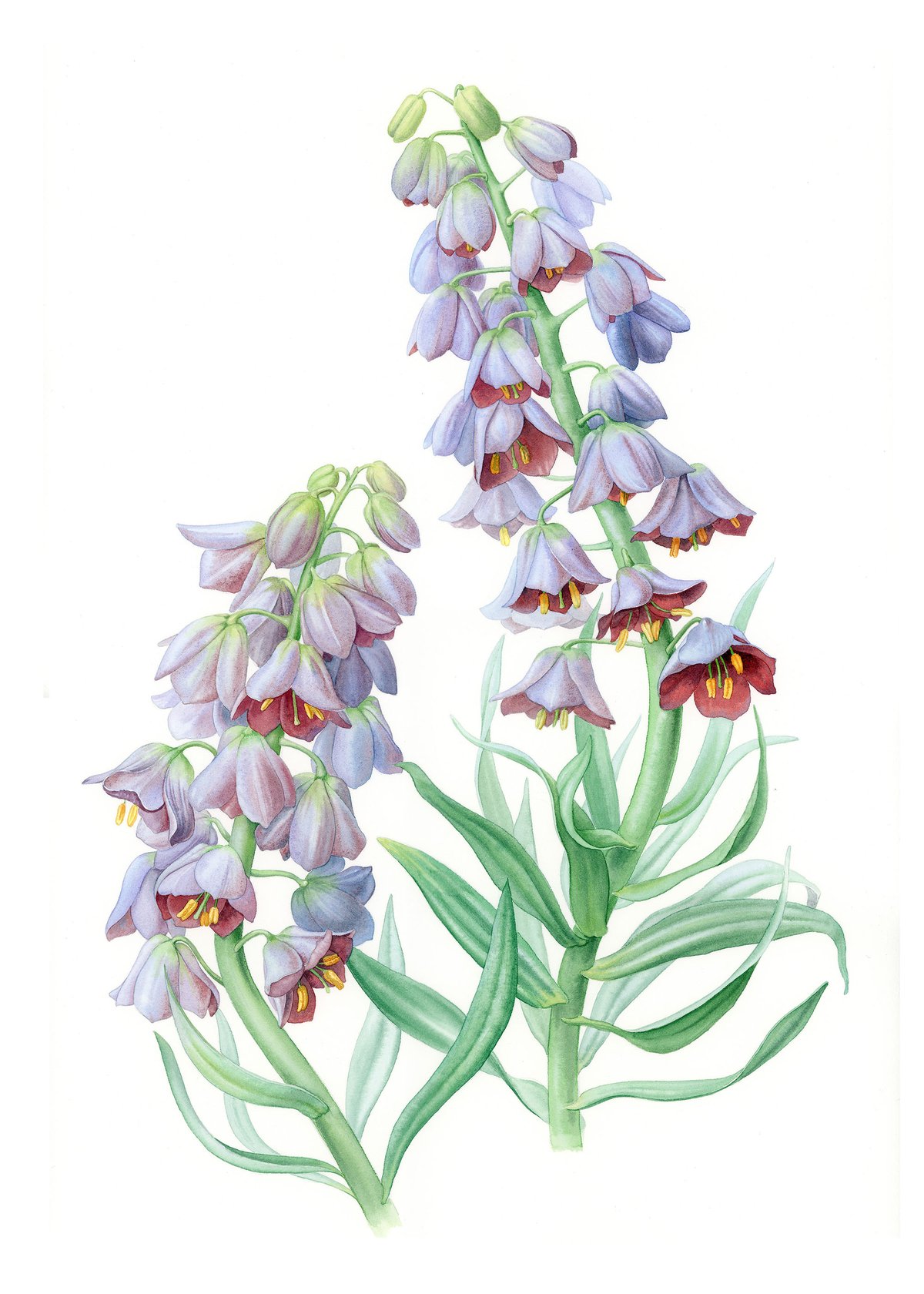
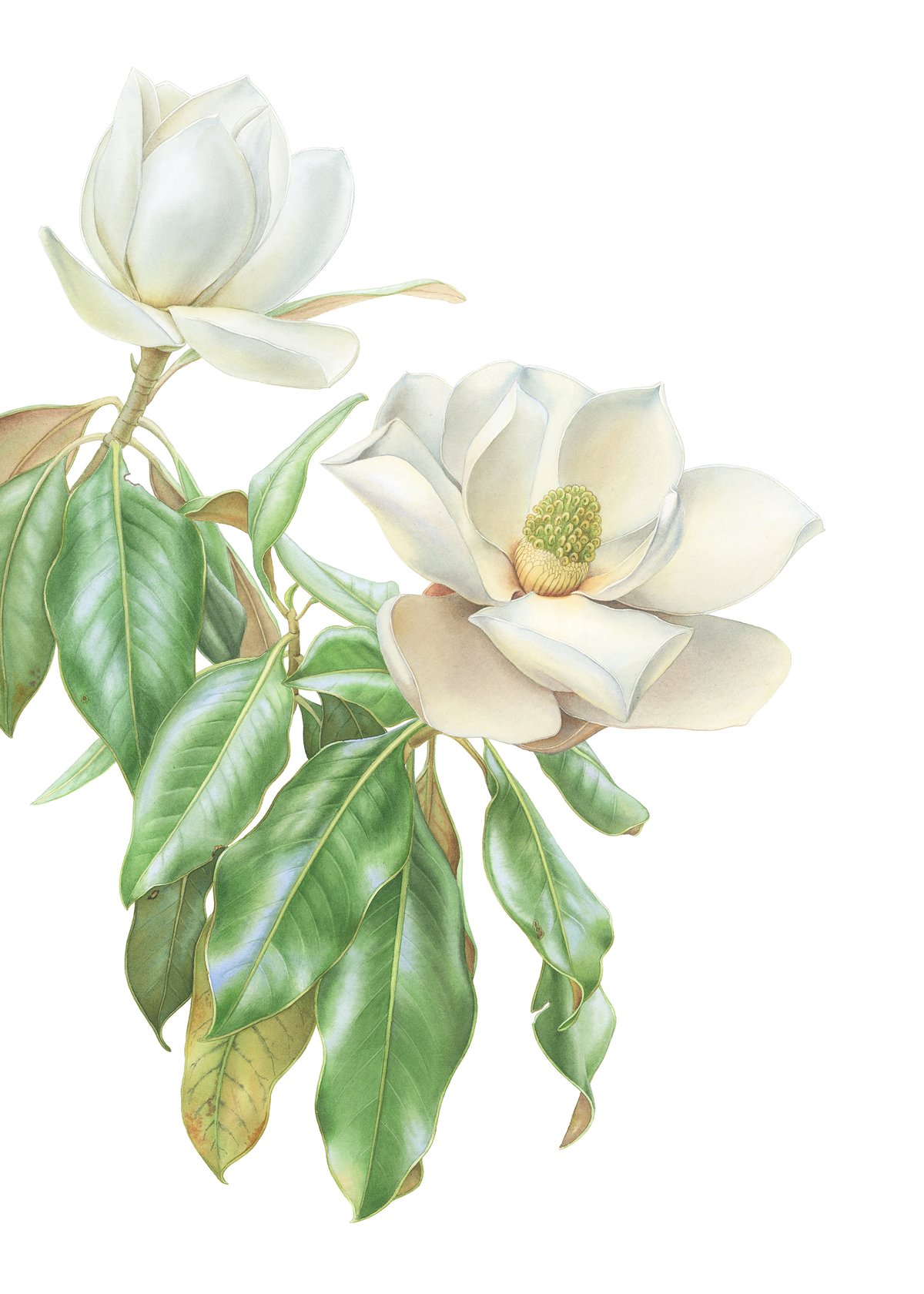
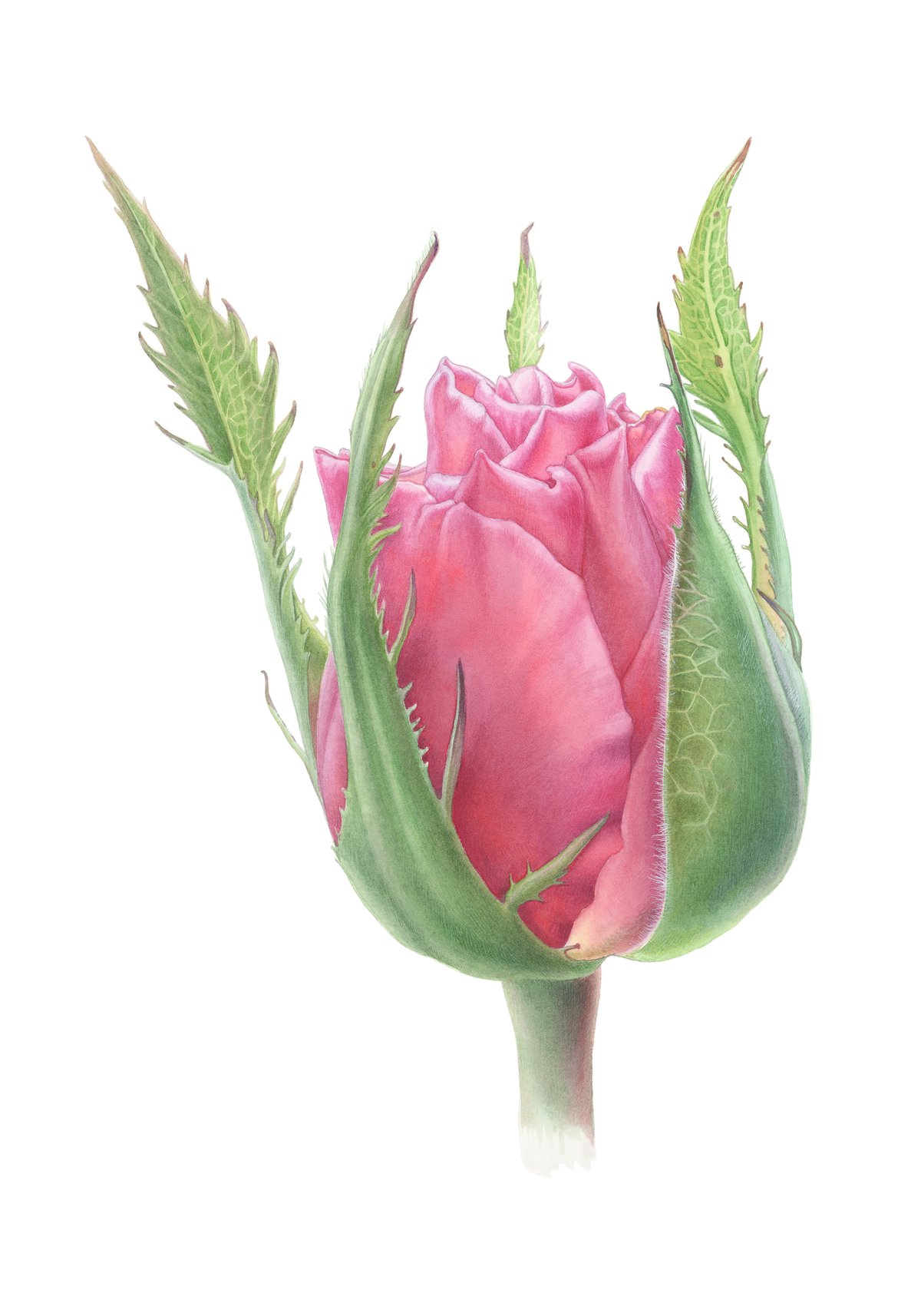
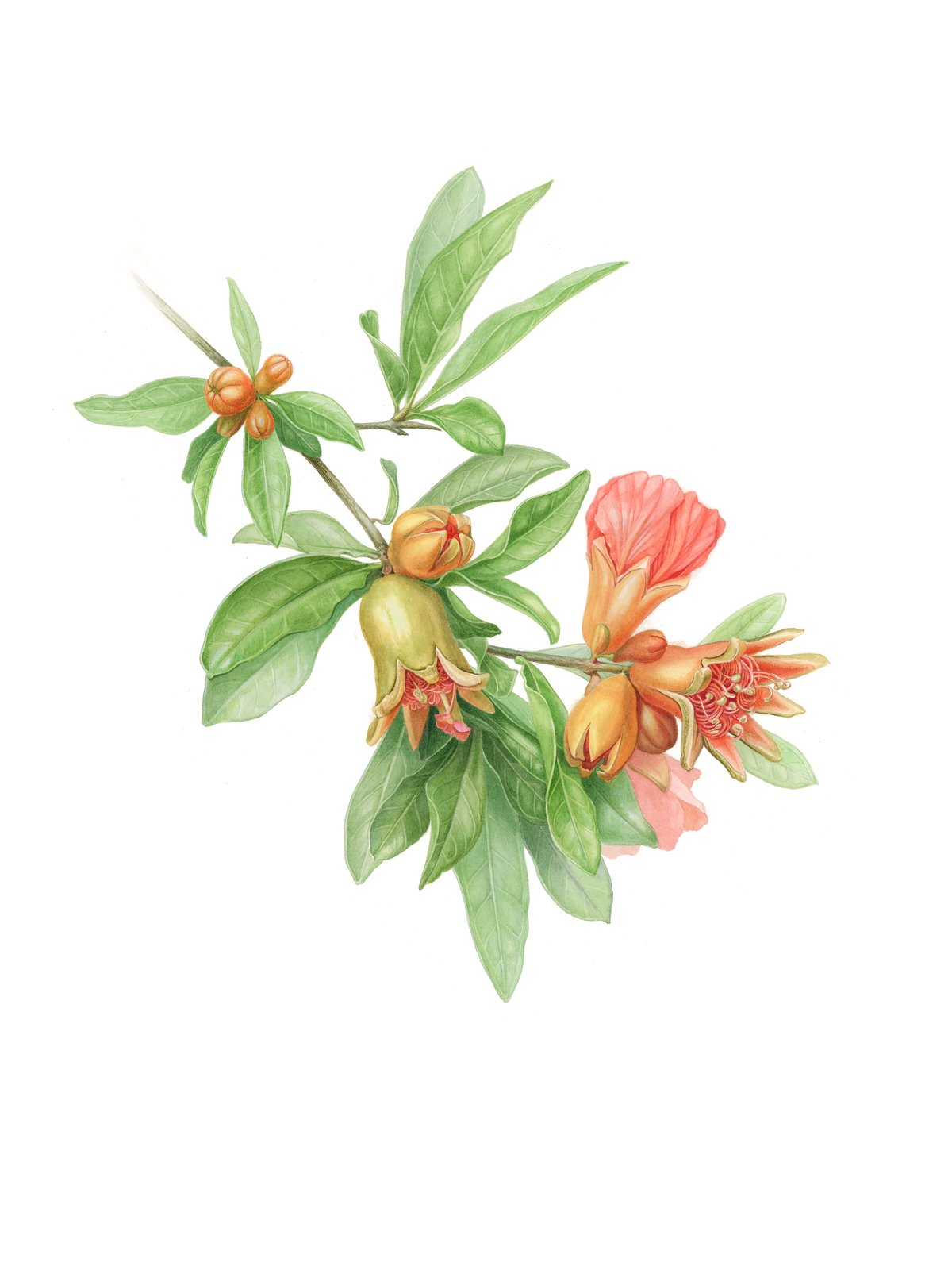
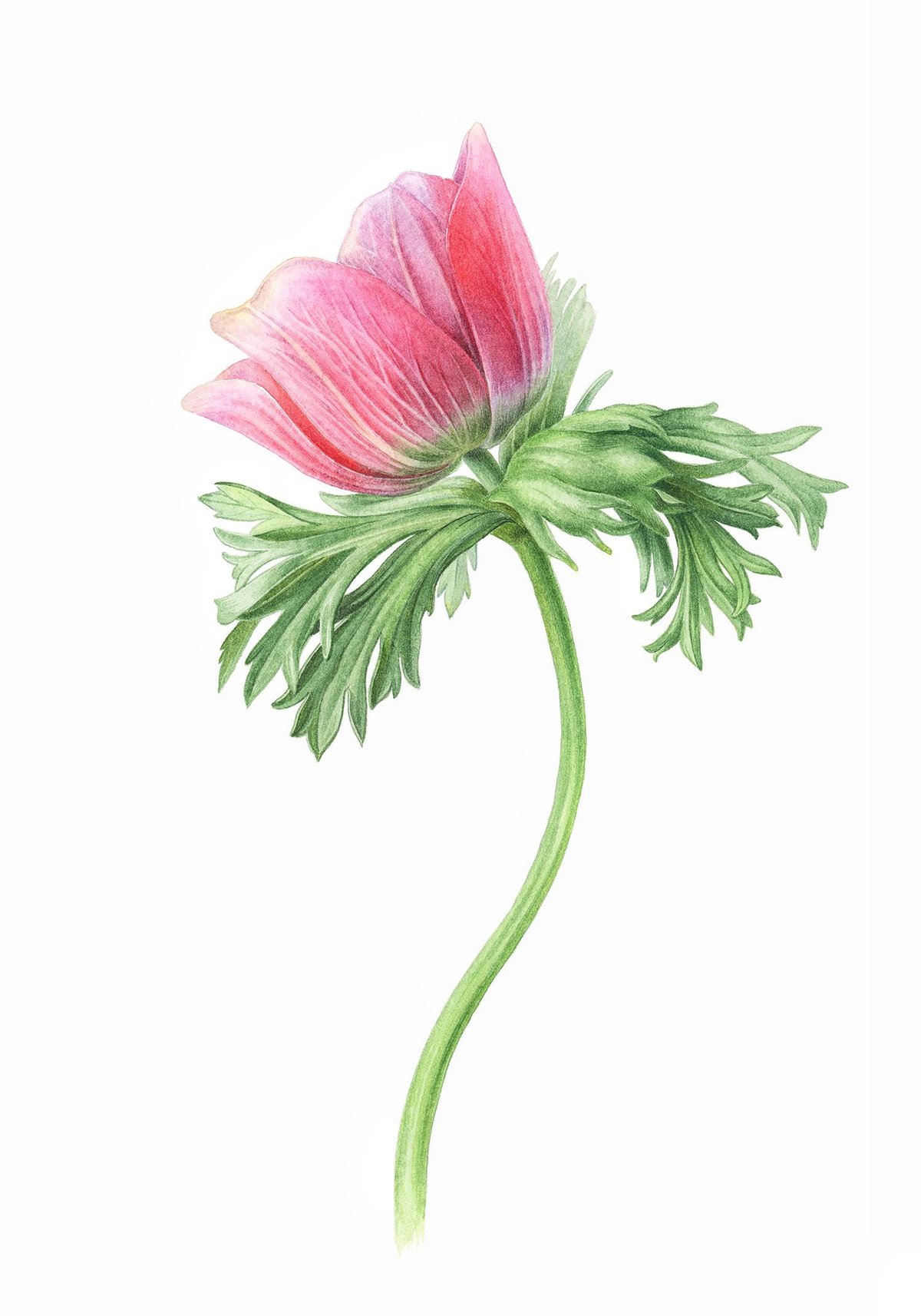
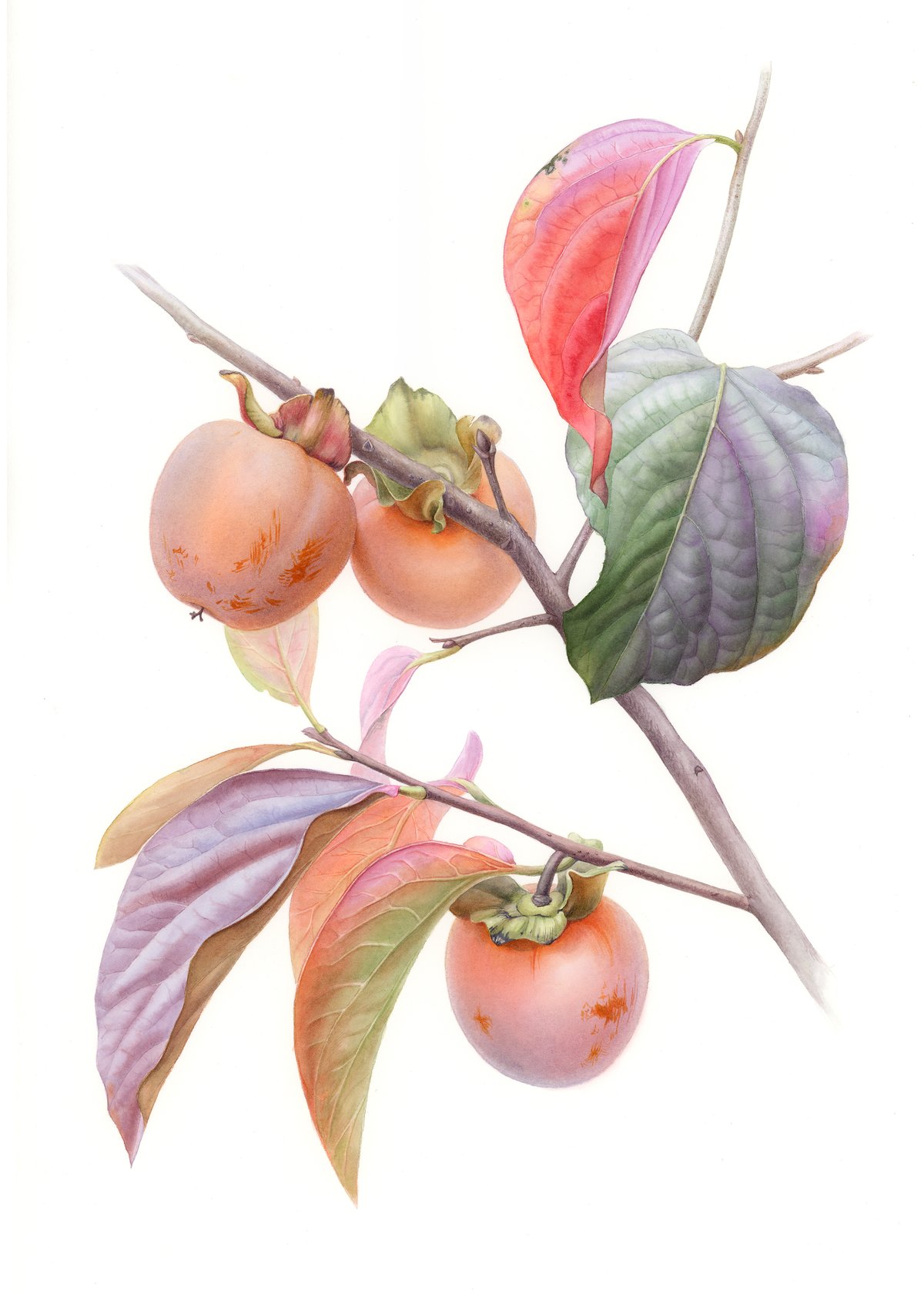
Course materials
Paints
Nevskaya Palitra “White Nights” watercolors:
- Titanium White No. 101
- Aureolin No. 253
- Cadmium Lemon No. 203
- Cadmium Yellow Medium No. 201
- Golden Deep No. 217
- Orange No. 315
- Light Ochre No. 206
- Indian Gold No. 244
- Geranium Red No. 364
- Ruby No. 323
- Carmine No. 319
- Venice Purple No. 365
- Quinacridone Rose No. 324
- Quinacridone Lilac No. 609
- Quinacridone Violet No. 621
- Bright Blue No. 509
- Ultramarine No. 511
- Indigo No. 516
- Payne's Gray No. 812
- May Green No. 745
- Sap Green No. 716
- Green No. 725
- Burnt Umber No. 408
- Lamp Black No. 801
Brushes
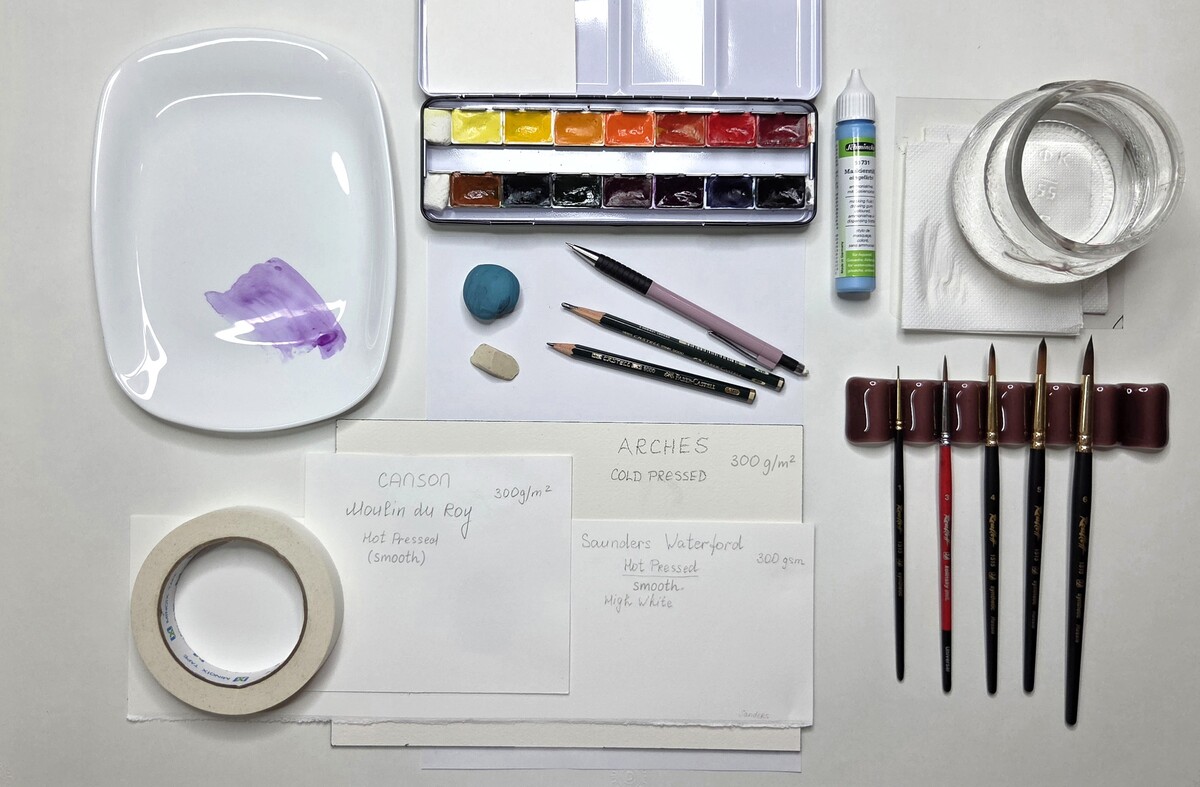
- Roubloff brushes (made in Russia): synthetic sable, round, Nos. 1, 3, 4, 5, 6
Paper
100% cotton paper, 300 gsm (140 lb). Sizes: 30×30 cm (12×12 in), 21×30 cm (8×12 in), 15×30 cm (6×12 in)
- Saunders Waterford 300 gsm (140 lb) Hot Pressed (smooth)
- Canson Moulin du Roy 300 gsm (140 lb) Hot Pressed (smooth)
- Arches 300 gsm (140 lb) Cold Pressed (medium texture)
- Plain paper for rough sketches (lightweight)
Additional
- White ceramic palette (a plain white plate works too)
- Masking tape (for attaching one sheet of paper to another when transferring the drawing to the final sheet)
- Thin or mechanical pencil; soft pencil (6–8B); eraser; kneaded eraser
- Glass of water; white paper towels
- Masking fluid (the “Azalea” lesson uses Schmincke masking fluid)
Choose your plan
- 8 botanical subjects: flowers, leaves, and natural forms
- 13 lessons covering theory, practice, and practical painting tips
- Machine translated subtitles: English, German, French, Italian, Spanish, Greek, Polish, Portuguese, Hungarian, Chinese, Indonesian
- «Course Unfreeze» - the chance to start learning at a convenient time
- The opportunity to watch artworks analysis of other participants
- Lifetime access to course materials
- Review of your work and answers to your questions in the comments for 60 days from the moment you start the course
- Personal one-hour online consultation with the course expert
- +20 bonus dollars! Can be used when purchasing a course at the next marathon. Valid for 3 months
Frequently asked questions
Of course! Anyone can learn to draw! It's simply a skill that develops with practice. Our course is built from simple to complex so that anyone can complete it, even with no experience at all. By practicing as you create the paintings in the course, you'll gradually build your skills and learn to draw.
At the end of the lesson, you'll upload a photo of your work. The instructor will be able to leave a text comment, a graphic comment (notes drawn directly on your painting), or an audio comment.
At the bottom of the final lesson there will be a comments section where you can ask any questions about the course.
If you're on a plan without feedback, it all depends on your own personal pace as you go through the lessons.
For plans with feedback, we actively go through lessons within two months from the moment you "unfreeze" the course.
In general, I recommend taking the course at a relaxed pace — enjoy the process as much as possible.
Yes, this course will be useful for beginners and for those who already paint.
It's never too late to learn to paint. In our school, 30% of students are over 50. They paint with joy, develop their skills and creative thinking — and feel younger in spirit and mind!
