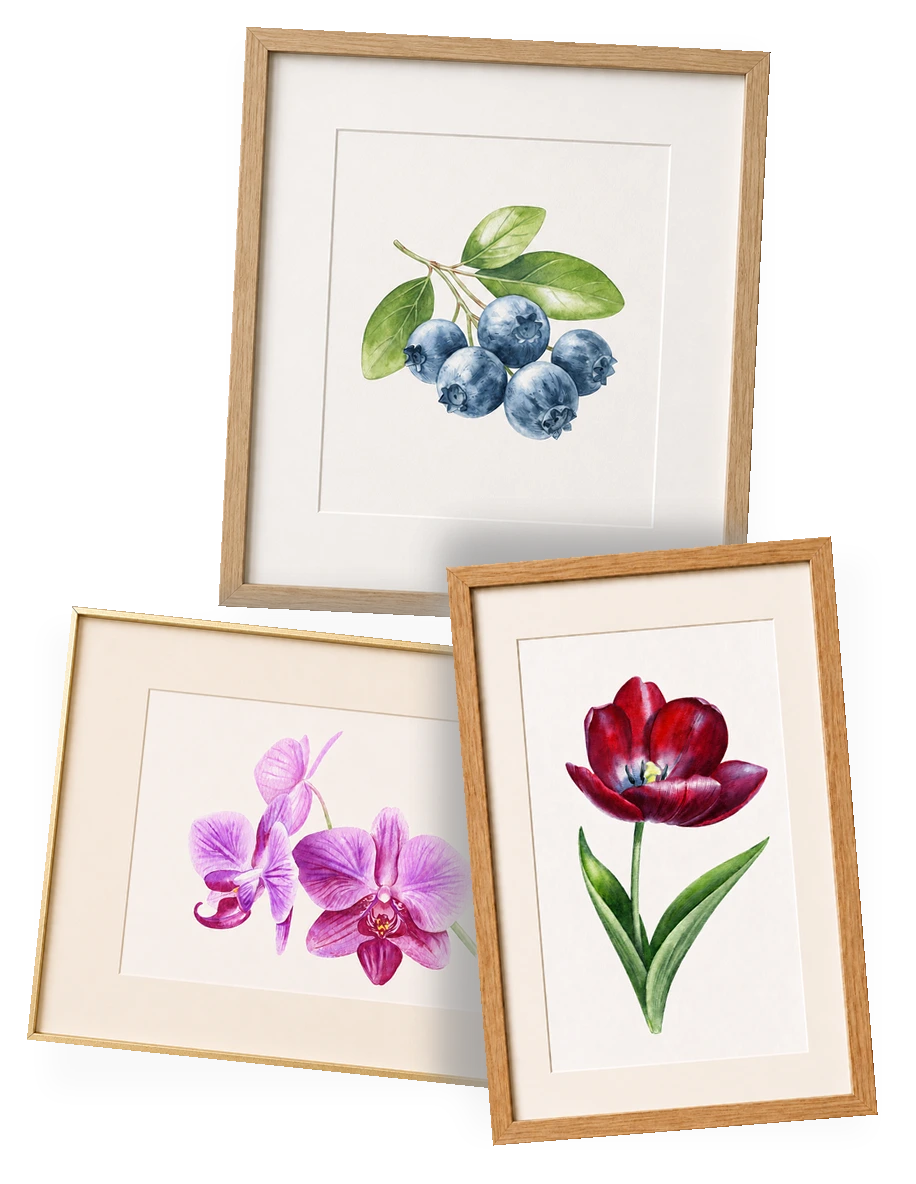
Interior Botanicals a course with Alla Lanskaya
- Create 8 elegant botanical pieces for your own home
- Learn how to turn botanical subjects into stylish interior decor
- Capture the textures of petals, leaves, and berries in fine detail
What the course is about
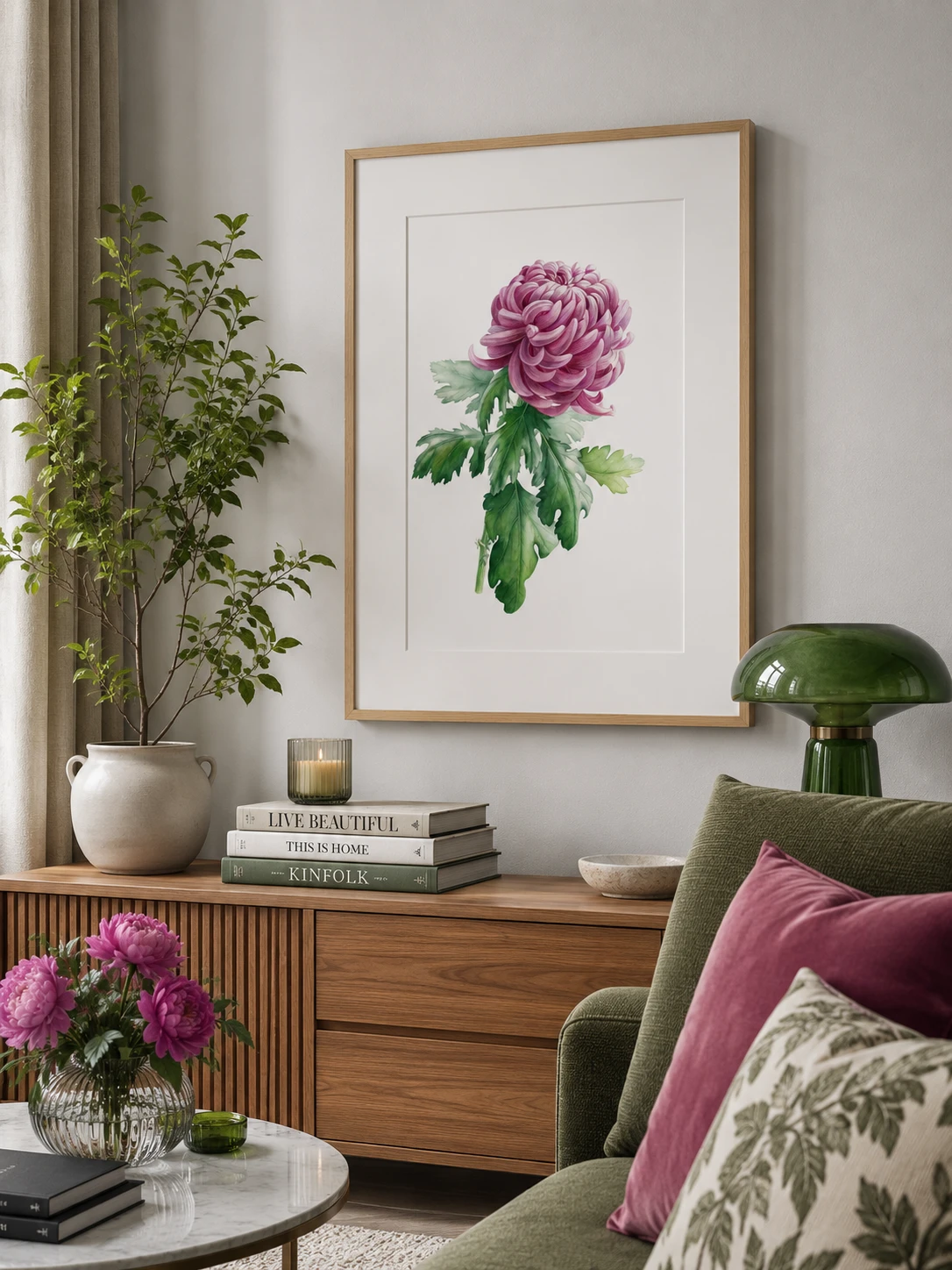
This course is all about creating botanical paintings for your home and turning a watercolor piece into a standout element of your space. We won't just paint plants, leaves, and flowers — we'll learn to see a subject as a future interior piece that will sit beautifully in a living room, a studio, or any other space.
Lesson by lesson, we'll look at compositional choices: why a particular reference was chosen, how the placement of elements shapes the way a painting is read, and what makes a piece feel cohesive, balanced, and pleasing to the eye. We'll pay special attention to how format affects the way a subject is presented, exploring how the same motif plays out in a rectangular, square, round, or oval frame.
We'll put the emphasis on how a painting relates to its interior. You'll learn which subject works best in which format, how to choose a frame to suit your composition, and how to plan a piece ahead of time so it slips easily into a modern space.
Who this course is for
- beginners who want to learn botanical watercolor from scratch and create stylish paintings for the home. Every lesson moves from simple to complex, with techniques and stages shown in detail and in sequence;
- experienced artists and illustrators who want to go deeper into the botanical genre and pick up professional nuances, signature techniques, and tricks for working with composition, light, and detail;
- anyone who dreams of creating more than just watercolor studies — full-fledged interior paintings that sit harmoniously in a space;
- those who want to learn how to choose the format, composition, and presentation of a piece: which frame suits a subject, how a painting will look on the wall, and how to make a piece look finished and modern.
Course Program
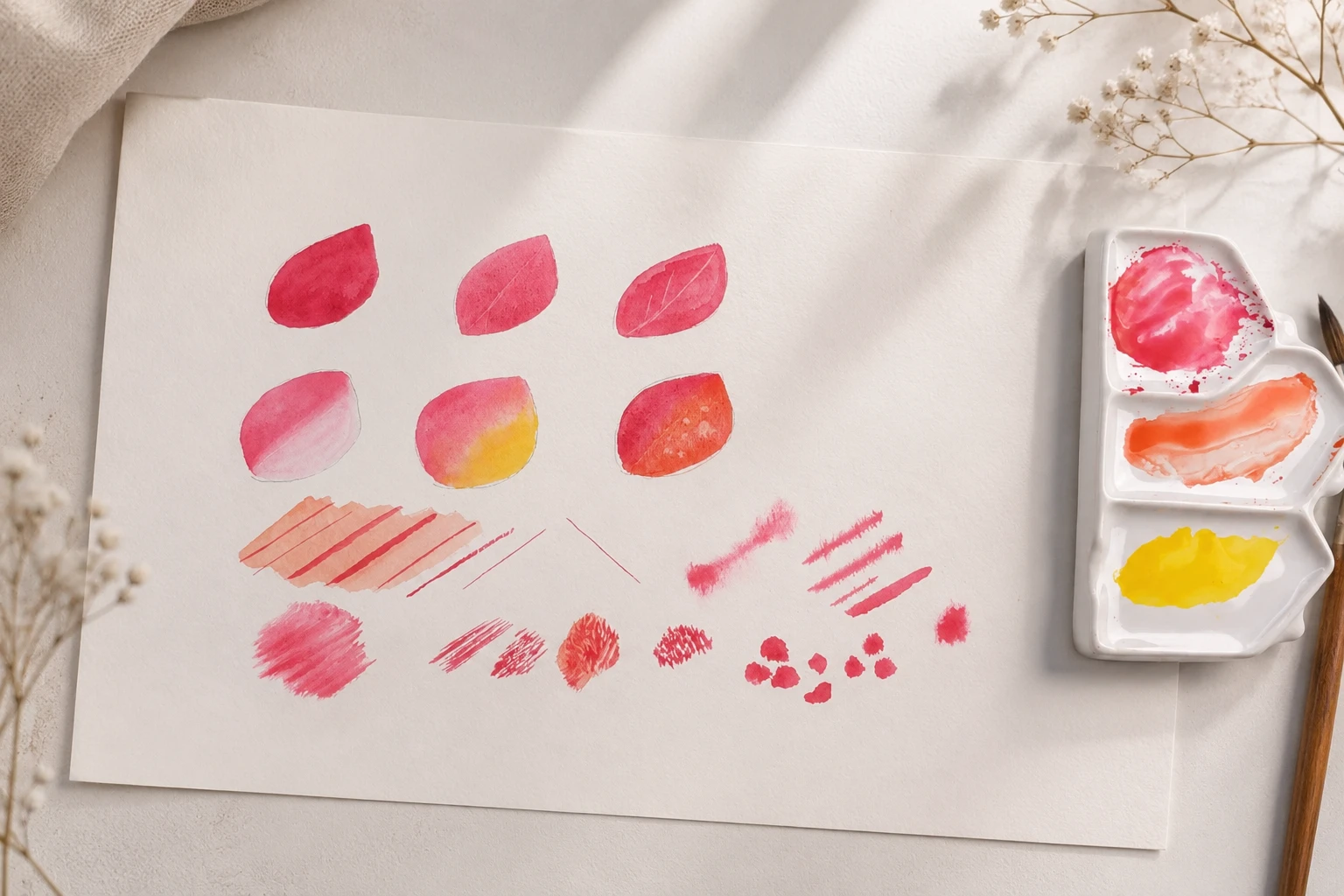
In this lesson we'll learn to:
- work in wet-on-wet and wet-on-dry techniques;
- create gradient washes;
- use glazing to build depth of color;
- work with hatching and stippling;
- control water and the transparency of watercolor.
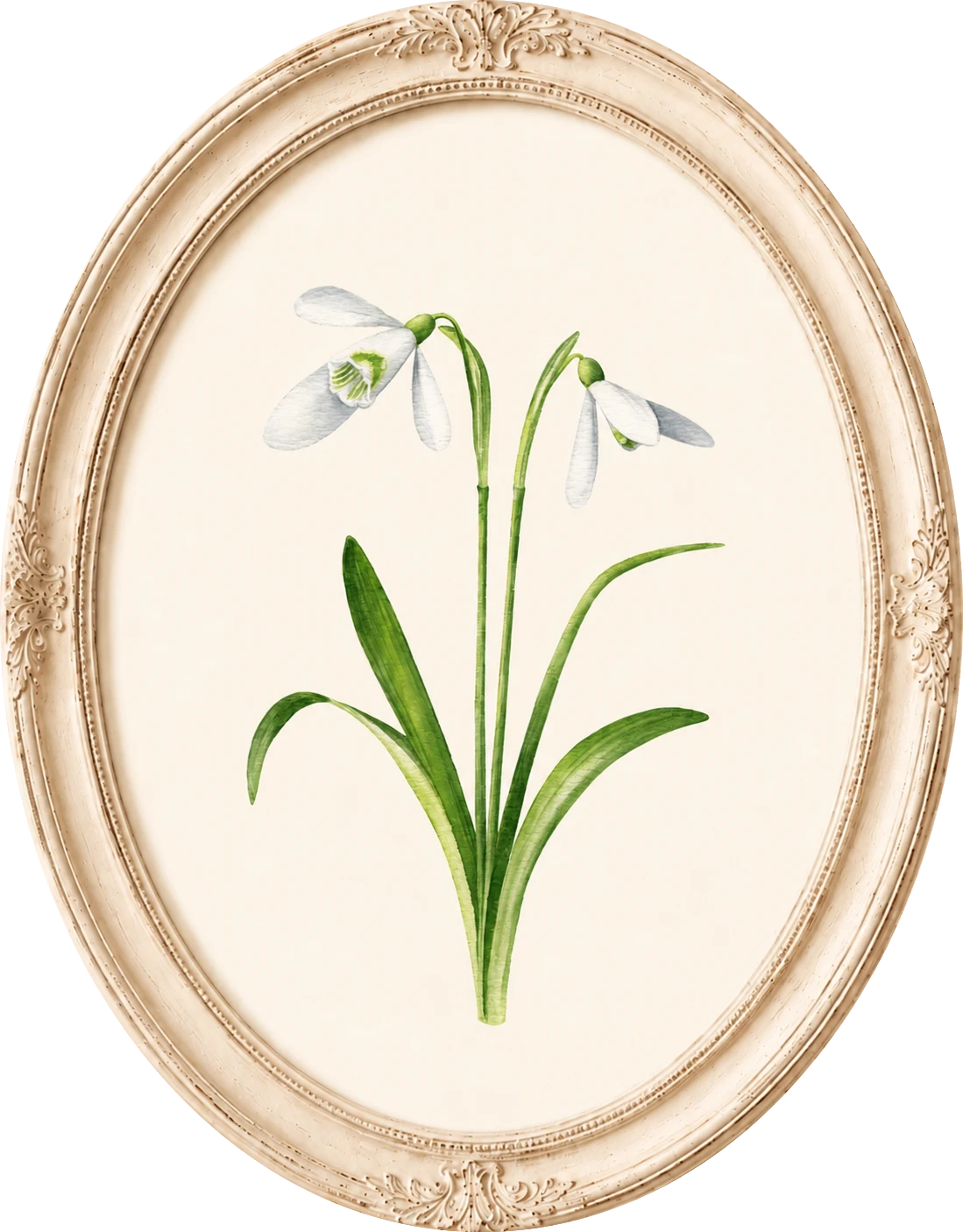
In this lesson we:
- will break down the structure of the snowdrop's flowers and leaves;
- will make a tonal sketch and discuss how tone helps convey the volume of a plant;
- will choose shades for a harmonious painting;
- will learn to paint white flowers and green leaves in watercolor.
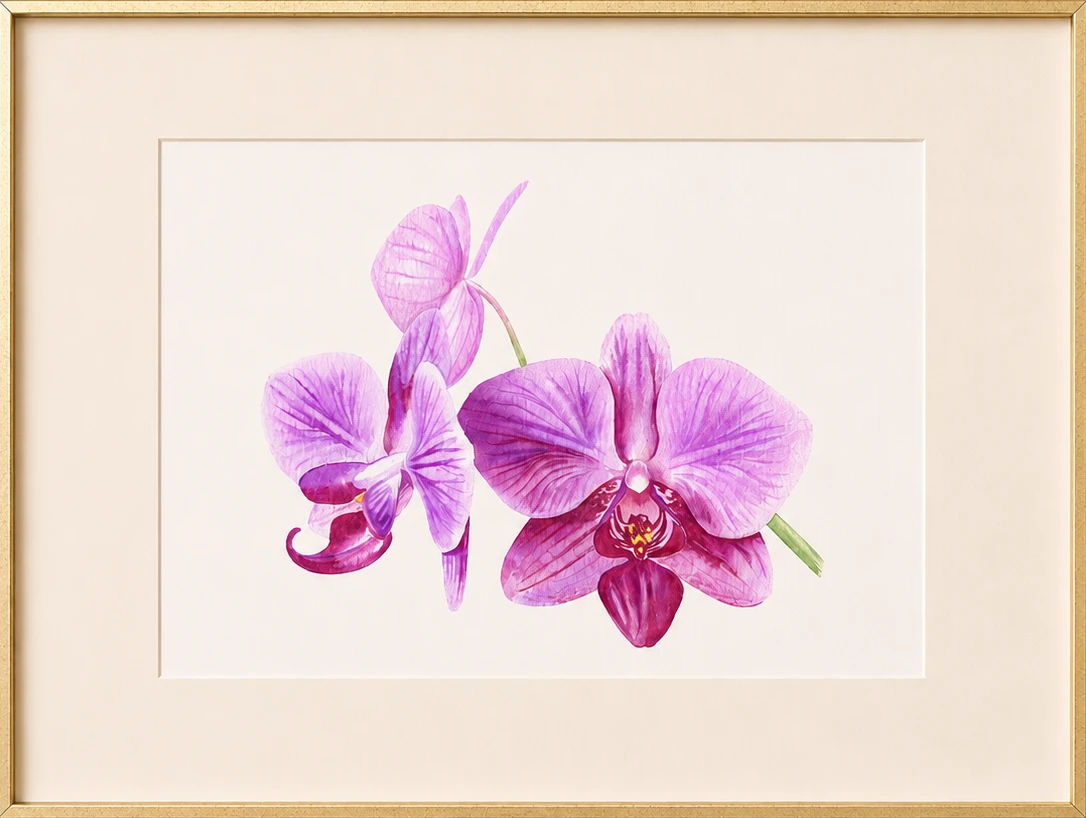
In this lesson we:
- will break down the structure of orchid flowers;
- will do a tonal analysis of the subject;
- will choose the right shades for the painting;
- will learn to create the characteristic pattern on the petals;
- will discuss how to convey the volume and form of complex flowers.
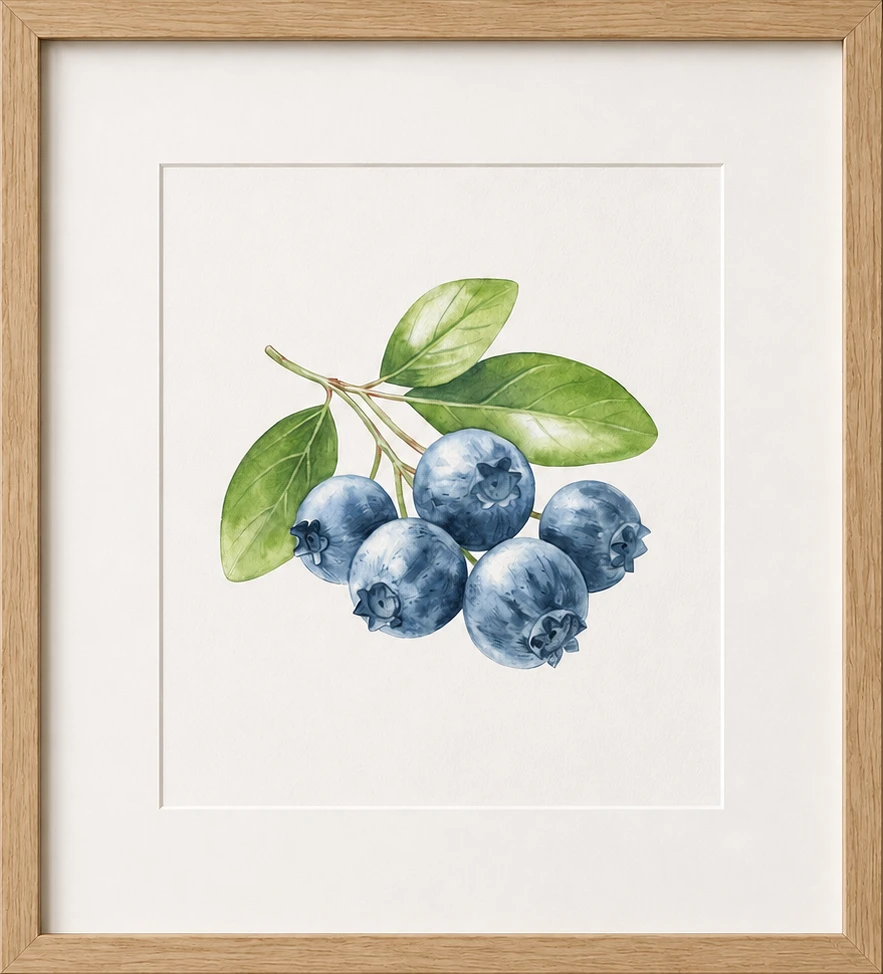
In this lesson we:
- will sketch the structure of the berries and leaves in pencil;
- will do a tonal analysis of the subject;
- will choose the right shades for the painting;
- will learn to convey the matte surface of the berries with their light bloom;
- will paint the leaves and discuss how to draw the veins.
In this lesson we:
- will go over the core principles of composition in botanical painting;
- will discuss how compositional techniques are used in the course subjects;
- will look at the more complex compositions you can build from flowers and berries you already know;
- will talk about framing your work and choosing frames;
- will find out when to use a mat and when it's better to skip it;
- will see how to flatten a watercolor painting before framing.
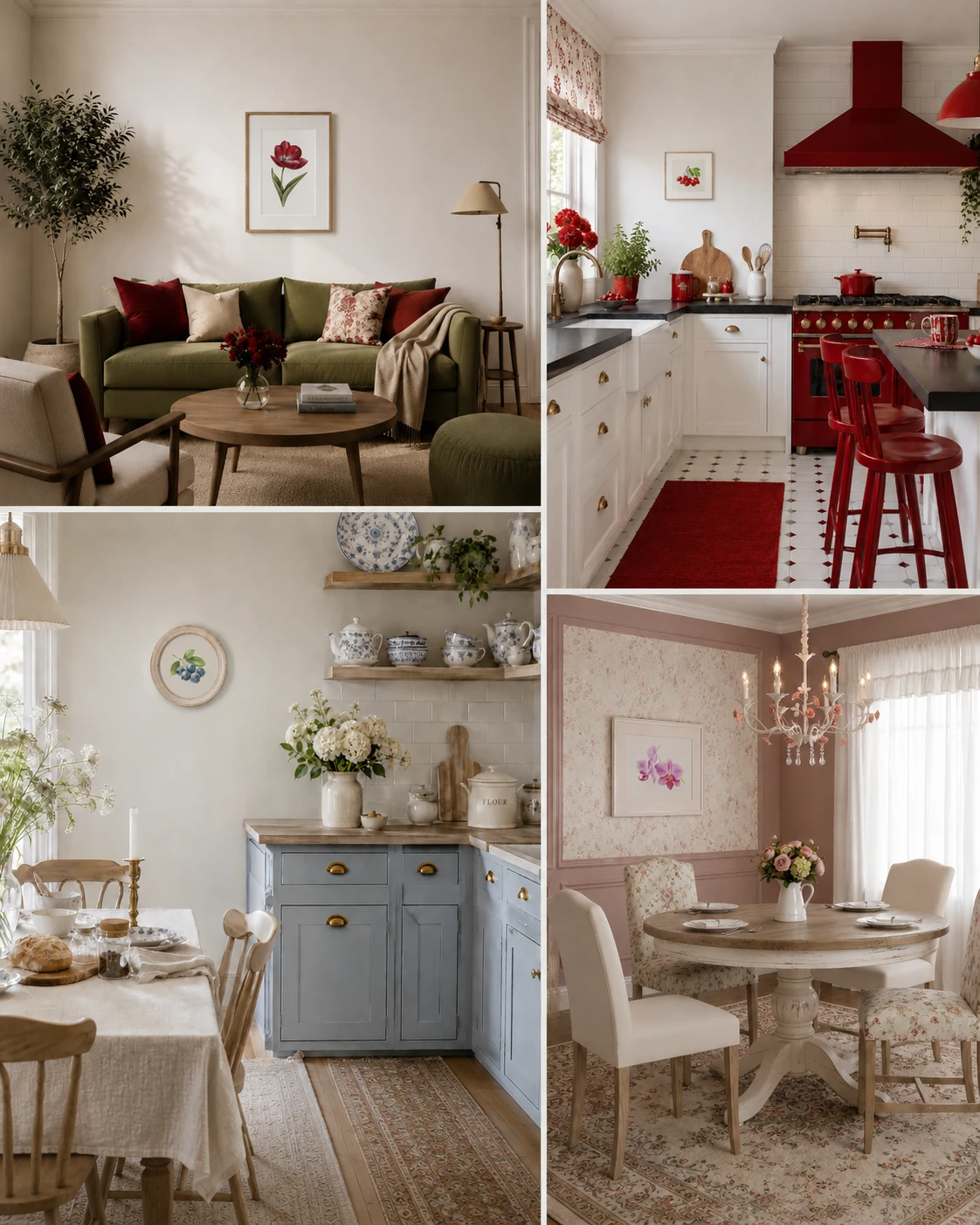
In this lesson we:
- will discuss which subjects and color combinations suit different interior styles;
- will look at examples of how botanical paintings can be placed in a space;
- will talk about creating series of paintings;
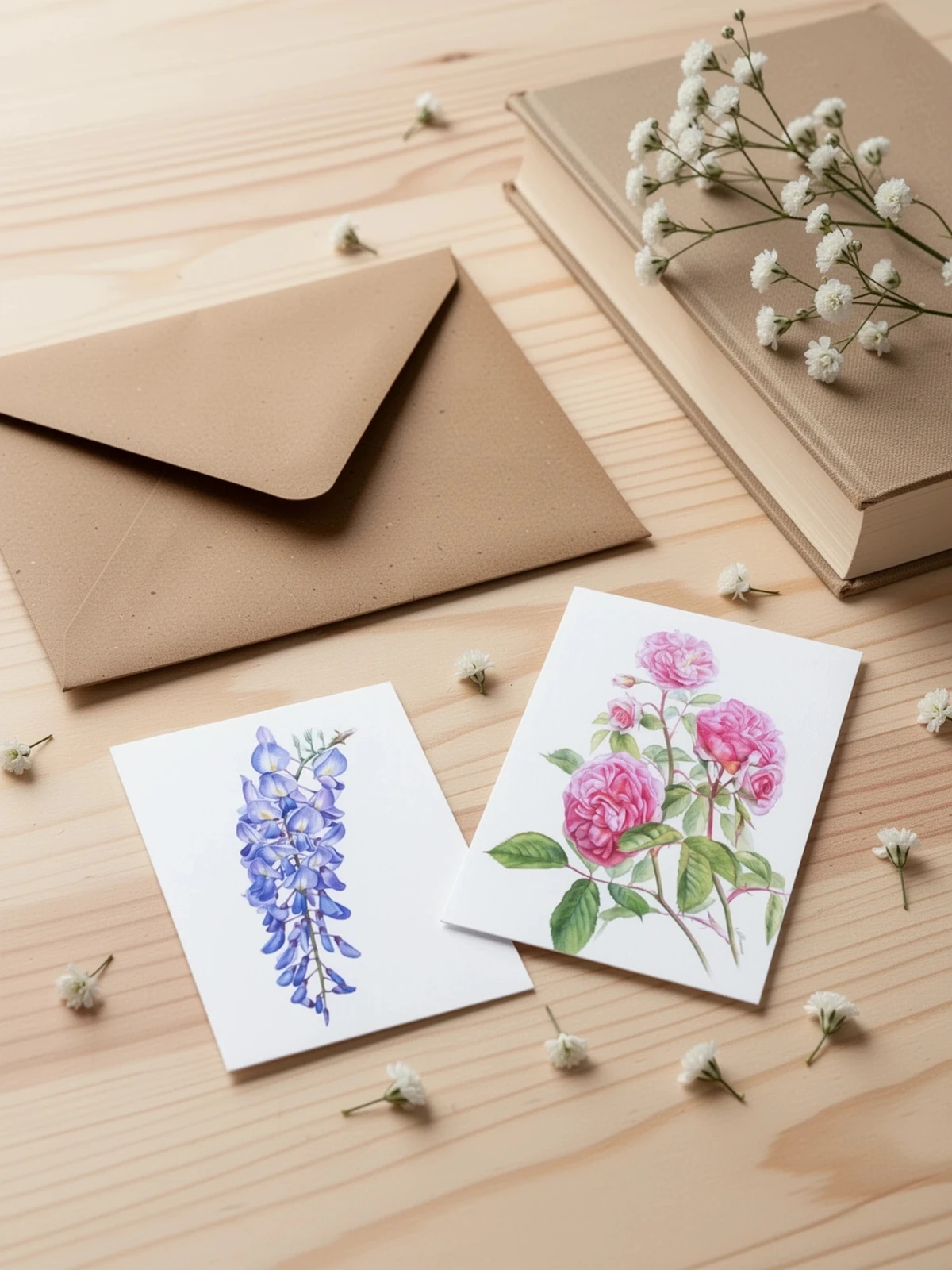
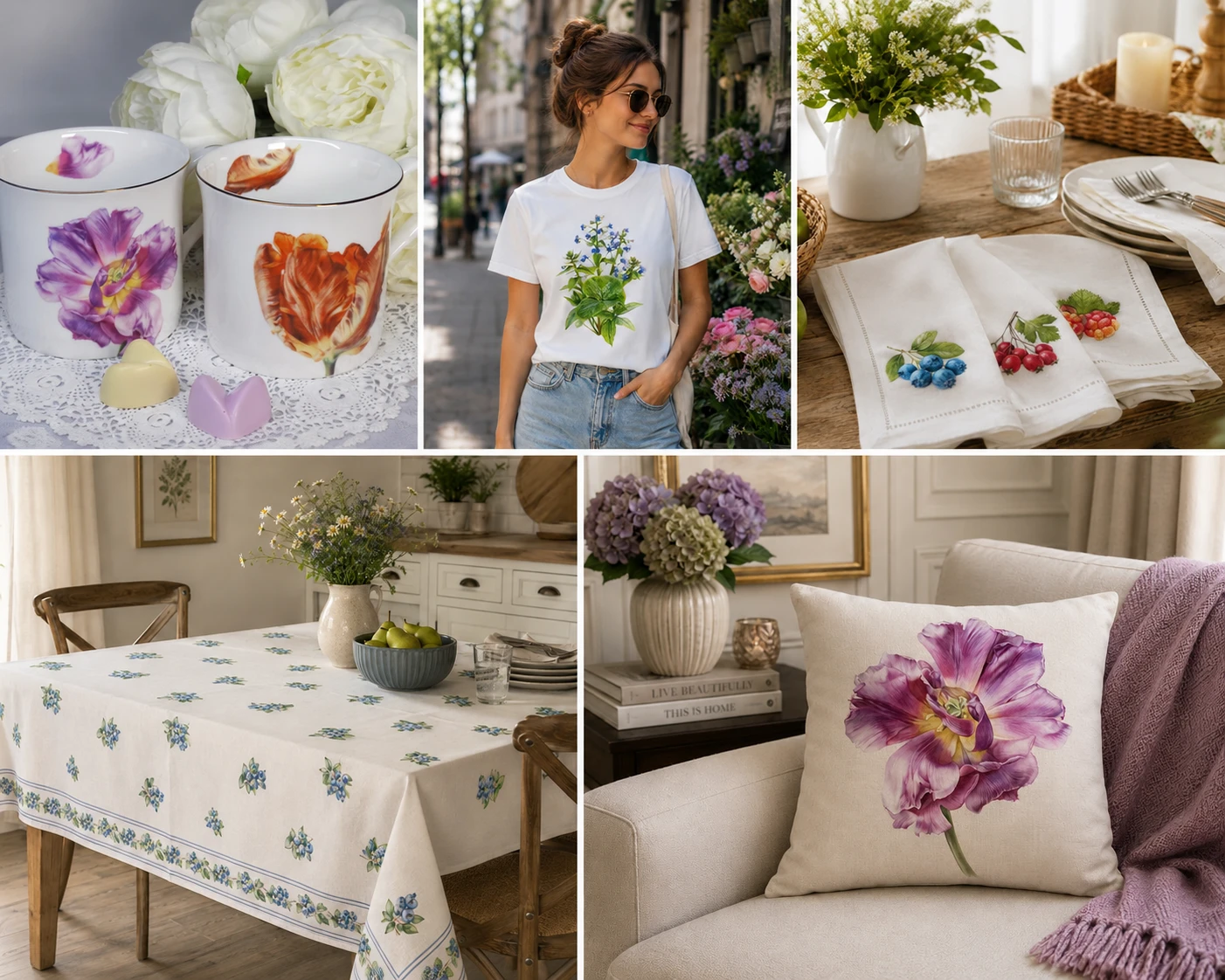
- will find out how to use your illustrations for postcards, prints, and other printed products;
- will discuss where else botanical subjects can be put to use;
- will talk about the first steps in selling your work and how an artist can grow in the botanical genre.
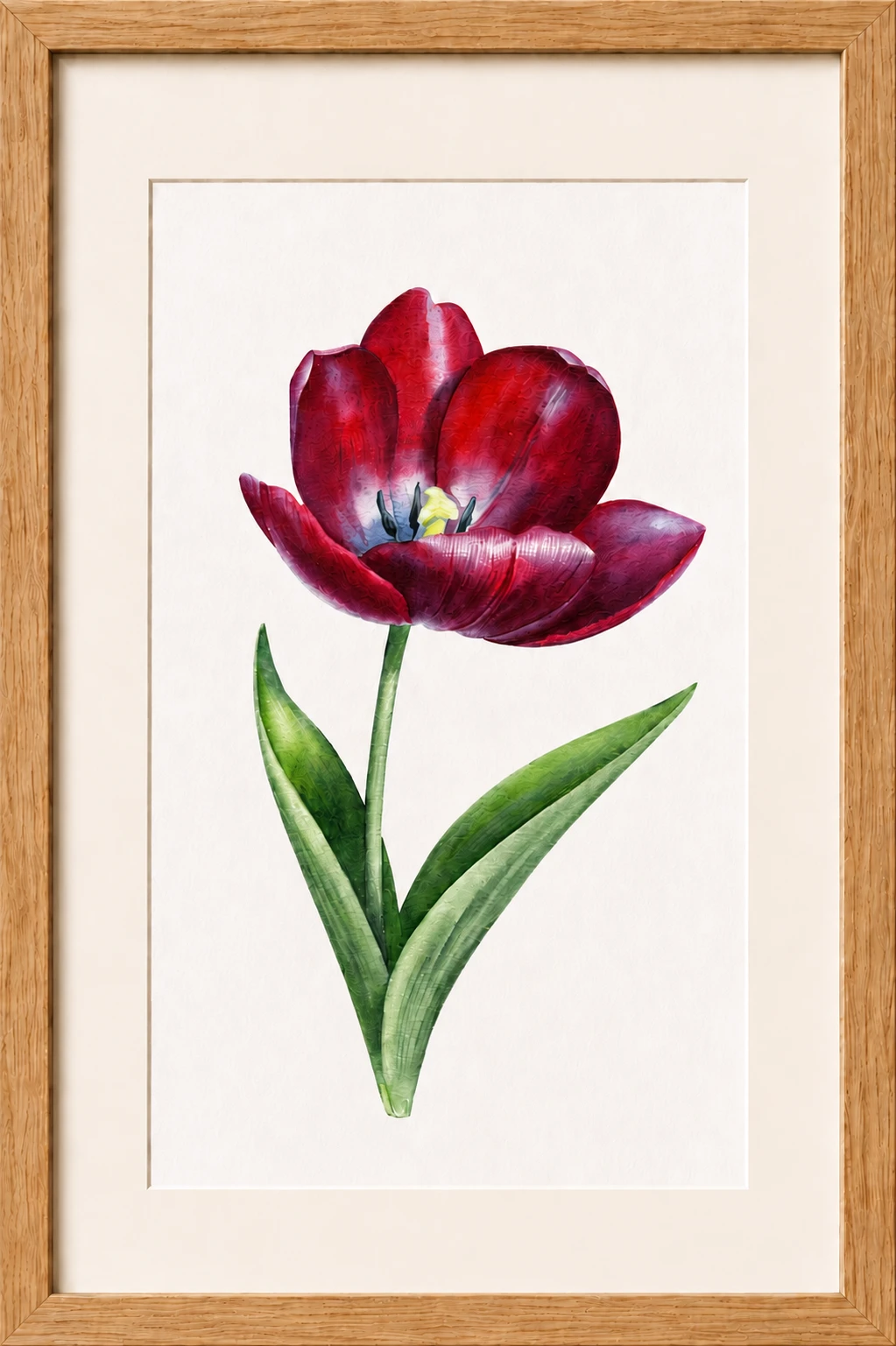
In this lesson we:
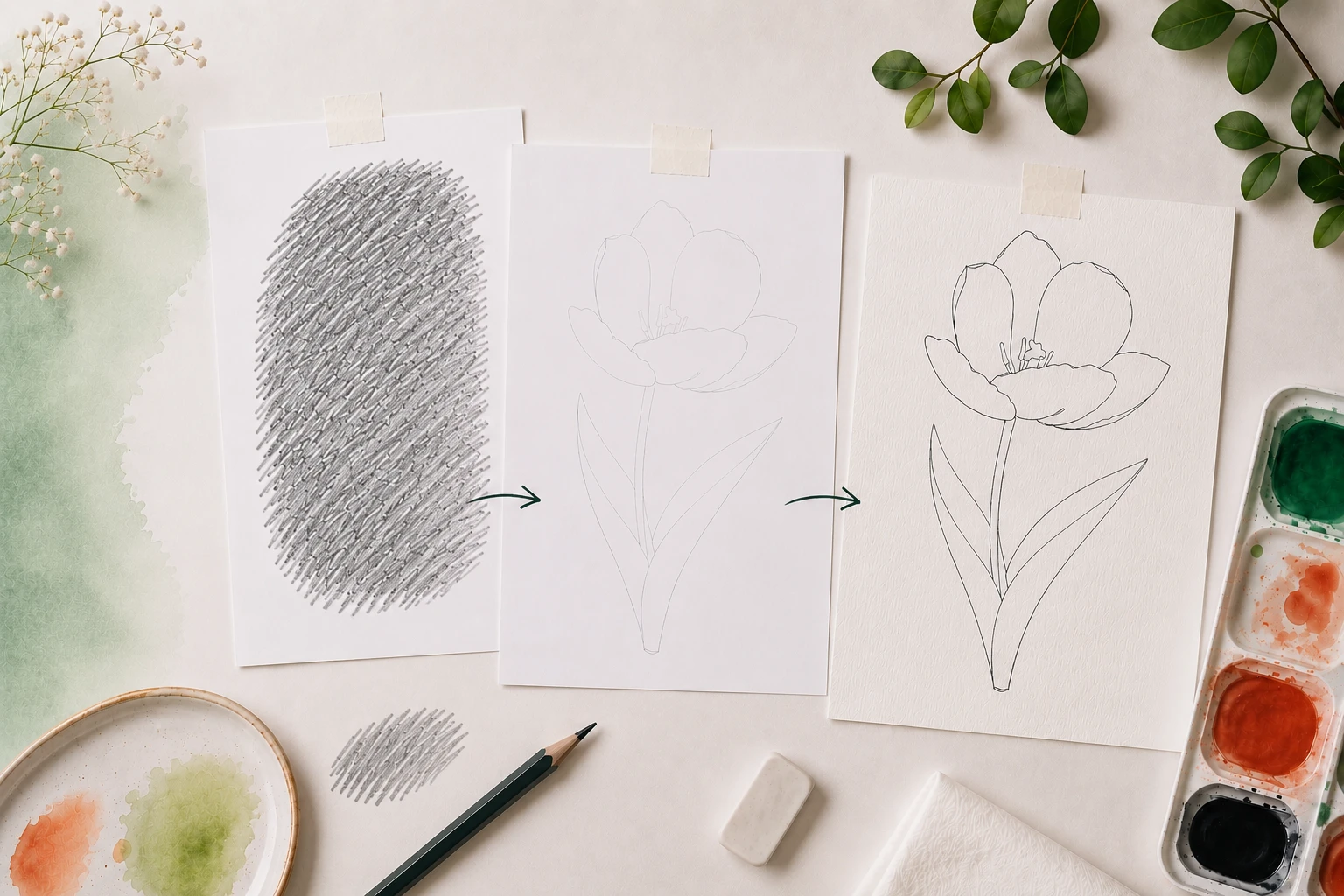
- will sketch the structure of the tulip in pencil;
- will do a tonal analysis of the subject;
- will learn to convey the glossy, slightly shiny surface of the petals;
- will paint the leaves and discuss their shape and shades.
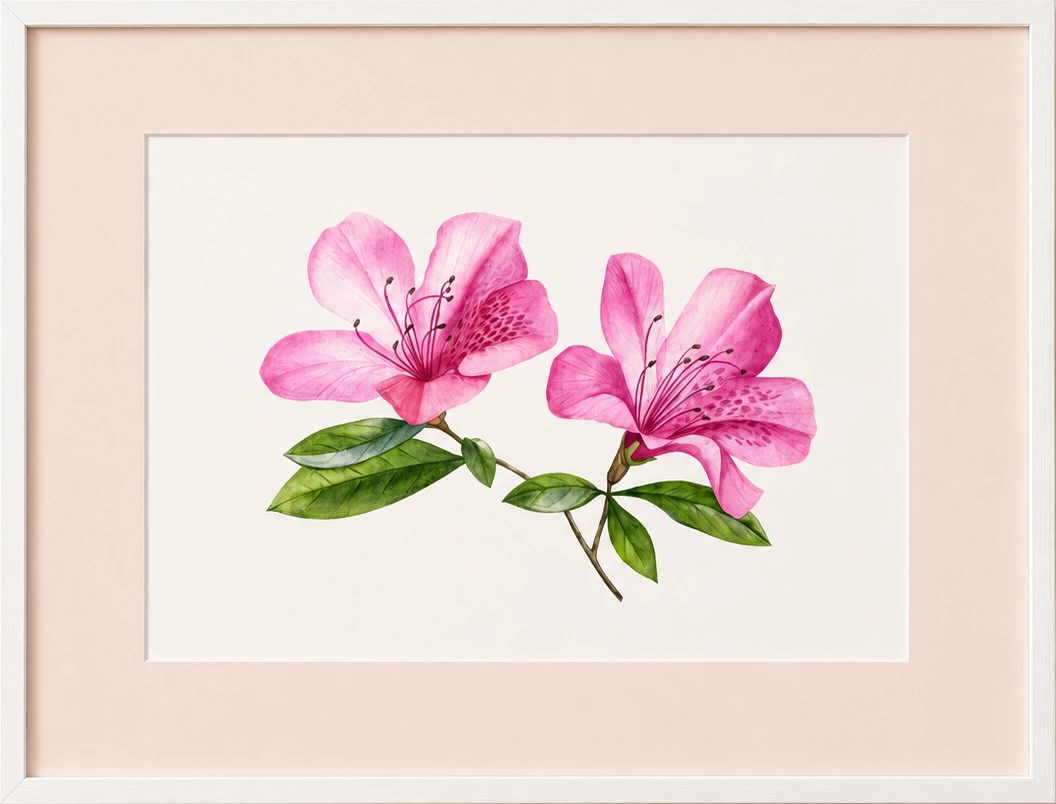
In this lesson we:
- will sketch the structure of the rhododendron flower in pencil;
- will do a tonal analysis of the subject;
- will learn to convey the flower's complex volume;
- will work with the translucency of the petals;
- will paint the leaves and discuss the features of their shape and color.
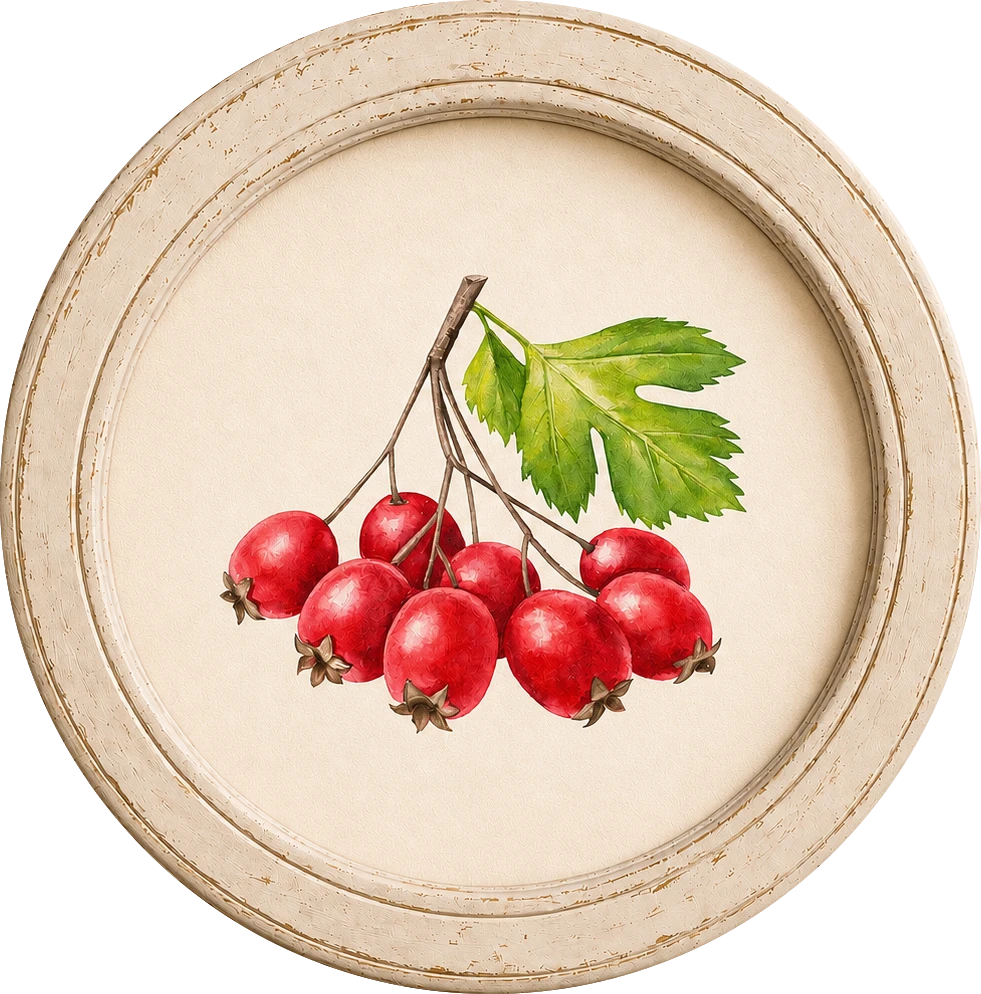
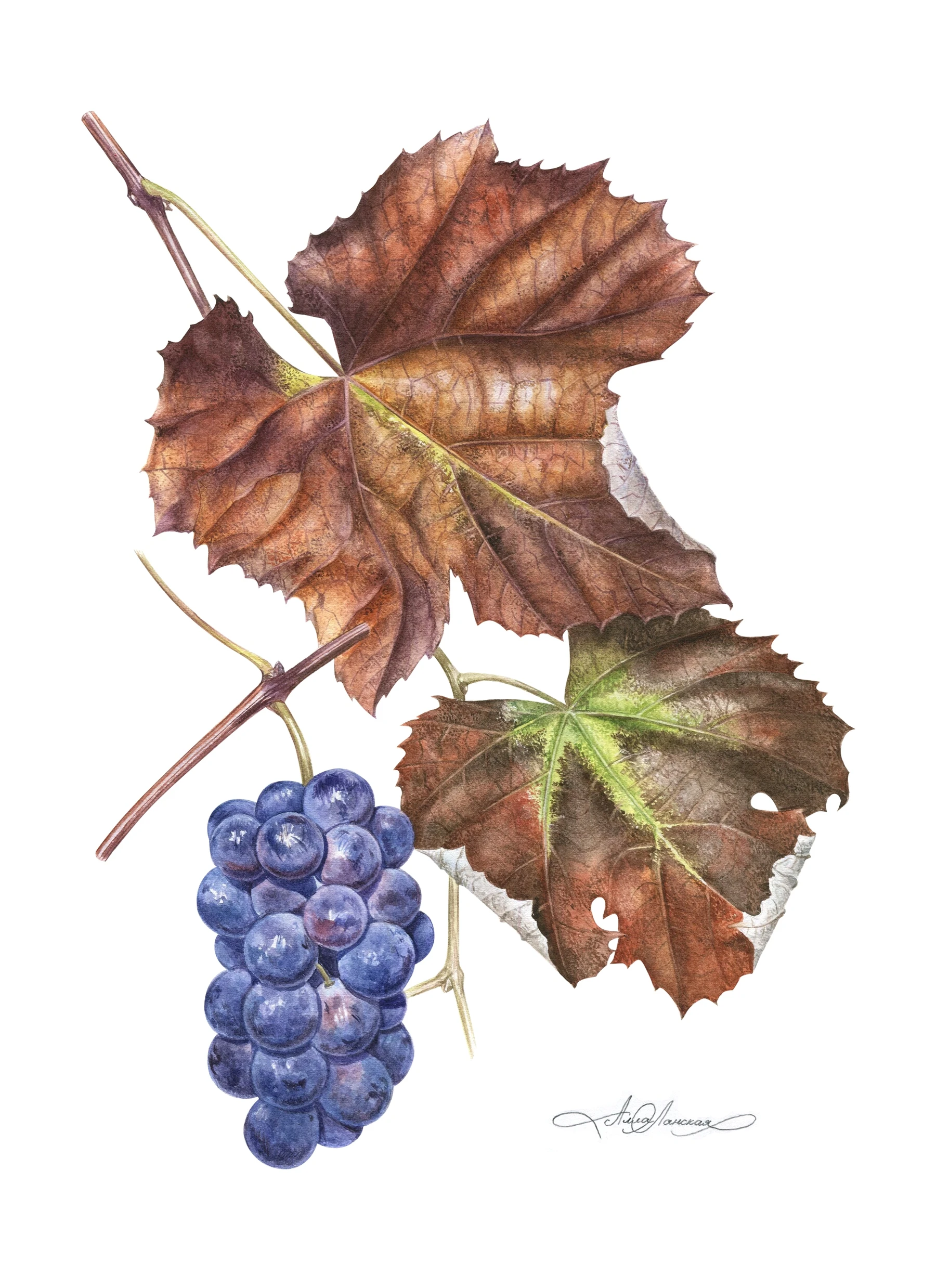
In this lesson we:
- will sketch the structure of a cluster of berries;
- will make a tonal sketch of the subject;
- will choose shades for the leaves and berries;
- will learn to convey the glossy surface of the berries;
- will work on the texture of the leaves and their details.
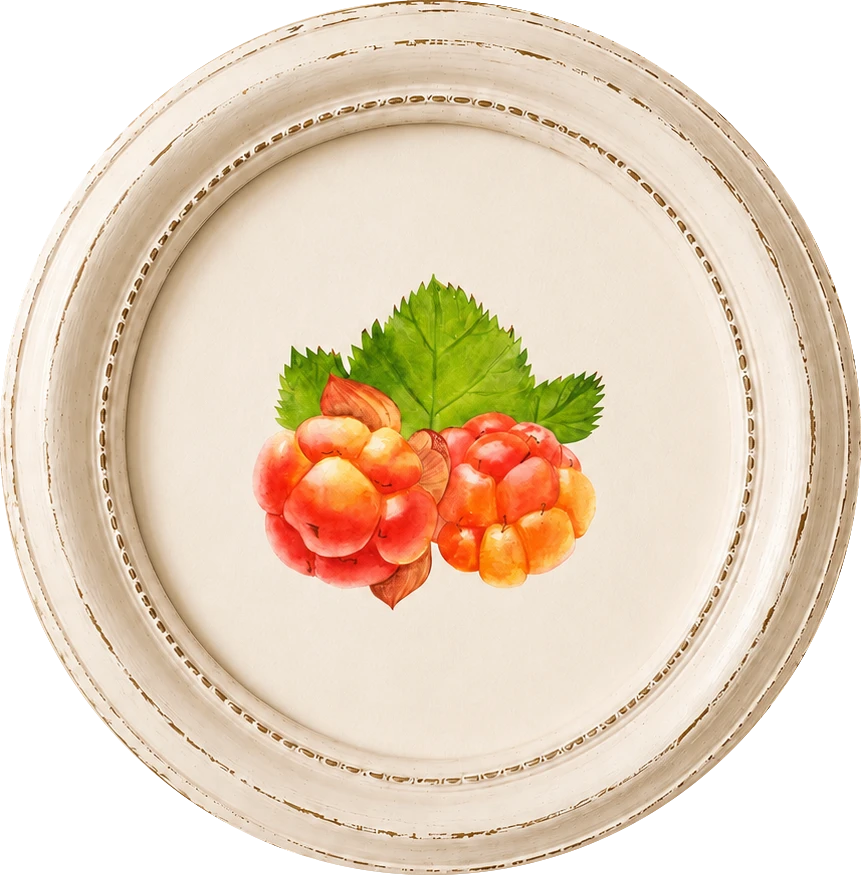
In this lesson we:
- will sketch the structure of this complex drupe berry;
- will make a tonal sketch of the subject;
- will choose shades for the berries and leaves;
- will discuss how to convey the complex volume of the form;
- will learn to paint the glossy surface of the berries and a textured leaf.
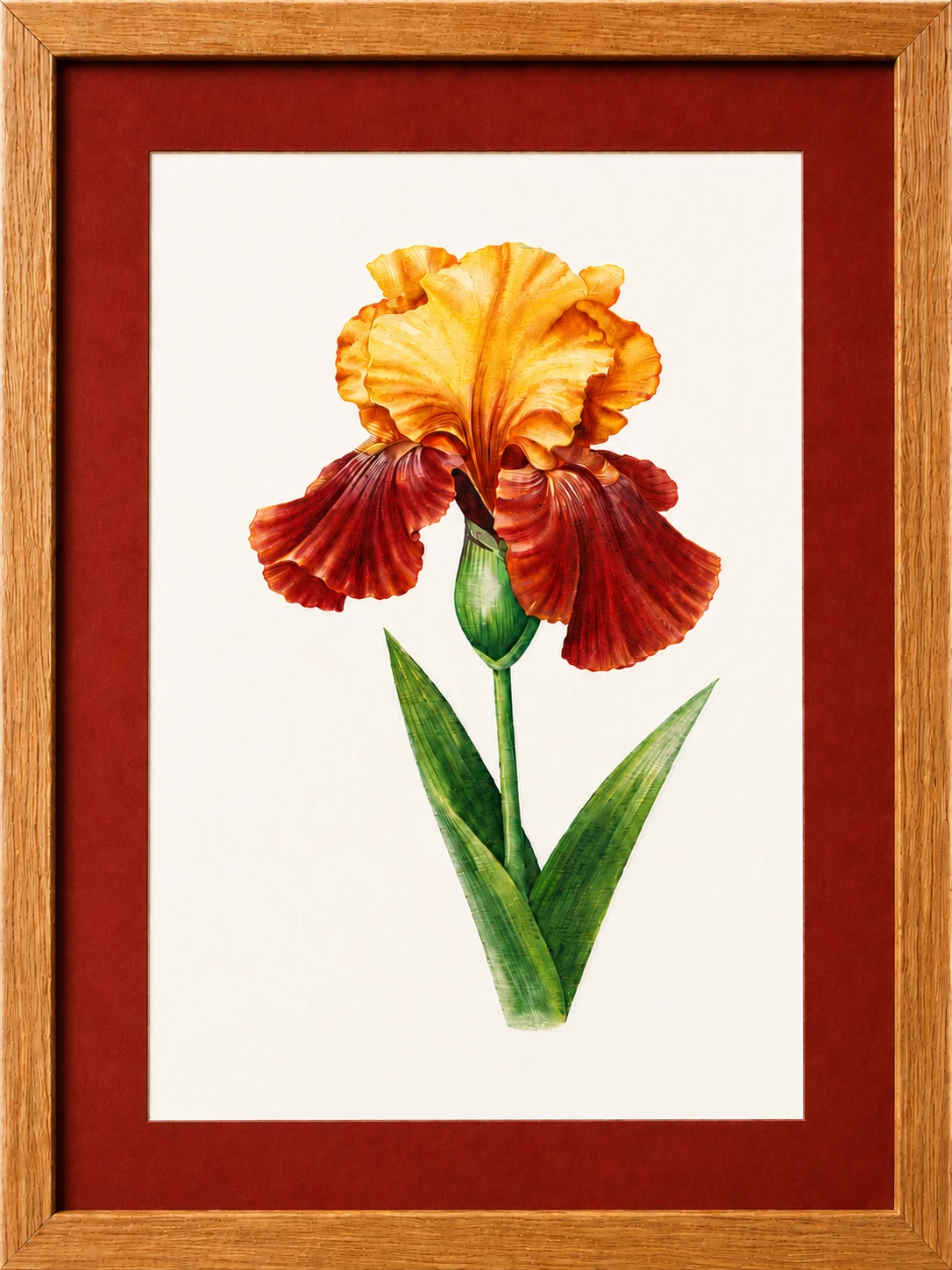
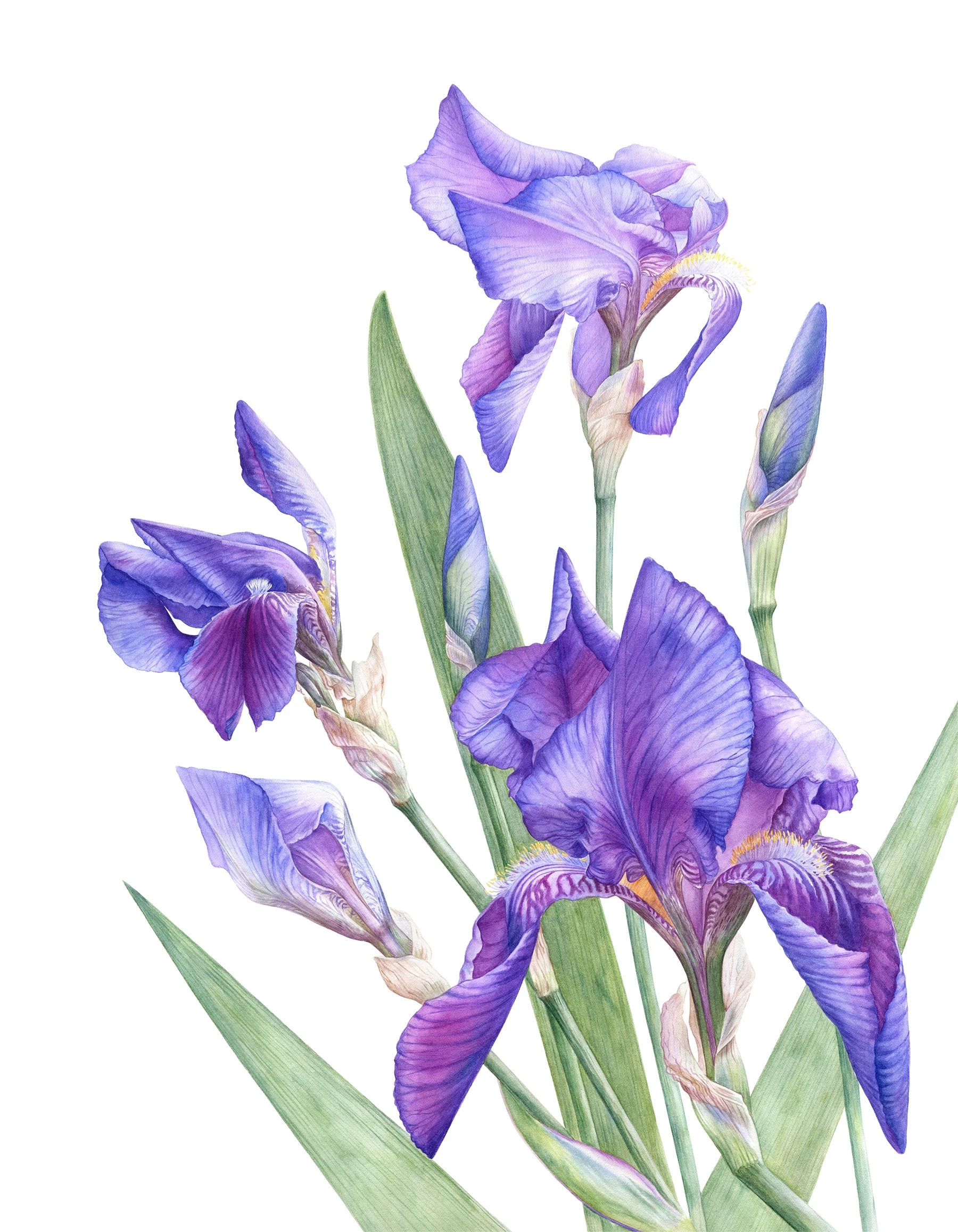
In this lesson we:
- will sketch the structure of the iris flower in pencil;
- will do a tonal analysis of the subject;
- will learn to convey the flower's complex volume;
- will work on the pleated surface of the petals;
- will paint the leaves and discuss their shape and shades of color.

Course instructor
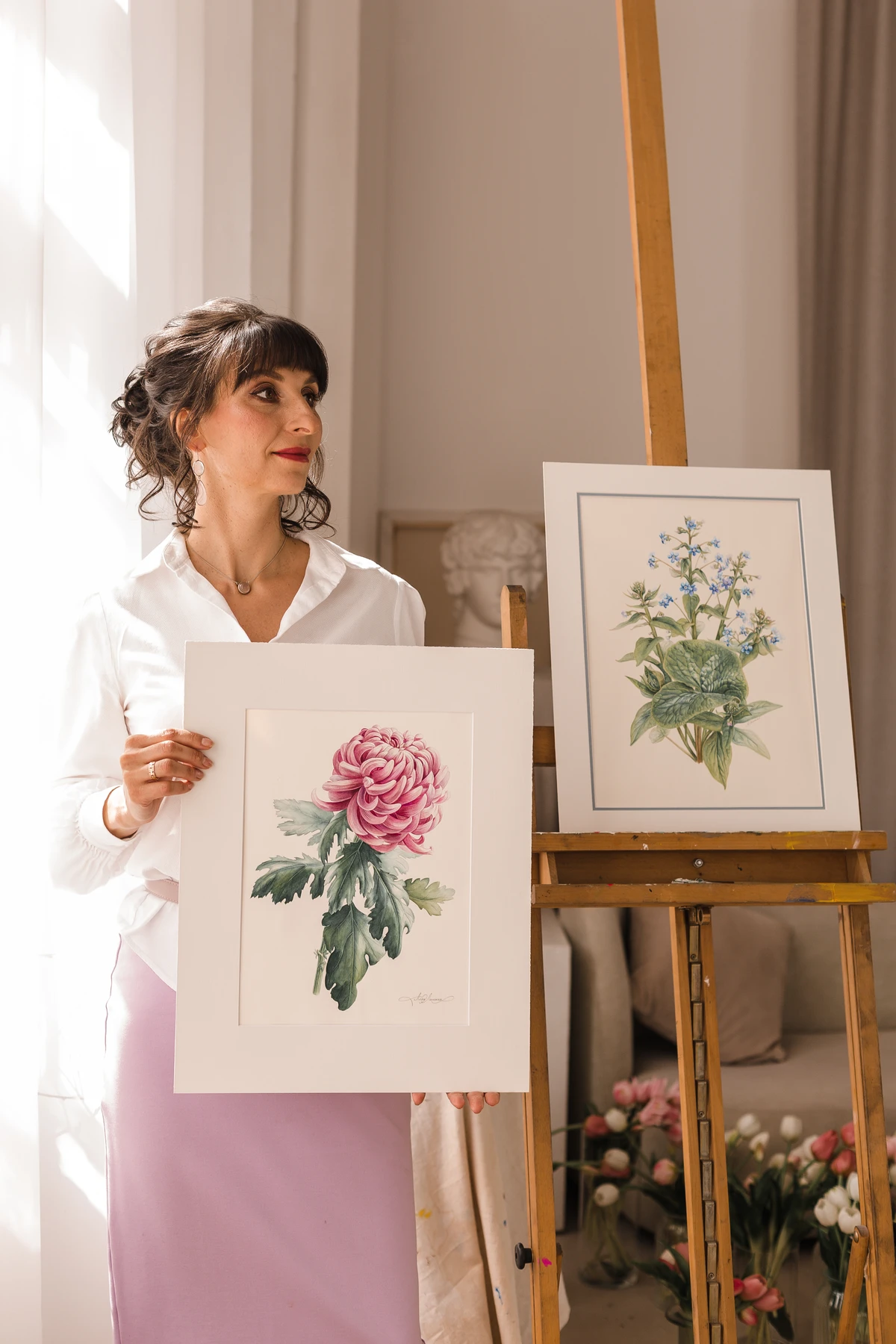
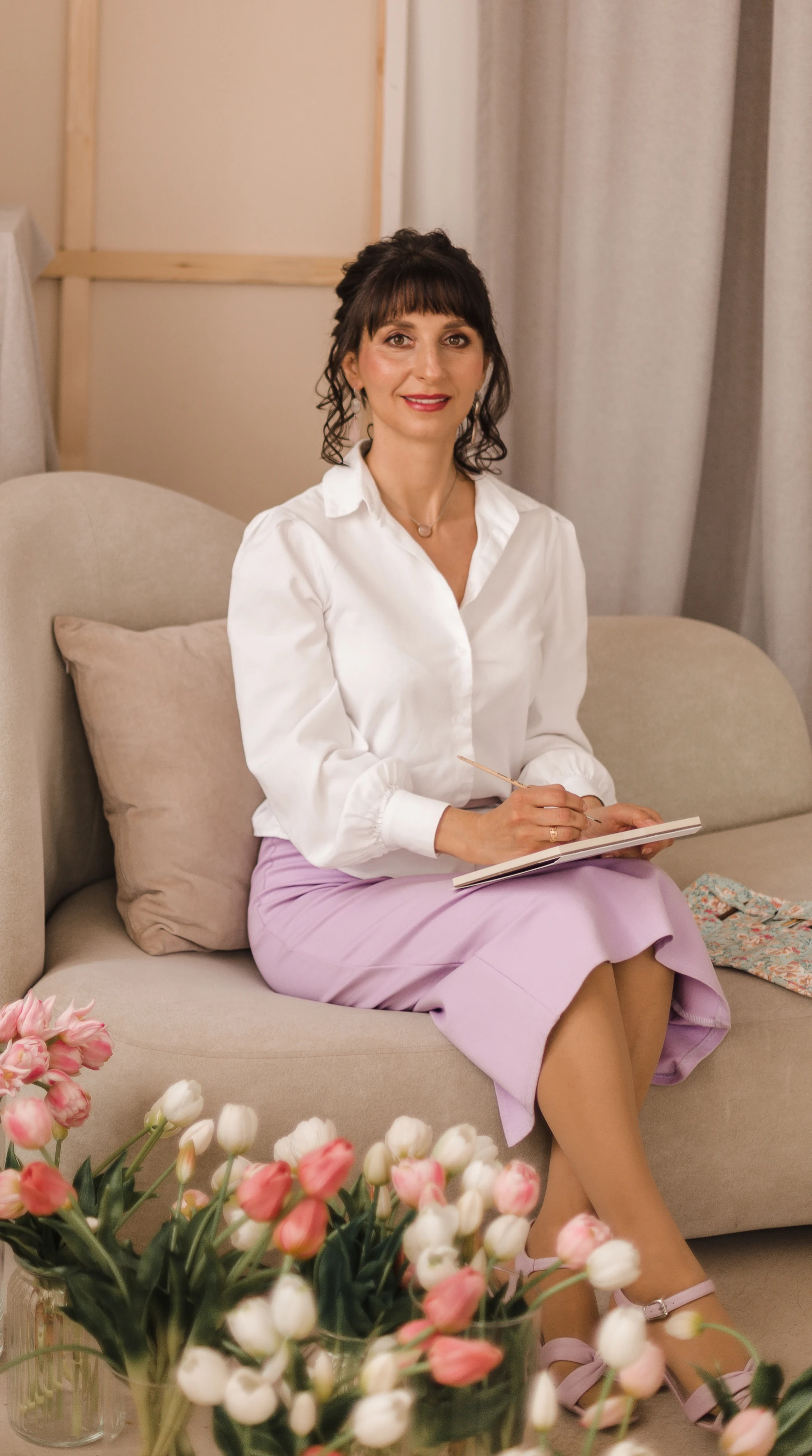
- Botanical artist, illustrator, designer, and teacher. Member of the Association of Botanical Artists of Russia.
- I work with the MIF publishing house and have illustrated three botanical books: a field guide to berries, a field guide to trees, and the Red Book of Russia covering all the main species.
- I create botanical illustrations for packaging and textiles.
- Author of three botanical painting courses — Flowering Trees and Shrubs, Juicy Berries, and Botany in Watercolor and Colored Pencils — and of more than 50 video lessons. Creator of more than 50 paintings in the botanical genre.
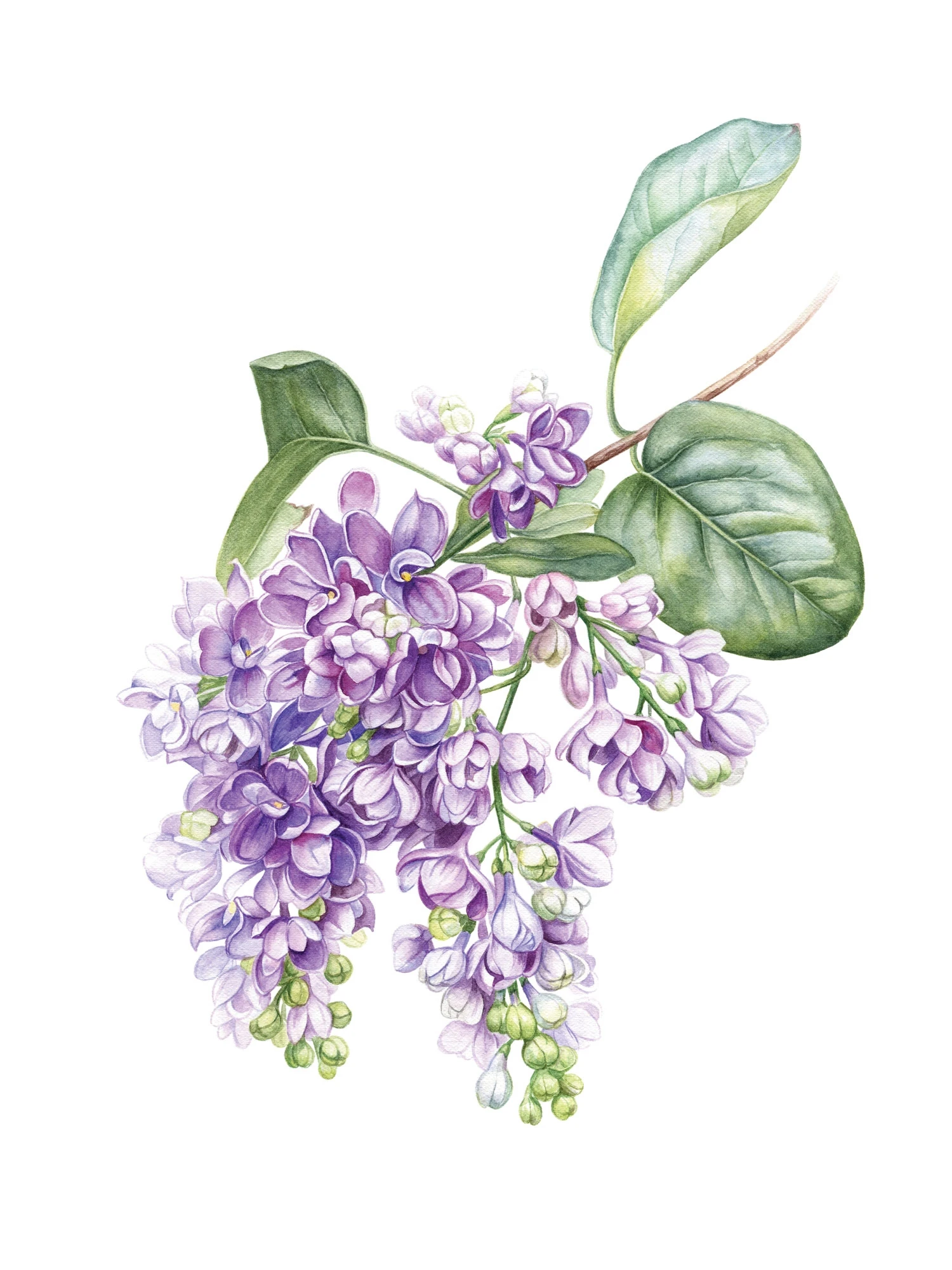
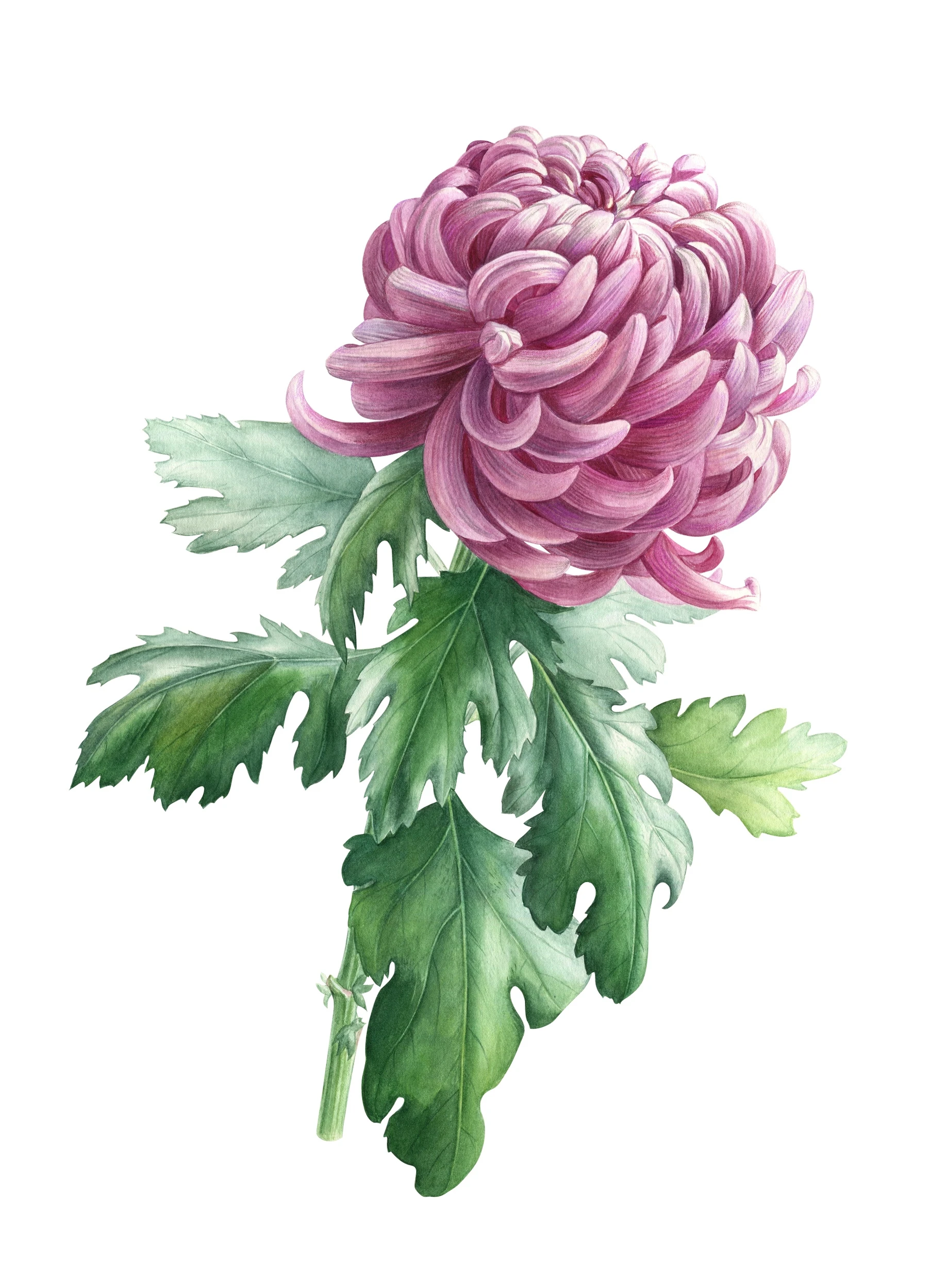
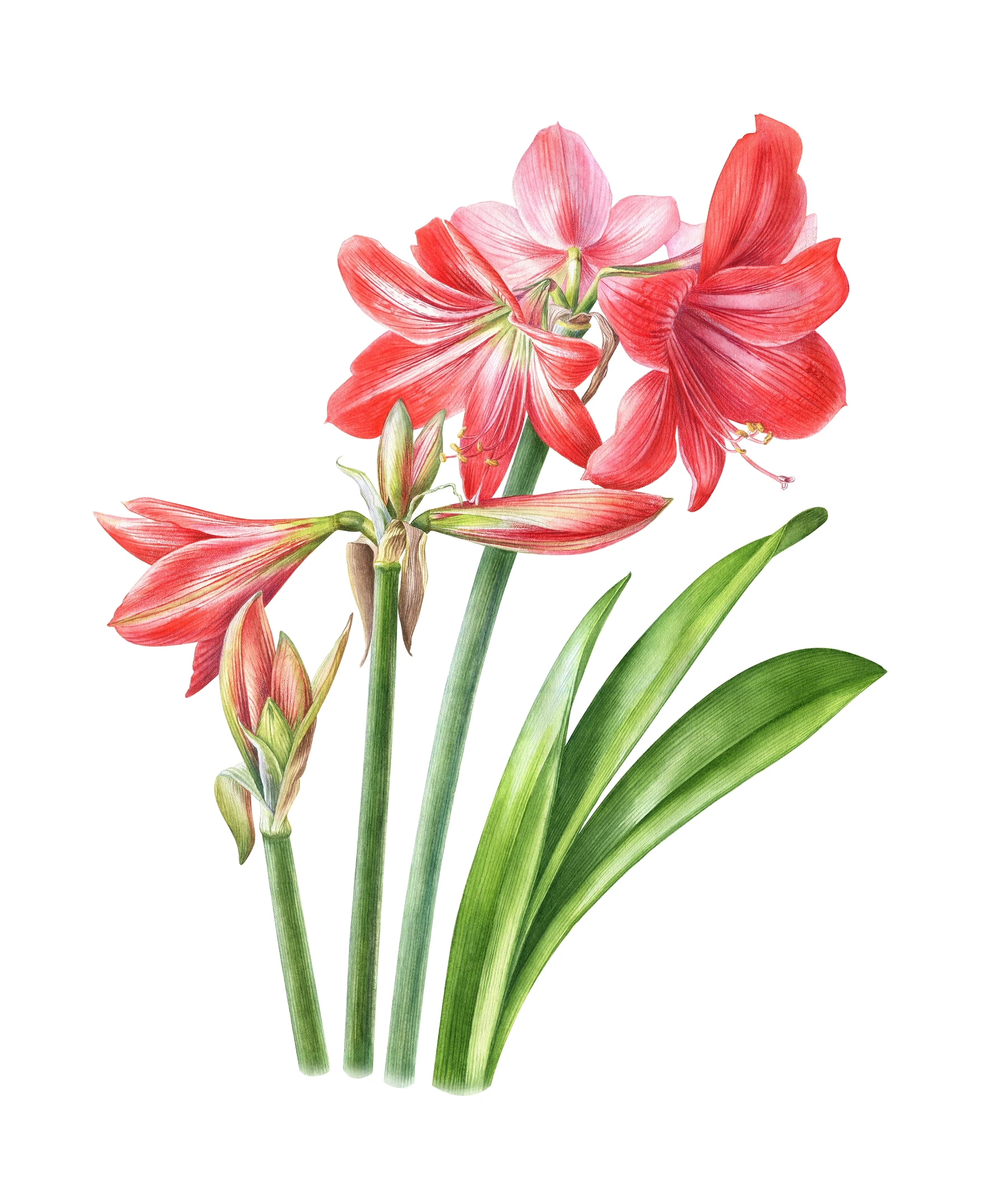
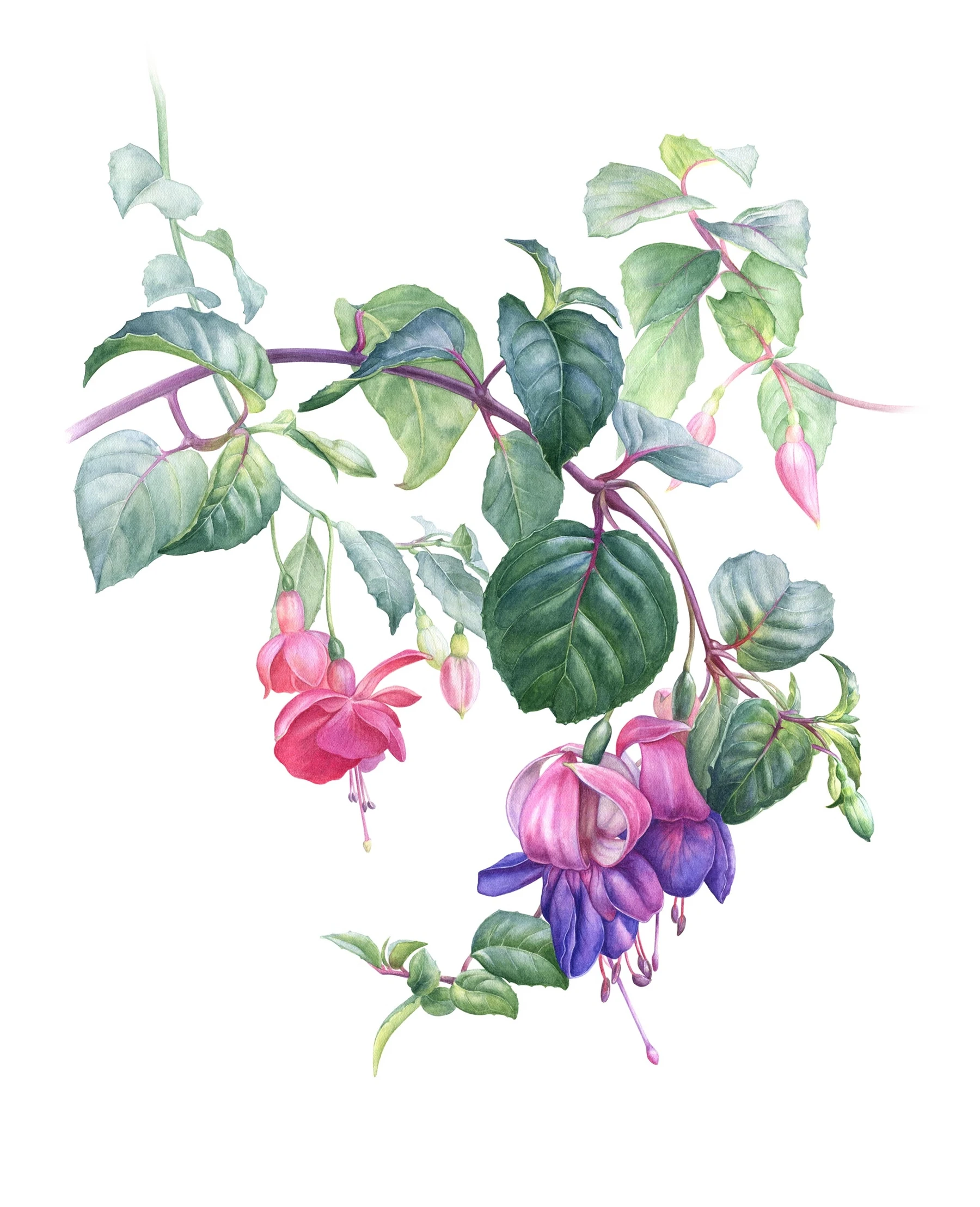
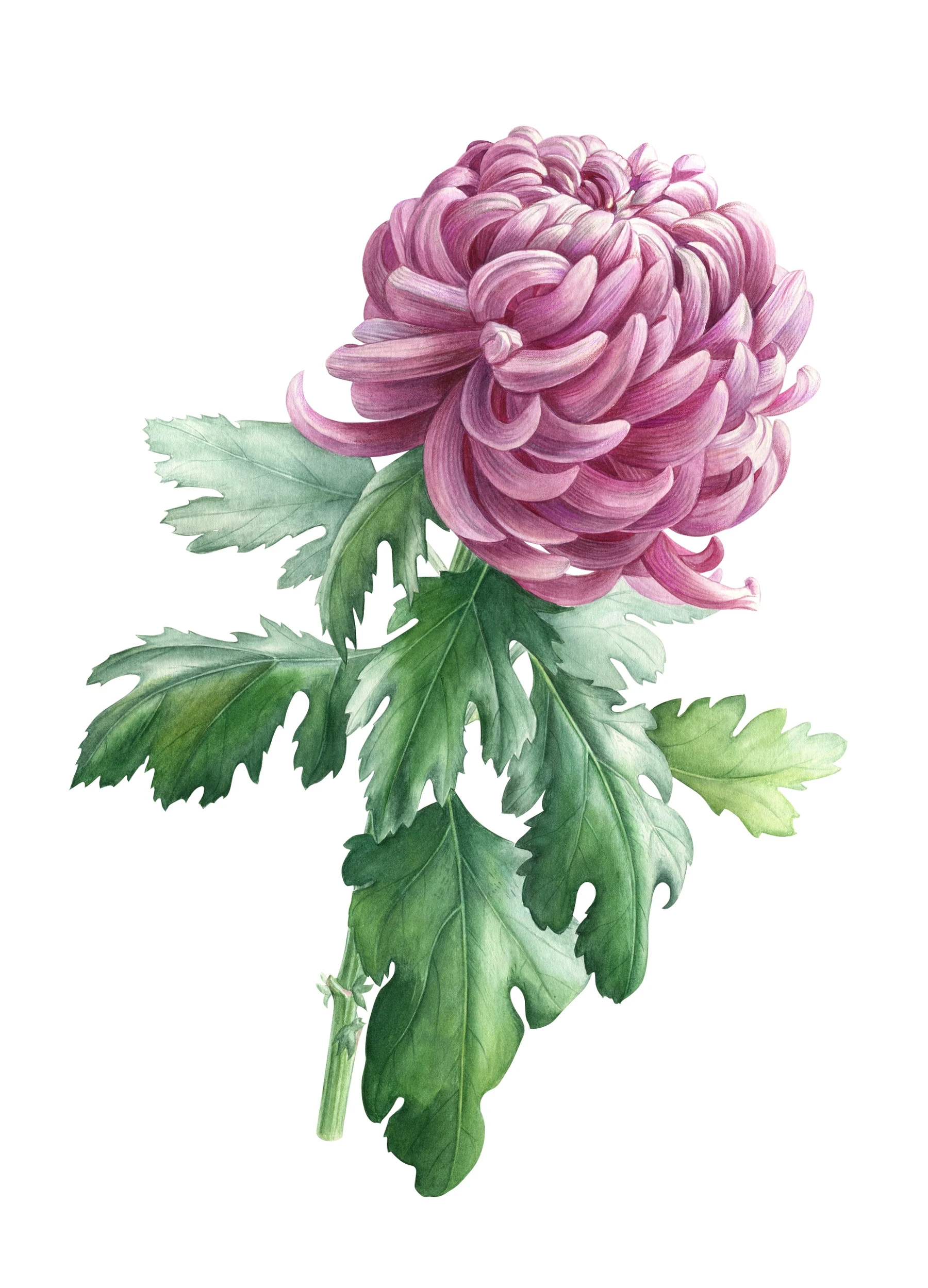
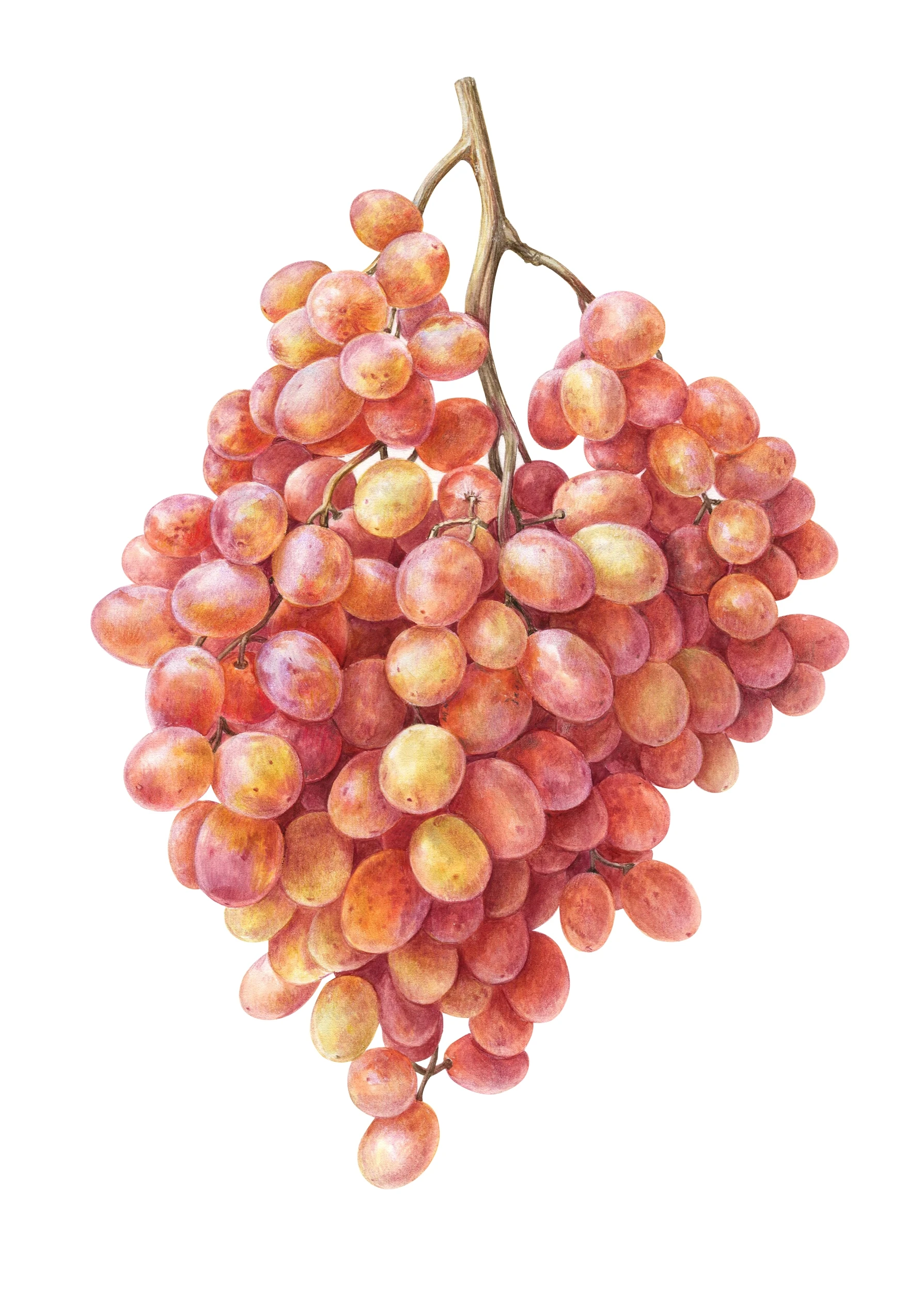
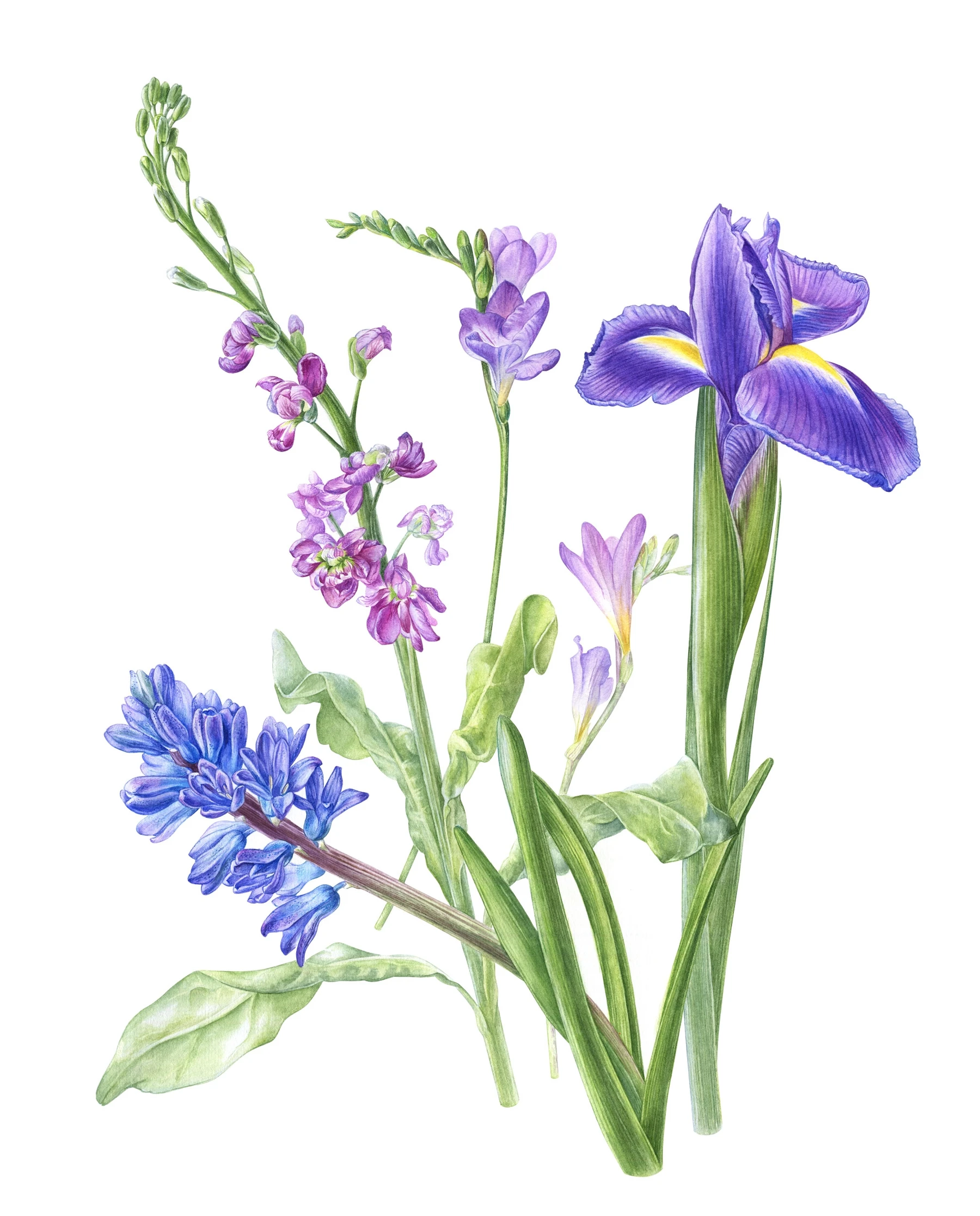
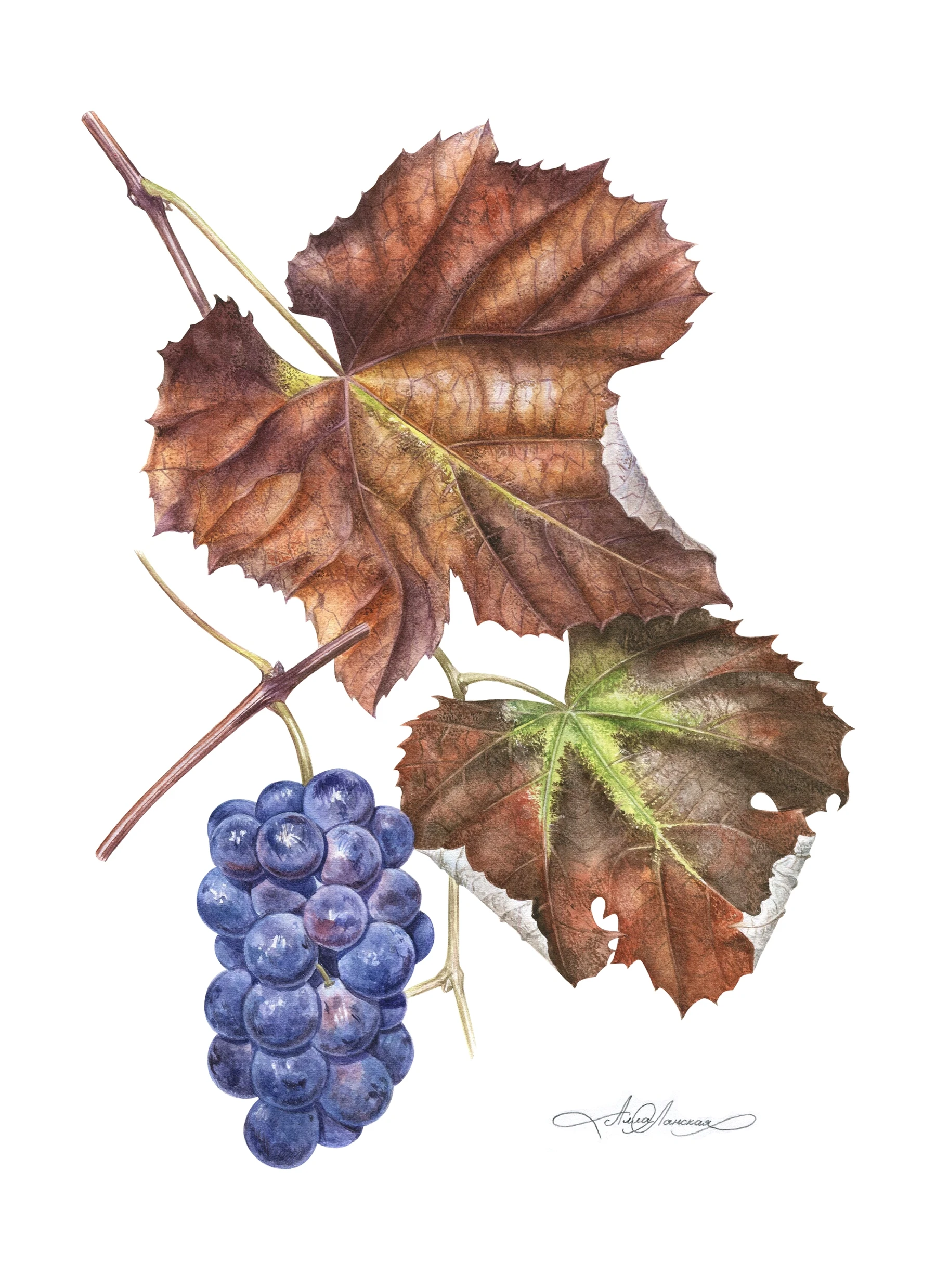
Works by Alla Lanskaya
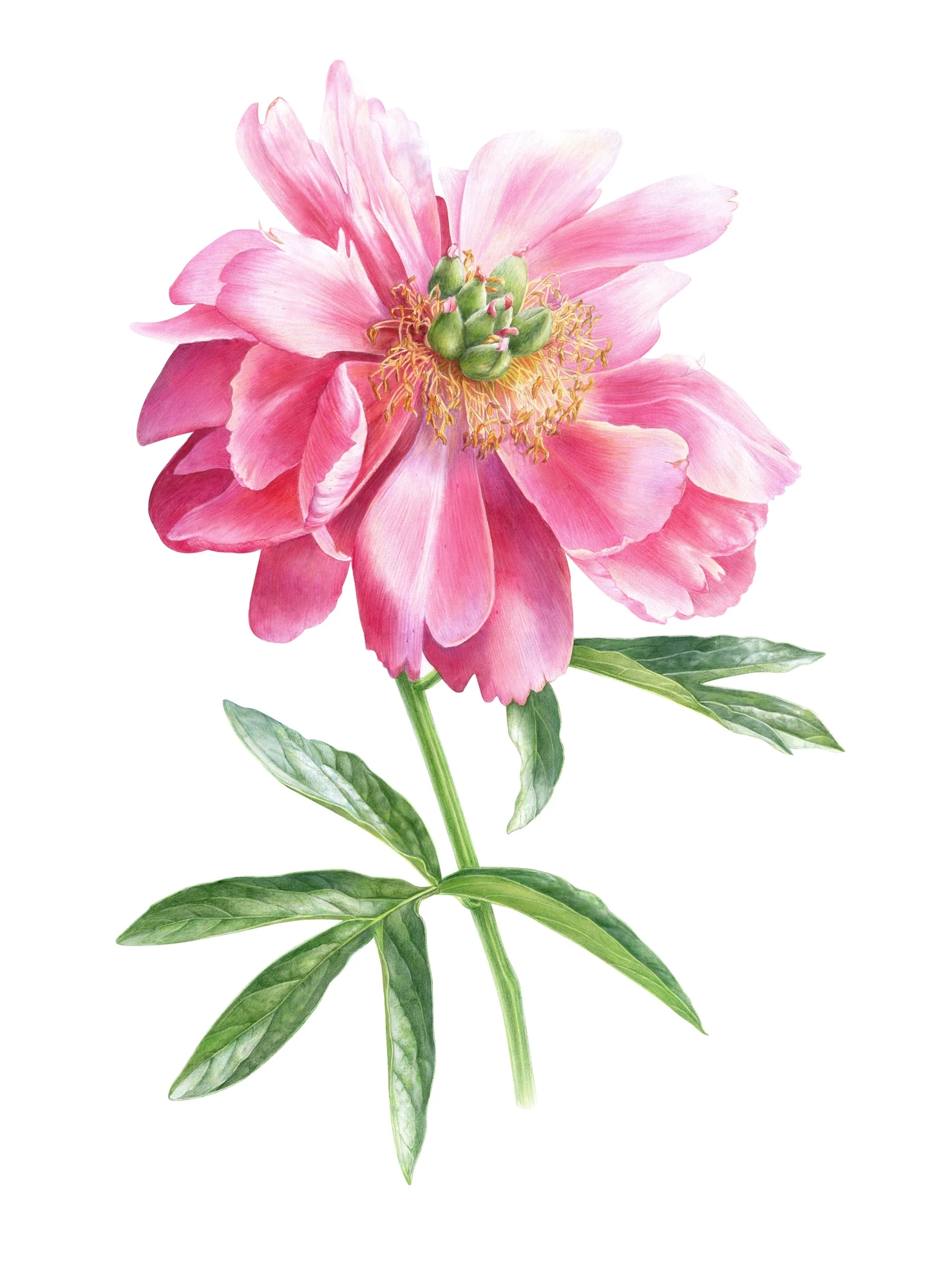
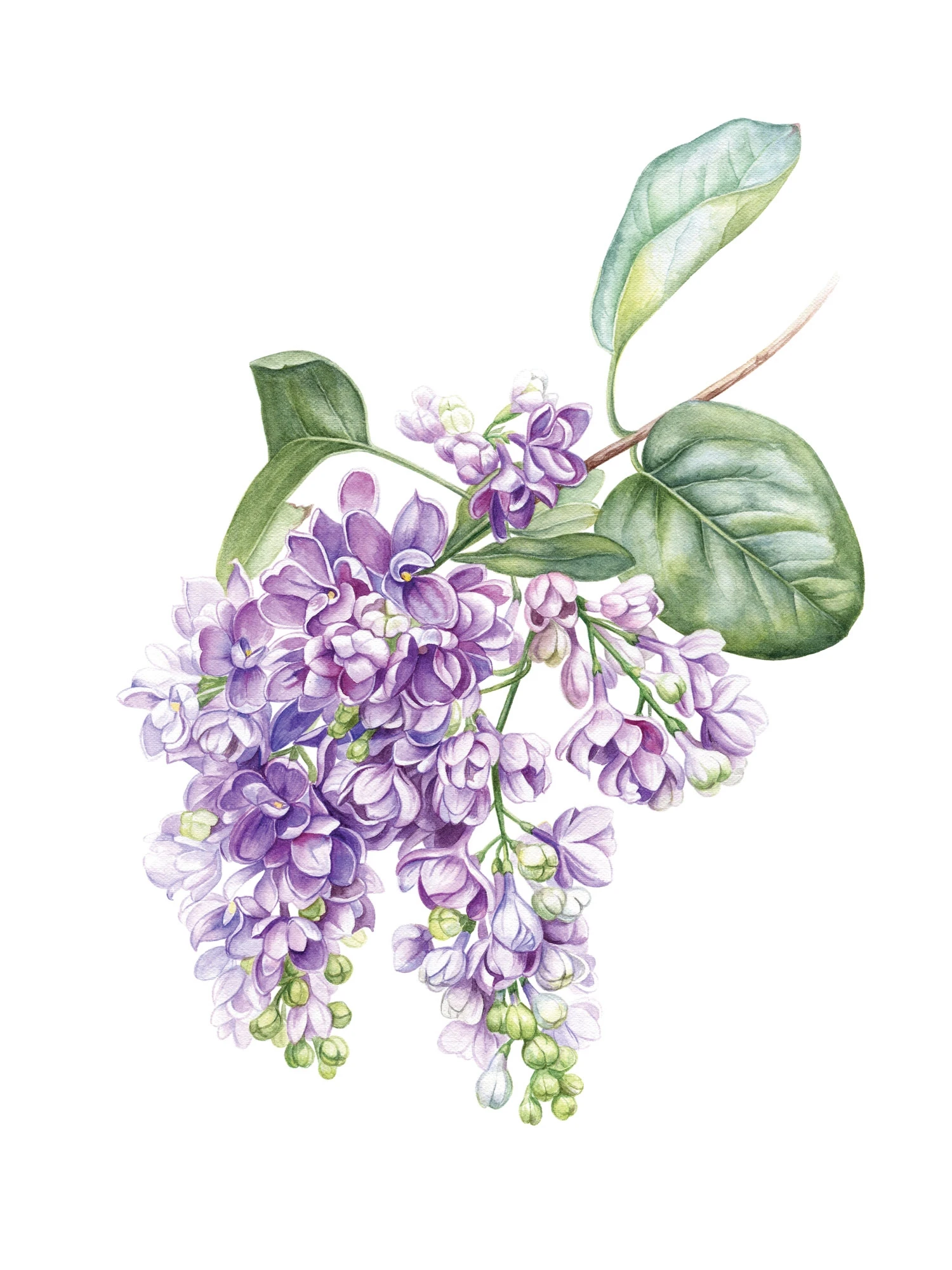
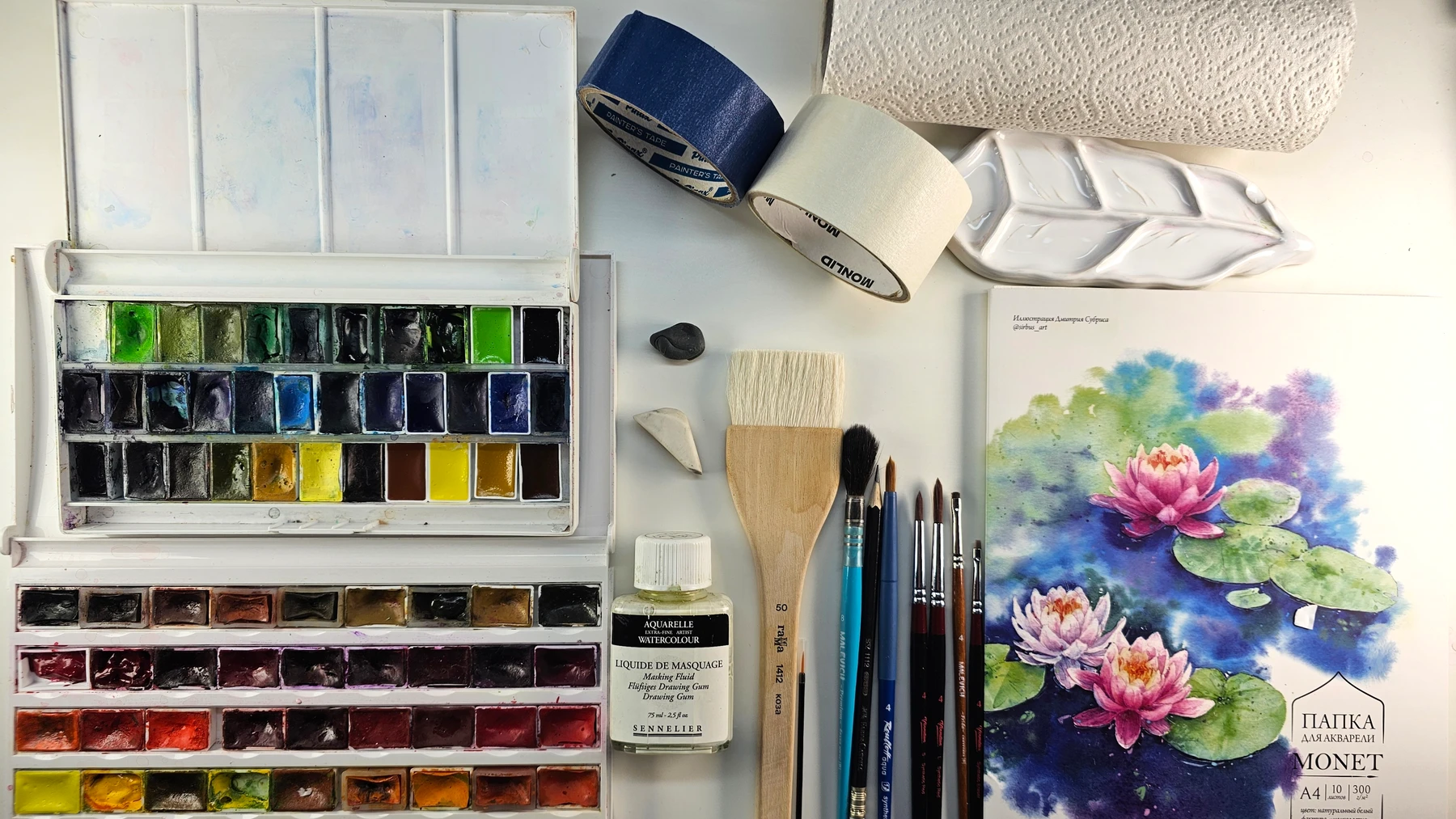
Course materials
Paper
- Watercolor paper, A4 (approx. 8.3" × 11.7") plus 20 × 20 cm (approx. 8" × 8") sheets for some lessons; 100% cotton, hot-pressed (satin) or fine grain
Brushes
- Synthetic round brush No. 4 with a sharp tip
- No. 0 or No. 1 brush for fine details (optional)
Paints
Watercolors, for example White Nights:
- 214 Lemon
- 201 Cadmium Yellow Medium
- 324 Quinacridone Rose (any bright pink)
- 608 Violet-Rose
- 313 Madder Lake Red Light
- 323 Ruby (or 318 Scarlet)
- 325 Claret
- 309 Red Ochre
- 304 Cadmium Orange (optional)
- 716 Sap Green
- 725 Green
- 521 Ultramarine Deep
- 516 Indigo
- 508 Cobalt Blue
- 524 Indanthrene Blue (optional)
- 812 Payne's Gray
Additional
- Pencil
- Eraser
- Palette
- Masking fluid
- Paper towels or napkins
- Water container
Choose Your Plan
- 8 botanical paintings for your home
- 15 lessons: theory + practice + artistic tips and tricks
- "Course Unfreeze" — the option to start learning whenever the time is right for you
- Access to artwork analysis sessions from other participants
- Lifetime access to all course materials
- Review of your work and answers to your questions in the comments for 60 days from the moment you start the course
- A personal one-hour online consultation with the course expert
- +$20 in bonus dollars! Use them toward your next course purchase at a future marathon. They expire after 3 months
- Machine translated subtitles: English, German, French, Italian, Spanish, Greek, Polish, Portuguese, Hungarian, Chinese, Indonesian.
Frequently Asked Questions
Absolutely! Anyone can learn to paint! It's simply a skill that develops with practice. Our course is structured from simple to complex, so anyone can follow along — even with zero experience. Step by step, through hands-on practice as you create the paintings in the course, you'll build your skills and learn to paint.
At the end of the lesson, you'll upload a photo of your work. Your instructor will have the option to leave a text comment, a graphic comment (notes drawn directly on your painting), or an audio comment.
At the bottom of the final lesson there will be a comments section where you can ask any questions about the course.
If you're on a plan without feedback, it all depends on your own personal pace as you work through the lessons.
On plans with feedback, we actively work through the lessons over two months from the moment you "unfreeze" the course.
Overall, I recommend taking the course at a relaxed pace. Enjoy the process as much as possible.
Yes, this course is great for both beginners and those who already have some experience.
It's never too late to learn to paint. In our school, 30% of students are over 50. And they paint with joy, develop their skills, nurture their creativity, and feel younger in heart and mind!